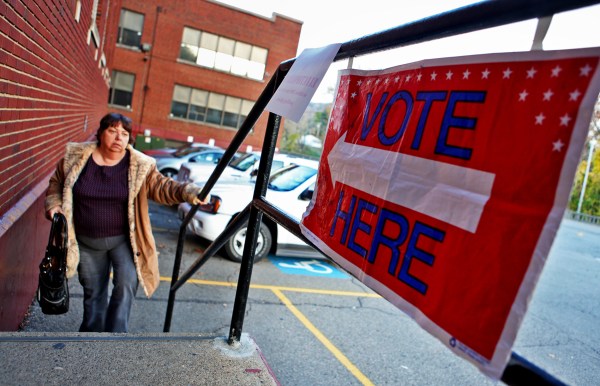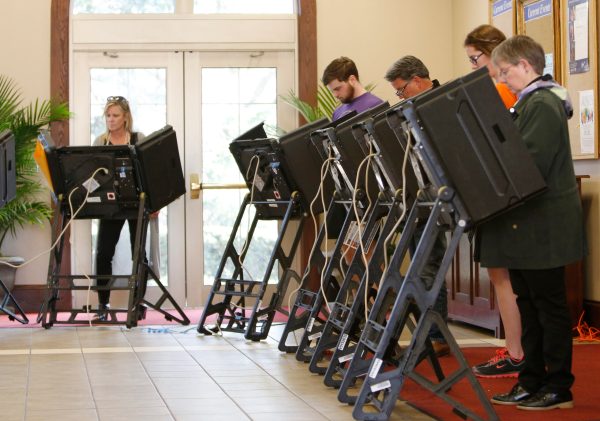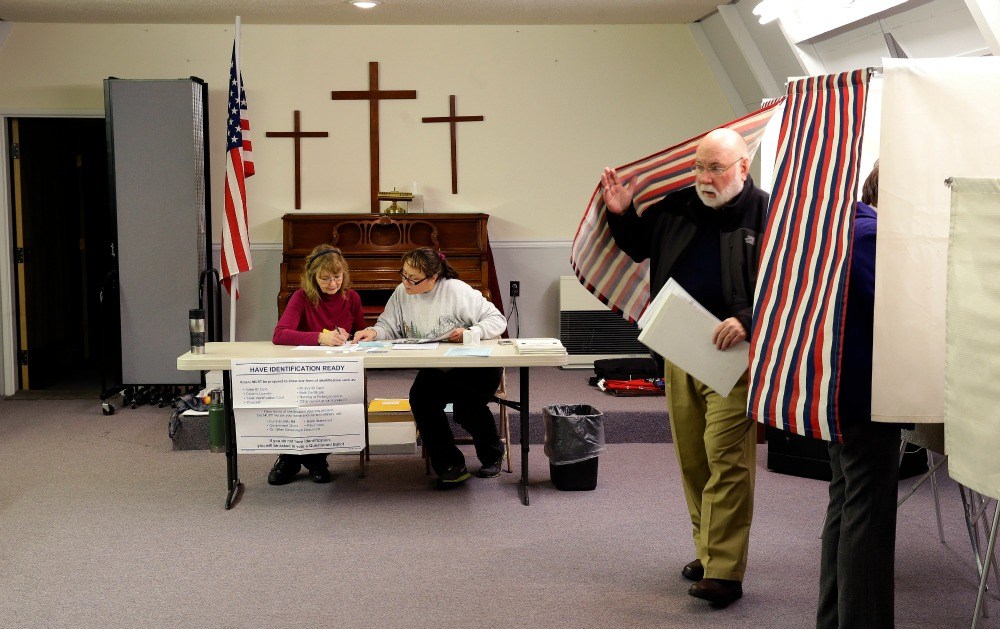
Is your favorite candidate down in the polls, and you don’t want to waste your vote on someone with little to no chance of winning? I have bittersweet news for you: Either way, your vote almost certainly won’t decide the election.
That means the time you spent considering whom to vote for was largely unnecessary, at least in terms of deciding the election. But it also means you can vote for your favorite candidate, no matter his or her poll numbers. Your conscience can remain clean knowing you stuck to your guns and voted on principle.
Recommended Stories
What are the odds that a single vote will decide the election? Let’s look at New Hampshire, since it has a fairly standard primary system and a small population. That way, our calculation is biased in favor of your vote making a difference.
In 2012, about 248,000 votes were cast in the New Hampshire Republican primary. In 2008, just over 239,000 votes were cast. Let’s assume 245,000 vote in the 2016 primary on Feb. 9. In an election that big, it’s unlikely the winner will be decided by one vote.
Even if every voter narrowed his or her choice down to just two candidates, the odds of a tie or an election decided by one vote are small. If 245,000 votes are cast between two candidates in the New Hampshire primary, the odds of a tie are one in 620 (using the methodology described for Ohio here). That’s better than one in 245,000, but they still aren’t odds on which many people would place a bet.
Even though your odds of deciding the winner are small, it’s possible your single vote might affect how many delegates a candidate receives in states where they are awarded proportionally. For example, in New Hampshire candidates have to break a 10 percent threshold to be awarded any delegates. Your single vote might make or break one candidate from reaching that threshold.
I won’t take the time to calculate those odds, but they’re still pretty small. Just keep in mind your vote might make a bigger difference if your state awards delegates proportionally rather than giving all delegates to the winner. States voting earlier in the process are more likely to award delegates proportionally.
In the general election, it’s even less likely that your vote will matter. Voter turnout is generally higher then. If you have qualms with the Republican and Democratic candidates, feel free to cast a protest vote for a third party or independent candidate you like better.
Although it’s unlikely to decide the election, there are still many reasons Americans spend the time and effort to vote. We know that, combined together, our votes do make a difference, and we don’t want to be left out of that. We also vote as a way of ensuring that our voices are heard on political issues. If a voter wants lower taxes or higher government spending, voting for certain politicians is a way of advancing those preferences, whether the individual vote decides the election or not. Others feel a civic duty to celebrate their right to vote, which so many have died to protect.
Just because the odds of your vote mattering are small doesn’t mean you shouldn’t vote. Be sure to have fun with it and vote your conscience.
Your vote is much more likely to matter in local elections. In 2015, my brother voted in the Walled Lake, Mich., city council elections. Five candidates ran for three seats. For the third seat, it came down to one vote: 377 for Casey Ambrose to 376 for Bennett Lublin. In the end, Ambrose became the city’s Mayor Pro Tem and Lublin became a city council member anyway. Sometimes, even when you think your vote counts, it might not end up mattering.
Jason Russell is a commentary writer for the Washington Examiner.