

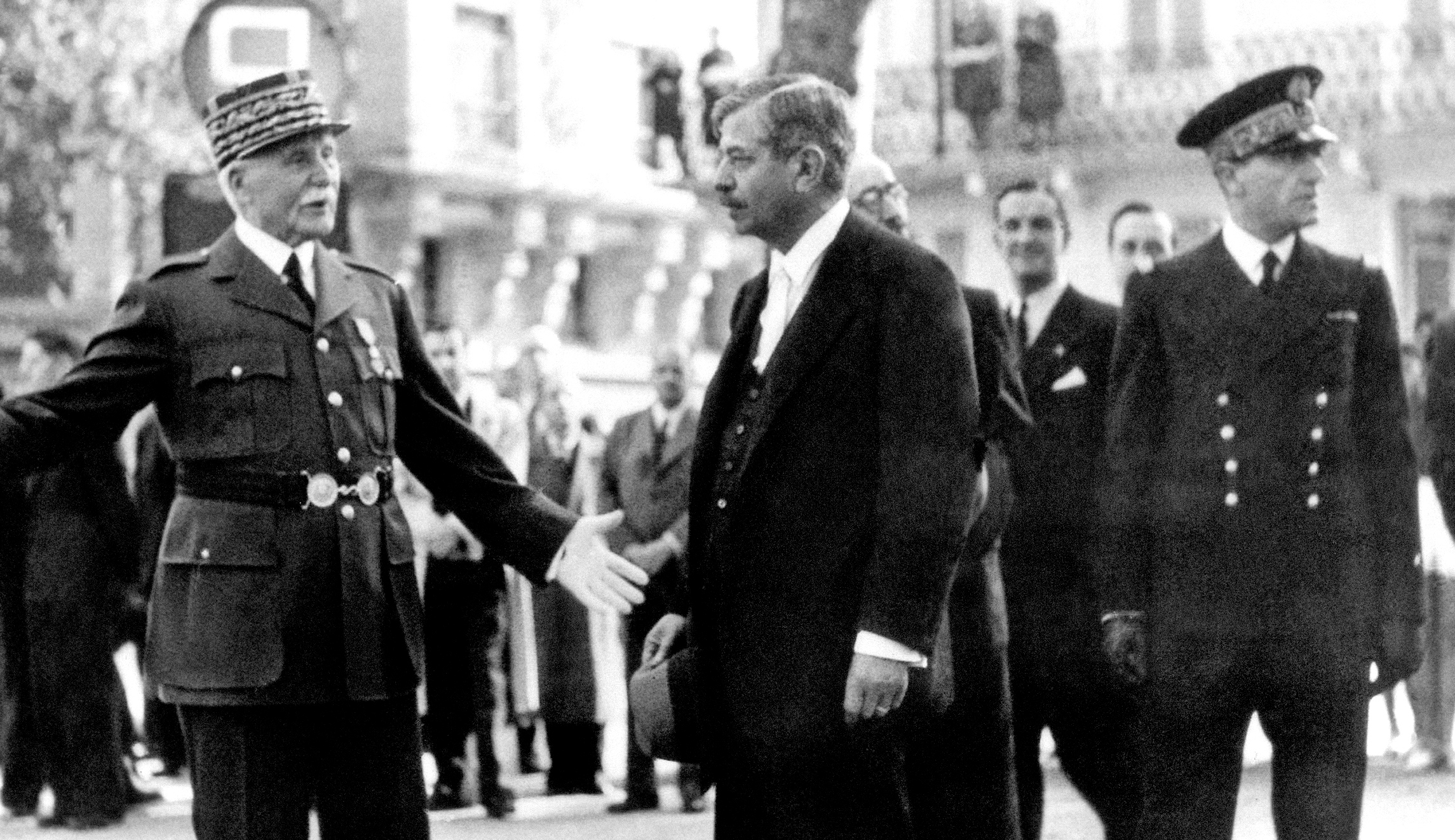
“Treason,” the Napoleonic-era diplomat Talleyrand famously remarked, “is merely a matter of dates.” Yet it is really about so much more, as Charles de Gaulle biographer Julian Jackson illustrates in his new book, France on Trial: The Case of Marshal Pétain. Jackson deftly uses the trial of the French World War I hero-turned-Nazi collaborator Philippe Pétain to explore France’s role in World War II and the Holocaust, as well as the nation’s struggles with memory and responsibility.

In October 1940, following a sharp and painful defeat to the Nazi Wehrmacht over the summer, Pétain shook the hand of Adolf Hitler. A famed military hero of World War I, the 84-year-old Pétain had been installed as the head of the Vichy state, the collaborationist regime the Nazis had created. The two-hour meeting was “inconclusive,” Jackson notes, but its “symbolic impact was incalculable.” To help his countrymen navigate the new set of circumstances, Pétain was offering “the gift of his person.” Humility was not among his faults.
Stay informed.Stay ahead.
Join Washington Examiner for unlimited access to the news, analysis, and commentary that matter most.
Already a member? Log in
