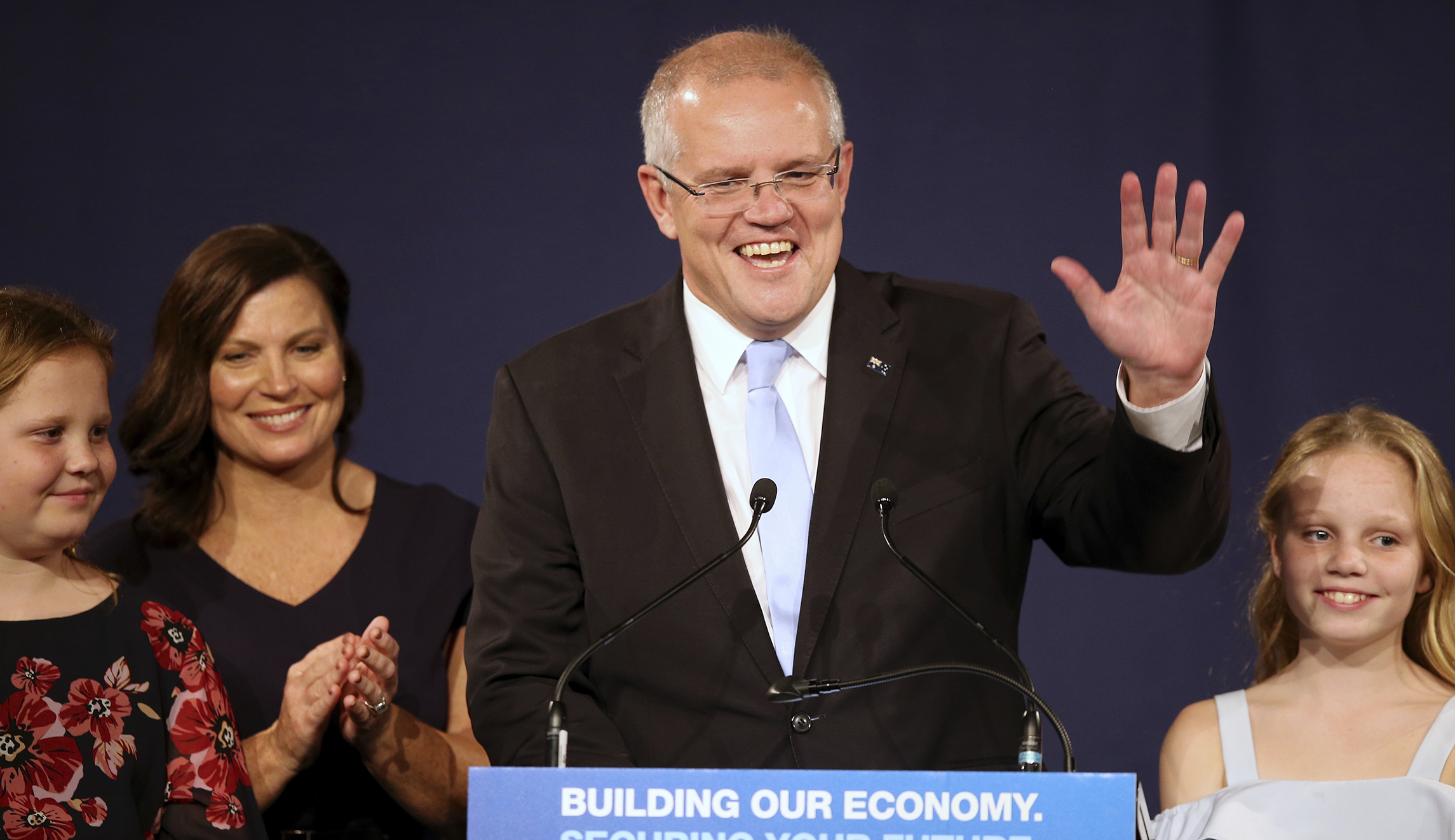
The shock reelection of Australian Prime Minister Scott Morrison’s Liberal-National coalition is good news. Morrison is a strong U.S. ally against Chinese imperialism in the Indo-Pacific region.
The same cannot be said of the man who was expected to triumph over Morrison. Now-former Labor leader Bill Shorten had pledged to build closer ties with China in return for Beijing’s economic investment. Shorten had also suggested his amenability to China’s price tag for that investment: degrading Australia’s close military relationship with America.
Recommended Stories
In contrast, Morrison has presided over significant increases in Australian defense spending and increasingly overt support for U.S. international order. Escalating joint military activity and exceptionally close intelligence coordination means that the U.S.-Australian alliance has rarely been stronger.
But this isn’t about Morrison being some U.S. puppet. There’s a mutual interest here. Recognizing endemic Chinese interference in Australian politics, Morrison has realized China is no friend. Instead, he’s doubled down on that nation which has guaranteed Australia’s survival and prosperity for over 70 years — America.
This has infuriated the Chinese government, which had expected Australia to become a supplicant minion under Labor. In turn, China is taking increasingly aggressive action to pressure Morrison to change course. China thought Shorten’s win would offer its ace card.
Bad luck. Instead, Morrison will continue supporting the broader architecture of U.S.-led security. He knows that shared democratic values and free trade are in the interest of all nations in the region — except, that is, China.

