

President Biden’s national security team recognizes that the political landscape of the Middle East has been radically altered since the Obama administration left office. Talk of an “Obama-redux” foreign policy is simplistic.
Instead, let’s take a look at the Middle East playing field as it actually stands in 2021. There are positives. The Abraham Accords between Israel, the United Arab Emirates, and Bahrain seem to be enduring. Though, in my view, these deals were essentially bought by the Trump administration with high-tech weapon sales to several Arab states fearful of Iran. Don’t get me wrong, that’s OK. Despite the raw transactional nature of these deals, peace and diplomatic advancements are far more often preferable to wars and shadow wars. The evolving Israel-UAE relationship is one to watch, given the potential for future economic cooperation between the two sides, particularly in the technology sector. Reports of an Israeli tourist boom in the UAE are also quite encouraging.
Recommended Stories


Yet the regional picture isn’t all rosy.
Iran is far closer to a nuclear weapon despite, or perhaps thanks to, the Trump administration’s maximum pressure campaign. Israel is also led by a right-wing government that continues to oppress the Palestinians. Prime Minister Benjamin Netanyahu quite spectacularly chose the wrong horse in aggressively supporting former President Donald Trump’s reelection. He will now suffer slow-drip retaliation by the Biden team, regardless of what is said about Biden and Netanyahu’s long-standing ties.
We face a Saudi regime led by Crown Prince Mohammed bin Salman, an impulsive neophyte who also backed the losing side in the United States election. Salman has now rightly been humiliated by Biden with the release of a CIA assessment regarding his likely complicity in the grotesque killing of Washington Post commentator Jamal Khashoggi.
Throw in the biblical-scale human suffering in Yemen and Syria, continued political dysfunction in Lebanon, an Iraq that is dominated by Iran despite all the American blood that has been shed there, and it’s clear that the Biden administration faces enormous challenges.
Given the headaches noted above, I offer five rhetorical questions that might help redefine how we look at the Middle East in 2021.
Which U.S. ally has not killed its own dissidents, including an American citizen, with hit squads? Which country does not adopt apartheid-like policies to subjugate an entire people, undermining its moral status as a vibrant democracy and a land of refuge for an entire religion? Which country has not blatantly sided with one or the other political candidate in a U.S. presidential election? Which country does not hire former U.S. national security officials to spy on its own citizens and neighbors alike? Finally, which country does not transfer U.S. technology to the Chinese military?
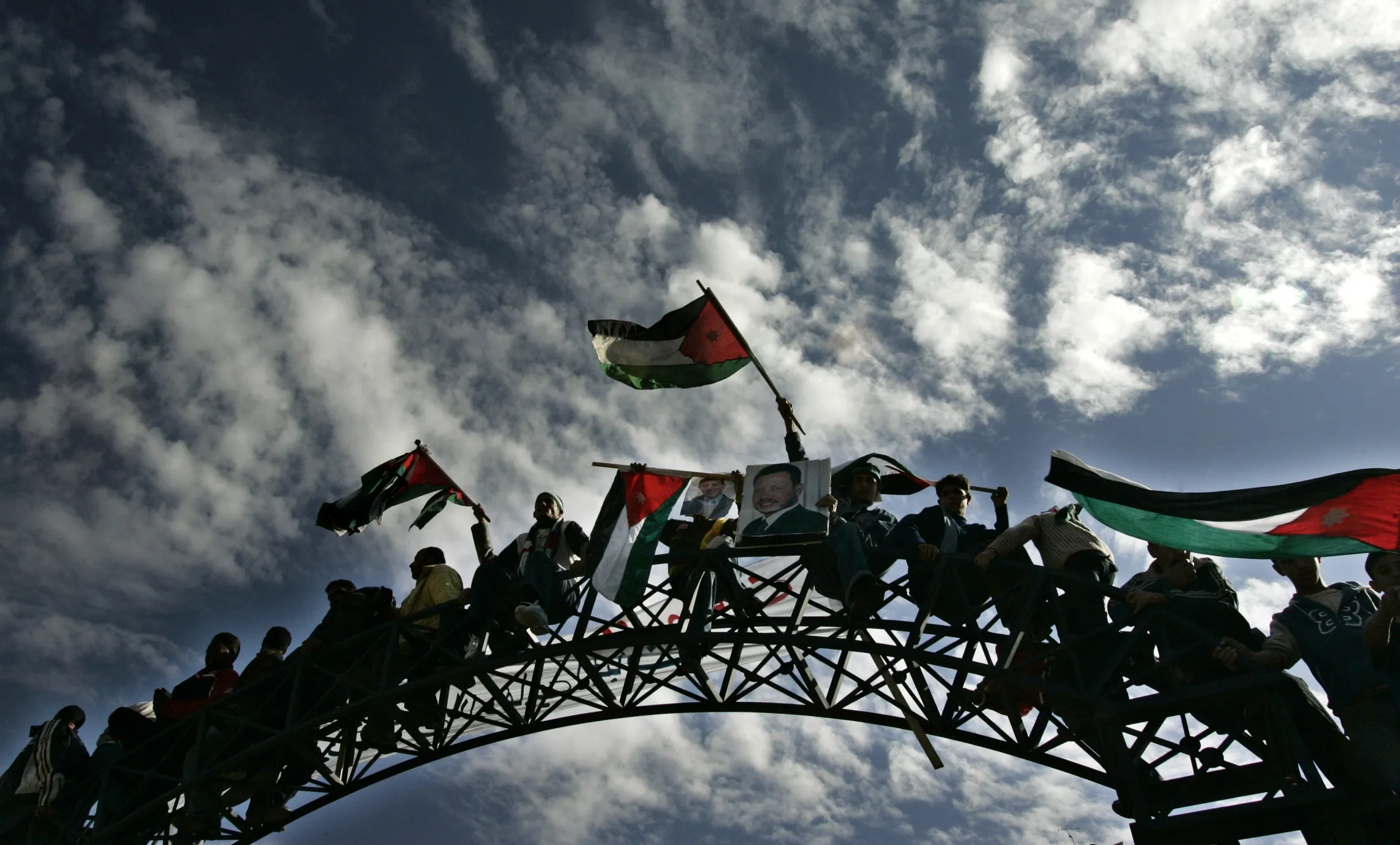
The answer is quite clear: the Hashemite Kingdom of Jordan.
I am not agnostic toward Jordan, having spent much time there during my U.S. government career. This was many moons ago, yet several fundamental truths remain true when it comes to Jordan and its ruler, King Abdullah. Jordan has been and remains an indispensable and reliable ally. Abdullah’s father, King Hussain, was a titan of regional power politics. It was he who, in the 1950s, recognized the need to partner with the U.S. Similar to his father, Abdullah is a critical thinker who cares about the Jordanian people but also retains a worldly view. He is now just as comfortable sitting in a Bedouin tent in Wadi Rum as he is on the stage at the World Economic Forum in Davos. Fortuitously, I was in Jordan on the day that Abdullah ascended to the throne. I have also seen him console the families of U.S. officials killed in the line of duty. There is an Arabic proverb that states that “friends are born, not made.” Abdullah did not evolve into a U.S. ally. He was born into this relationship. That truth carries special significance in the Middle East.
Unfortunately, Jordan was often overlooked by the Trump administration. It is not a major energy producer, nor is it a global financial hub. Jordan was not a sexy destination for the Trump team: It has no Buddha Bar to visit and no indoor ski slope to take photos on. Yet our over-reliance on the Gulf Arab bloc led by Saudi Arabia, and yes, even sometimes Israel, has led us to forget one of our ablest partners. We used to call Jordan the “lily pad” of the Middle East for good reason. Jordan was our de facto aircraft carrier to cover trouble spots in the military and intelligence worlds. In 2006, for example, Jordan played a key role in the highly successful U.S.-led “Anbar Awakening,” rallying Sunni tribes against al Qaeda in western Iraq. The U.S. military retains access to several strategically important Jordanian air bases, and the partnership between our special operations communities runs deep. Jordan participated in the coalition fighting al Qaeda and the Taliban in Afghanistan and against the Islamic State in Iraq and Syria. I knew some of the commanders of these units. They led outstanding soldiers who served courageously alongside our own.
There’s more.
As an intelligence officer, I saw my Jordanian counterparts akin to a Five Eyes partner, the closest U.S. intelligence-service allies of Australia, the United Kingdom, Canada, and New Zealand. People sleep more soundly at night due to the Herculean efforts of the Jordanian General Intelligence Directorate. The GID has lost many officers and agents in its struggle to save Americans and other innocent lives. I used to visit a senior Jordanian security officer whose ritual was to provide all his U.S. counterparts with coffee and cookies. He did this for legions of U.S. officials who came through his doors. His kindness was legendary, a gesture not only of a partner but of a true friend and brother. He was a wonderful man, and he later rose to be a chief of one of Jordan’s intelligence services. Many other Americans have similar stories of the warmth, generosity, and fierce determination of their Jordanian security counterparts. I served proudly alongside Jordanian intelligence, and I learned as much from them about counterterrorism operations as they did from me.
We must remind ourselves of this reality.
Since the start of the Syrian civil war in 2011, Abdullah has shown great compassion in allowing a massive influx of refugees to enter Jordan. More than 650,000 Syrians now make up approximately 5% to 10% of the Jordanian population. For a country that is not rich in natural resources, the Syrian refugee crisis has taken a heavy toll, placing tremendous pressure on the country’s overstretched resources during a difficult economic period. This sacrifice should not be lost on Biden, let alone the wealthier regional Sunni powers that have avoided a refugee crisis arriving on their doorsteps.
If Biden is serious about serving American interests in the Middle East, he should work with and support Jordan more closely. Amman is an ally that comes without the heavy baggage our other regional allies carry in spades. Throw in CIA Director-nominee William Burns, who was a former U.S. ambassador to Jordan and has a deep understanding of the relationship, and our lily pad of the Middle East may very well be back.
Marc Polymeropoulos is a former CIA senior operations officer. He retired in 2019 after a 26-year career serving in the Near East and South Asia. His book Clarity in Crisis: Leadership Lessons from the CIA will be published in June 2021 by Harper Collins.
