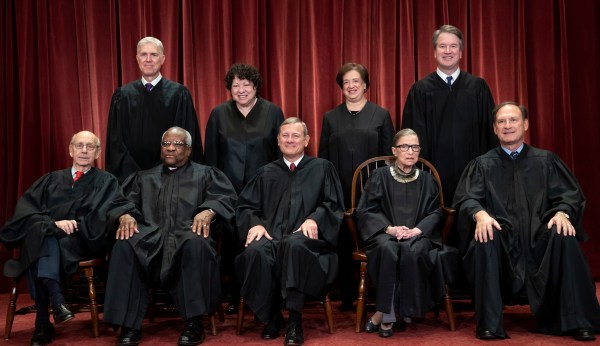
The confirmation process in today’s Senate is a dull affair. With few exceptions, Republicans and Democrats alike do not see it as an opportunity to offer meaningful advice and consent. Senators from both political parties instead see it as an opportunity to rationalize a decision they have already made to support a particular nominee. The result is that a president’s partisan allies in the Senate back his nominees unquestioningly while his opponents look for reasons to oppose them.
This dynamic is evident in the Senate’s present consideration of Amy Coney Barrett to serve on the Supreme Court. The Senate Judiciary Committee completed its review of Barrett’s nomination after two anti-climactic days of questioning. While the committee will not vote on whether to advance Barrett to the full Senate until next week according to its rules, the outcome of that vote is not in doubt among senators. Even before the hearings began, the top Republican on the committee, Sen. Lindsey Graham of South Carolina, asserted that senators will support or oppose Barrett based on their partisan affiliation. And Democrats are predictably condemning the process as a “sham” because of Barrett’s skill at dodging their loaded questions.