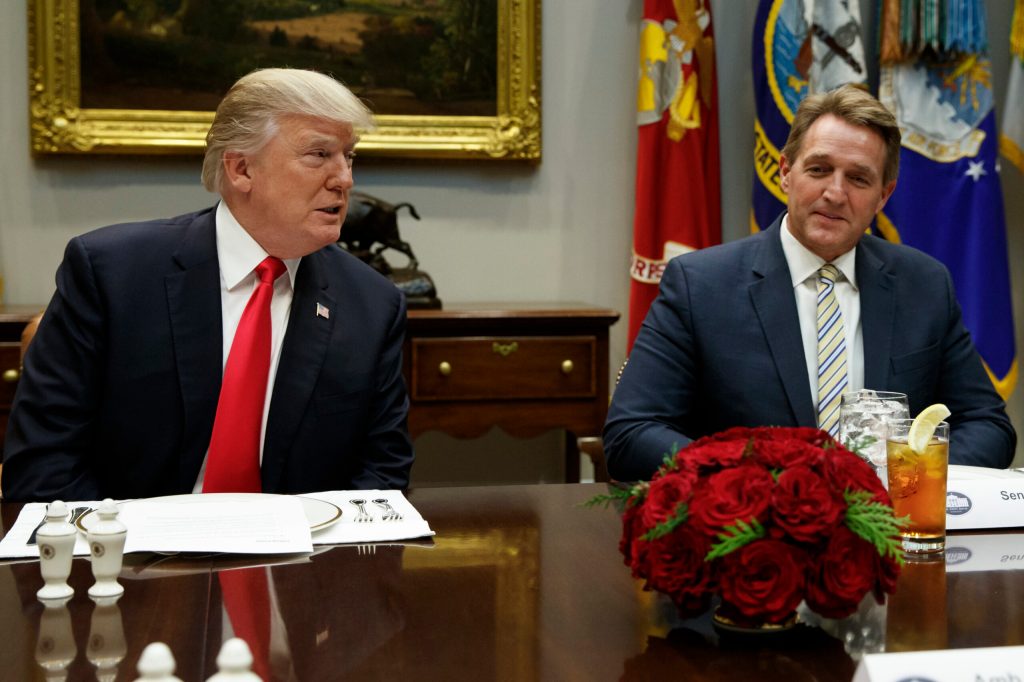
Last month, in a speech to the National Press Club, Sen. Jeff Flake made a charge that has become common among disillusioned Republicans: Donald Trump is corrupting “true conservatism” with his authoritarian style, neo-isolationist foreign policy, lack of fiscal discipline, and opposition to free trade.
What Sen. Flake and other “Never-Trumpers” fail to realize is that Trumpism is only the latest mutation in a long history of conservative evolution that goes back to the early 20th century. As liberalism settled into its New Deal incarnation in the 1930s, the conservative movement arose to challenge it. The primary goal of the leading conservatives of the era, such as Ayn Rand, Albert Jay Nock, H.L. Mencken, Max Eastman, and Rose Wilder Lane, was to roll back President Franklin Roosevelt’s expansion of government power. Conservatism of the time was defined not by religiosity, nationalism, or foreign policy hawkishness, but by one overriding concern: protecting individual liberty from the encroaching state.