

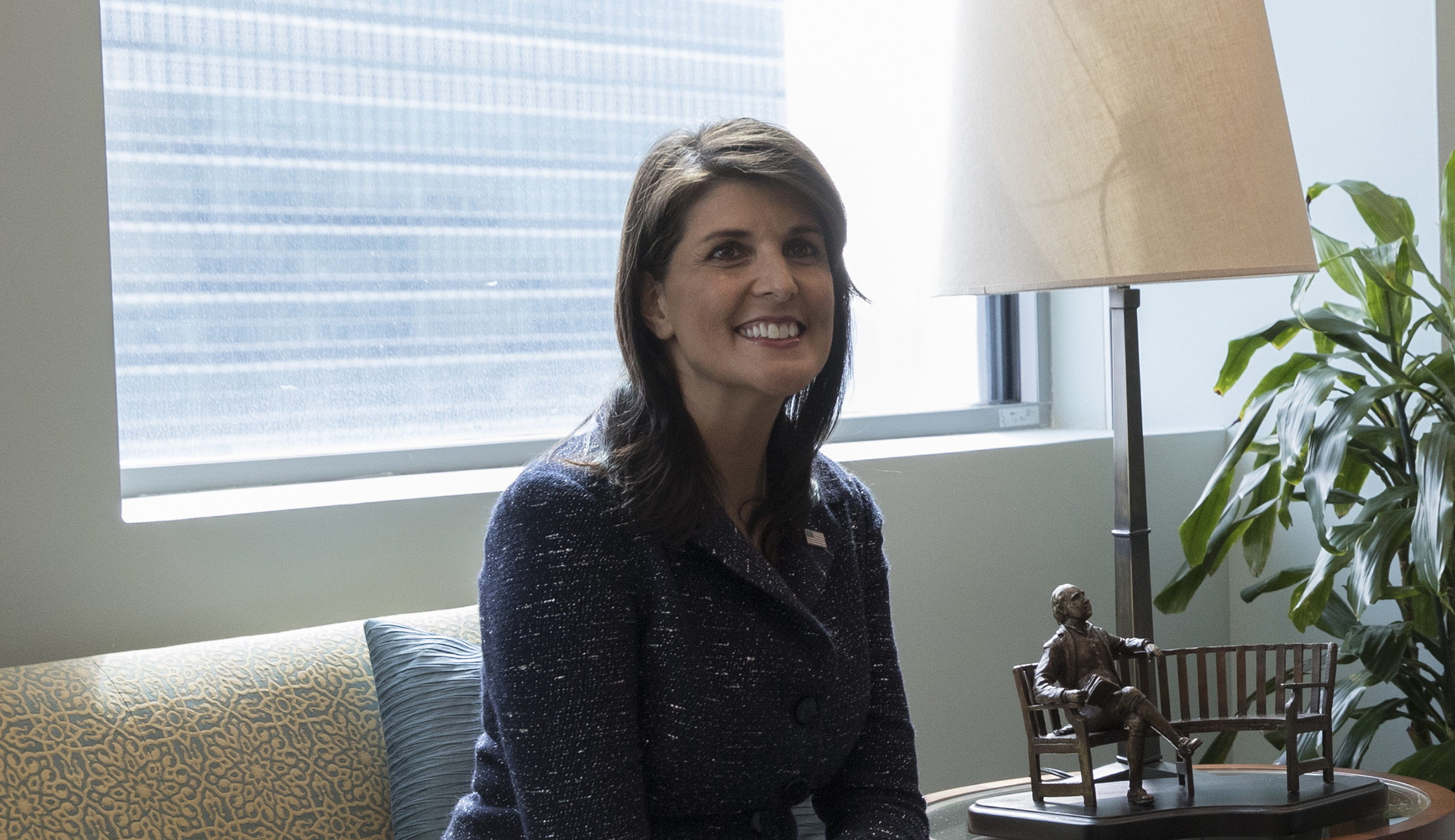
U.S. Ambassador to the United Nations Nikki Haley was hopping mad in the U.N. Security Council chamber last week. Addressing her colleagues on the topic of Syria and the ongoing Assad government bombardment of the Eastern Ghouta enclave, she pointed the finger at Russia for failing to enforce a 30-day humanitarian cease-fire that Moscow had voted for weeks earlier. She concluded with an ominous message: “When the international community consistently fails to act,” Haley remarked, “there are times when states are compelled to take their own action.” In case one believed Haley was an outlier, Secretary of State nominee Mike Pompeo shares a similarly hawkish inclination on the Assad problem, having lobbied for a more extensive air campaign against the Syrian regime in 2013.
While the ambassador did not specify what she meant by “action,” the use of military force against the Syrian government is likely at the top of her list. This is beyond unfortunate, because U.S. military action would be both an unconstitutional use of force and a military operation guided by a humanitarian impulse rather than a sober analysis of U.S. interests. And it ignores the reality on the ground, which is far more intractable than interventionists make it out to be.
Stay informed.Stay ahead.
Join Washington Examiner for unlimited access to the news, analysis, and commentary that matter most.
Already a member? Log in
