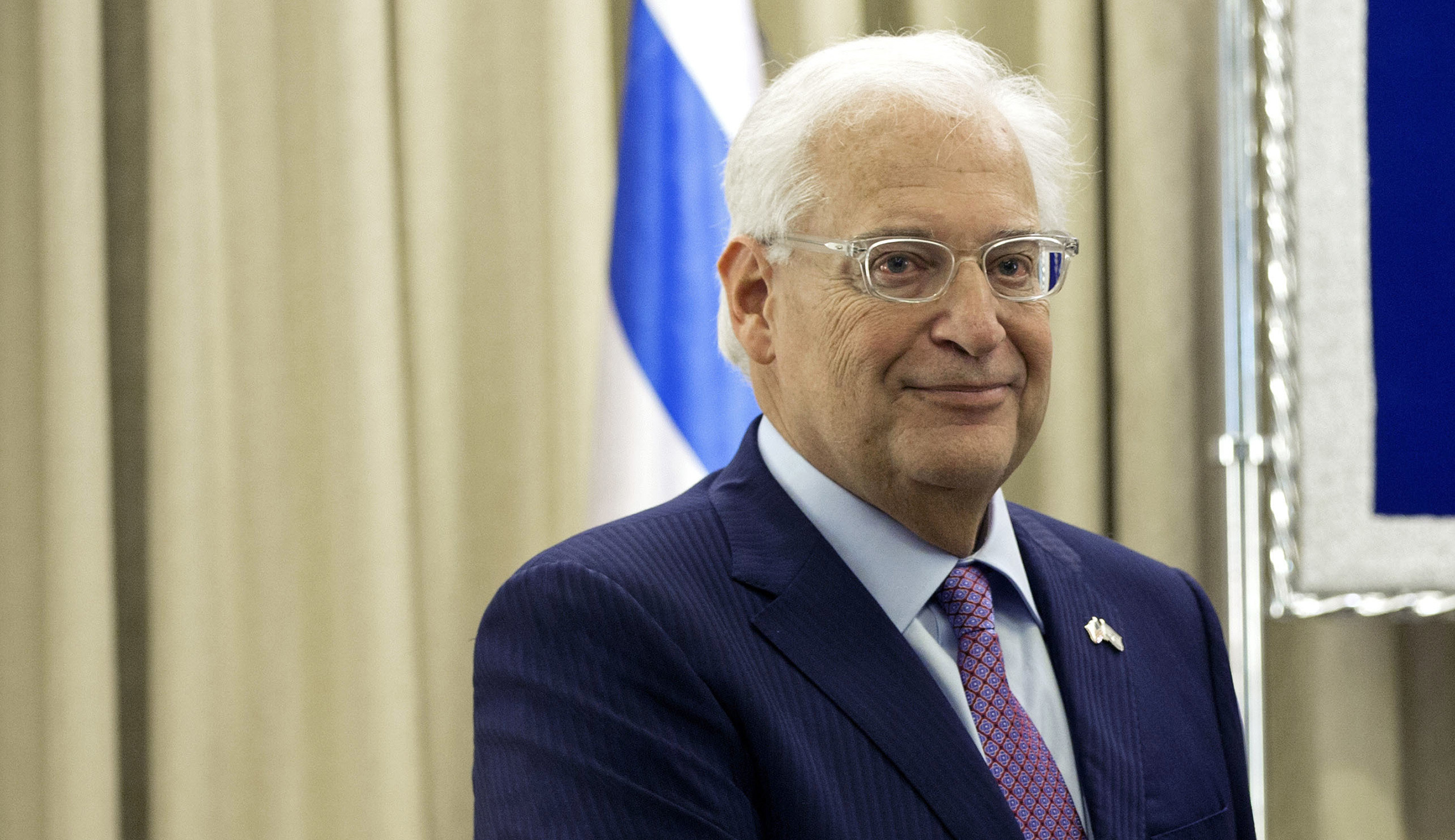
Ambassador David Friedman is right, journalists should do research before condemning Israeli security forces

Published June 5, 2018 1:43pm ET


He might be a hardliner (I disagree with his support for Israeli settlement construction in the West Bank), but U.S. Ambassador to Israel David Friedman is right about one thing: too many journalists too easily and unfairly criticize Israeli security forces in their dealings with Palestinian protests.

As the Times of Israel reports, Friedman told an Israeli media conference that “it would seem to me that in a journalistic environment where nine out of ten articles that are written about the Gaza conflict are critical of Israel, you’d think that some journalists would take the time and go and meet with experts and try to understand what could have been done differently or better before they criticize. And I just haven’t seen it.”

Friedman is right.

While the history of western reporting towards Israel and the Palestinians has been heavily deferential towards the latter, this has been most outrageous in relation to the recent exchange of violence between the Palestinian protesters and Israeli soldiers along the Israel-Gaza border. While the tactical realities of that situation demanded the basic form of Israeli response which followed, most media coverage painted Israel’s response as that of a blood-crazed maniac. Or at best, the conduct of a callous oppressor.

Don’t get me wrong, this doesn’t mean that Israel is always the victim in relation to the Israeli-Palestinian conflict. That is not so. Yet the media has a responsibility to tell the truth and in covering the recent protests, the majority of journalists failed to live up to that solemn responsibility. Alongside ignorance of the tactical realities of what Israeli soldiers were facing, the media failed to cover Hamas and the Palestinian Islamic Jihad’s deliberate incitement, direction and use of the protests for violent ends.

It would be one thing if the misguided reporting was coming solely from opinion-analysis journalists like myself, but it was striking to see how many purportedly objective journalists jumped on the bandwagon of uninformed coverage. These prophets of Robert Fisk pageantry (a British journalist who is notorious for his fact-deficient, opinion-heavy Middle Eastern reporting) do themselves and their profession a disservice. More than that, they do a grave disservice to those who read or listen to their reports with a belief that what they will learn will be the truth.

Still, Friedman’s comments were also positive for one final reason. Because the ambassador wasn’t entirely anti-media in his observations. In a thinly veiled push back to President Trump’s demand for changes to U.S. libel laws that would weaken the First Amendment, Friedman remarked that “We don’t have a democracy without a free press. It’s simply impossible to do that, criticism is fair game. It’s what I would expect and what I appreciate.”

Trump might learn from his ambassador here. A politician need not embrace authoritarian bluster in order to challenge the media to do its job better.
