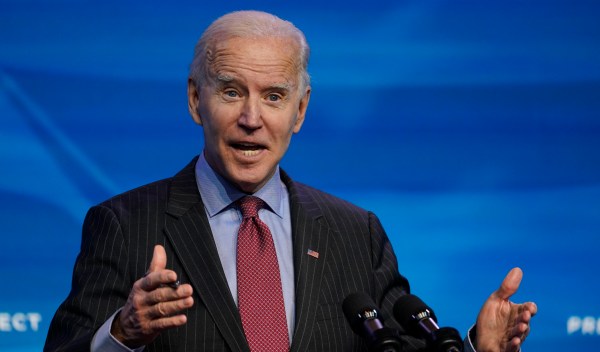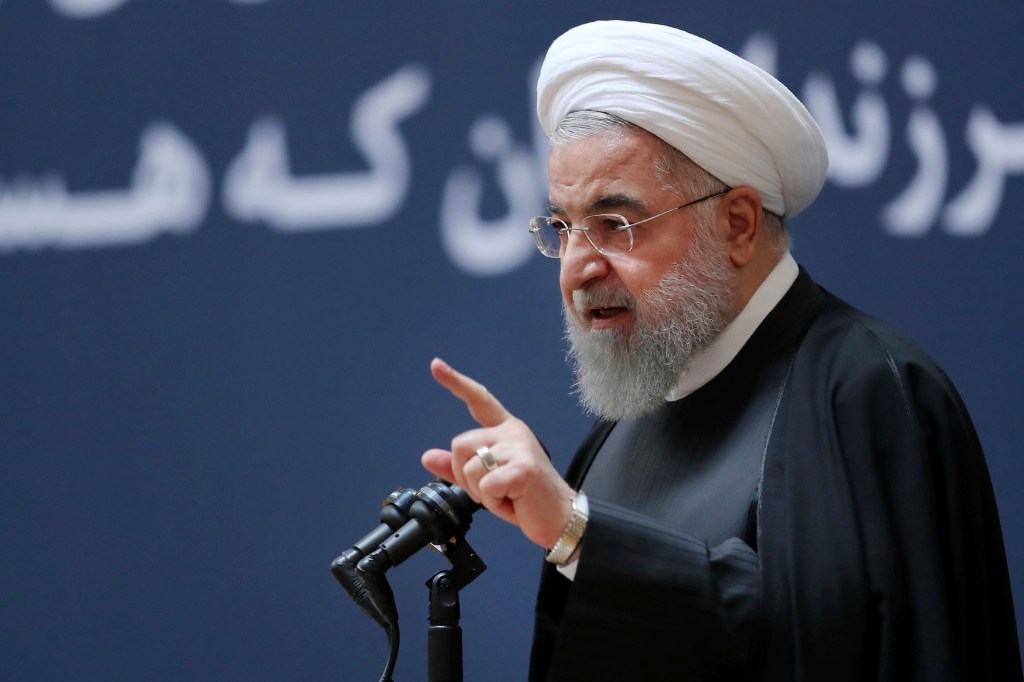
This week’s news that Iran has amassed a huge stockpile of enriched uranium beyond the limits it agreed to makes it all the more absurd that President-elect Joe Biden wishes to return the United States to the disastrous Iran nuclear deal.
The truth is that thanks to the Trump administration’s “maximum pressure” campaign, Iran is much weaker today than it was when the nuclear accord was enacted. Refusing to engage in talks toward a more robust agreement, Iran has suffered crippling sanctions. These restrictions have depleted Tehran’s ability to fund terrorist groups such as its Islamic Revolutionary Guard Corps, the Lebanese Hezbollah, and the Kata’ib Hezbollah in Iraq. The peoples of Syria, Iraq, Lebanon, and the Sunni-Arab monarchies have benefited most from this restraint. As an extension, Iran now faces a short-term choice between sanctions relief and the growing possibility of regime collapse. Domestic economic pressures have fueled the young Iranian population’s desire for a better, freer future. Unless Iran’s theocratic elite can give their people a respite, their people may well give them a revolutionary riposte. For all their hectoring rhetoric, Iran’s leaders are aware that they have a big problem.