

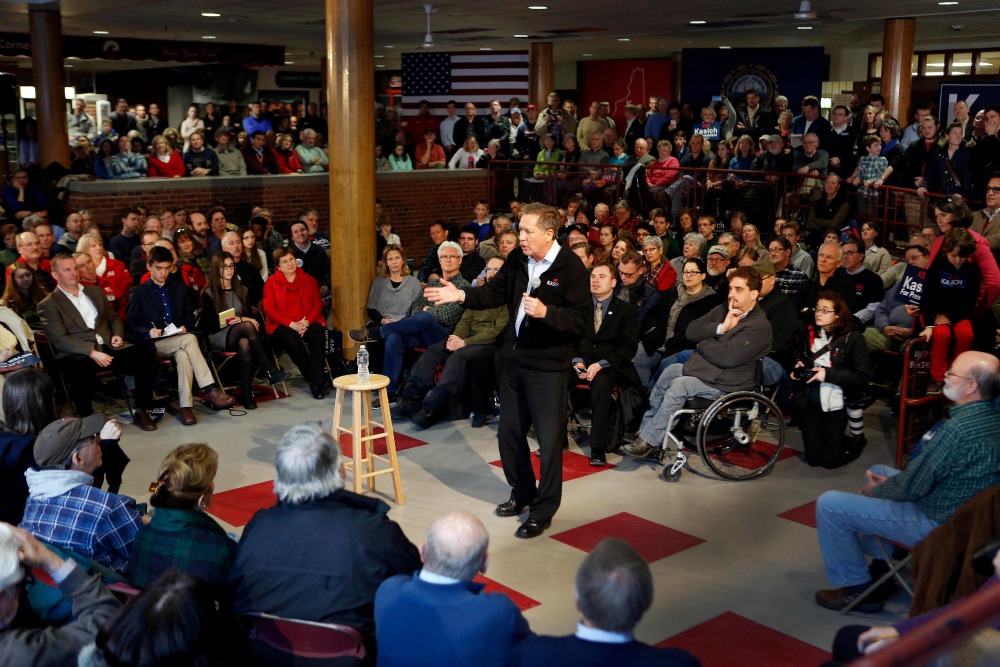
MANCHESTER, N.H. – With a vacuum of hard information before results come in for Tuesday’s presidential primary, the focus of political coverage is increasingly focused on crowd sizes. Reporters tweet out photos of “overflow crowds” and campaigns are eager to spread them. I myself caused a bit of a stir on Twitter Sunday just by observing from a Marco Rubio event in Bedford that it appeared less crowded than one Jeb Bush held at the same location the day before. But it’s important for readers to take all such reports about crowd sizes with a grain of salt, for three basic reasons.
1) Many venues are small
Recommended Stories


Especially in the days of Twitter and ubiquitous camera phones, campaigns know that reporters are going to highlight crowd sizes and notice empty chairs. So, they tend to err on the side of scheduling events at smaller venues. They’d much rather have tweets about the long line to get in, people crammed in the back, late arrivals being turned away, then to have a large venue with plenty of room for all comers. A lot of the venues that events are held in — such as middle school gyms, barns or restaurants — aren’t that big.
Campaigns can also arrange the room so that it appears more cramped. For instance, putting down more chairs is an easier way to make the room fill up faster then allowing for more standing room, as standing tends to take up less space. There are of course exceptions. Monday night, for instance, Donald Trump is holding a rally at the Verizon Wireless Arena, which has a capacity of nearly 12,000. Should that overflow, it would be an impressive display of strength heading into Tuesday’s voting.
2) Media takes up space
At every campaign stop, the media take up a lot of room. Platforms have to be constructed for all the camera operators to set up and there are typically rows of tables for print journalists, and photographers also have to be there. The more press at an event, the more space media take up at appearances. And here, too, campaigns have room to game it — for instance, if they’re running low on RSVPs, they can allocate more space to the media section.
3) Political tourism
Given the opportunity to see so many presidential candidates up close, New Hampshire attracts a ton of political tourists this time of year. In events I’ve attended in the past few days alone, I’ve spoken to or heard questions asked by people from Maryland, Massachusetts, Connecticut, New York, Texas, Florida and even Denmark. As a reporter trying to get reactions from voters at events, it isn’t uncommon to have to speak with several people before finding an actual New Hampshire voter.
