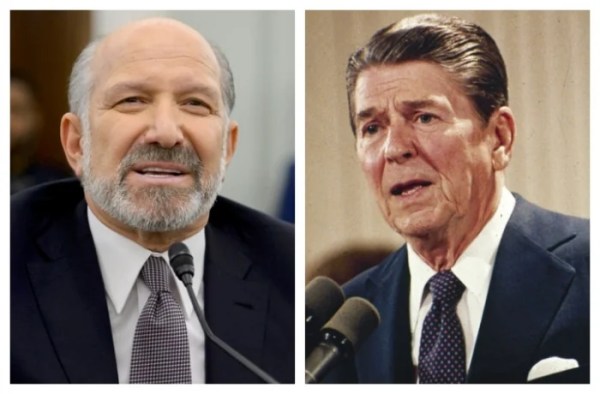
The Great Communicator was also a terrific compromiser. What made him so terrific was that he knew the difference between compromising one’s deeply held principles (don’t!) and compromising to achieve significant incremental advancement of those principles (yes, do it!).
Those are the key lessons from the latest in a masterful series of books on former President Ronald Reagan by public affairs ace-turned-historian Craig Shirley. In the case of The Search for Reagan, released just a month ago, the subtitle tells the story: The Appealing Intellectual Conservatism of Ronald Reagan. Crucially, what many so-called conservatives today fail to grasp is that a willingness to reach constructive compromise was a key facet of Reagan’s deeply thought “intellectual conservatism.” In sum, constructive compromise is built into, rather than being an abandonment of, the Reaganite principles that conserve the U.S. tradition that Reagan called a “maximum of individual freedom consistent with law and order.”