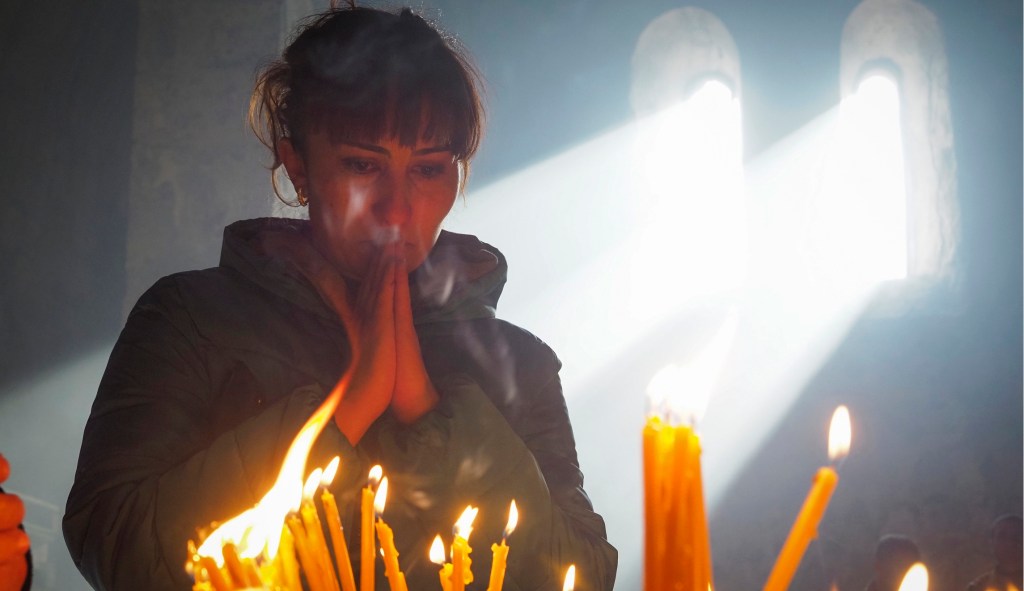
STEPANAKERT, NAGORNO-KARABAKH — Azerbaijanis celebrated the recapture of Shusha, a cliff-top town revered by both Azeris and Armenians, shortly before a Russia-imposed ceasefire in the war over this disputed territory. Shusha is less than five miles from Stepanakert, the capital of Nagorno-Karabakh’s self-declared independent Republic of Artsakh. Many refugees from the Shusha fighting now search for shelter within sight of a town whose homes had been in their family for generations. While Azerbaijani leader Ilham Aliyev has said ethnic Armenians can remain as residents of Azerbaijan, the actions of his forces and those of the Syrian militiamen who support them tell a different story: They have tortured and mutilated prisoners, both military and civilian, and posted videos of gruesome, Islamic State-style beheadings on social media platforms such as Telegram.
Azeris may justify their actions in Armenian attacks on Azeri villages in previous Nagorno-Karabakh wars and the fact that many Azeris had fled towns such as Shusha when they fell under complete Armenian control more than a quarter-century ago. Without moral equivalence, the reality is that both Azeris and Armenians have narratives that are often diametrically opposed, and both can point to abuses perpetrated by the other side. There is a darker reality that while Armenians often refer to Azeris as adversaries, Aliyev has incited his population to despise Armenians in the crudest ethnic and religious terms. The fact that Azeris, or the forces they fought alongside, now behead Armenians while chanting “Allahu Akbar” is not a spontaneous development.