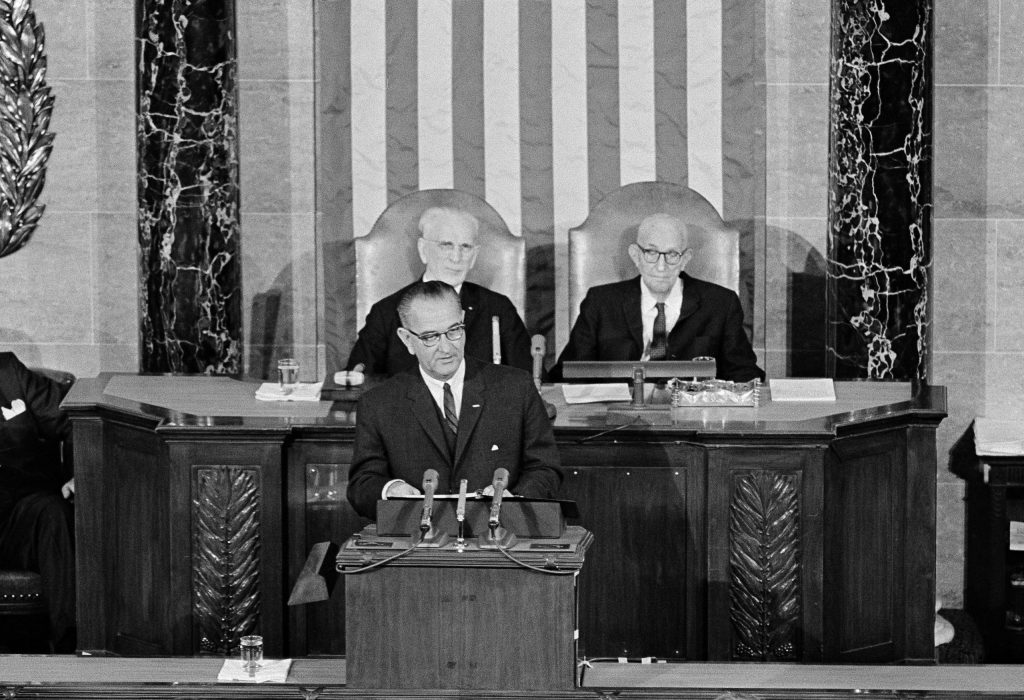
Fifty years ago today, President Lyndon B. Johnson addressed Congress in his first State of the Union Address in the wake of the assassination of John F. Kennedy. “This administration today, here and now, declares unconditional war on poverty in America,” Johnson said. “I urge this Congress and all Americans to join with me in that effort.”
By the time Johnson left office in 1969, Congress had passed a raft of anti-poverty legislation, including the Economic Opportunity Act, Medicaid and the food stamp program. The effort has been at the heart of one of the critical public policy debates since World War II. In pure statistical terms, the poverty rate, which was 19 percent in 1964 when LBJ declared war, according to Census Bureau data, had declined to 12.8 percent by 1968, the final year of his presidency.