
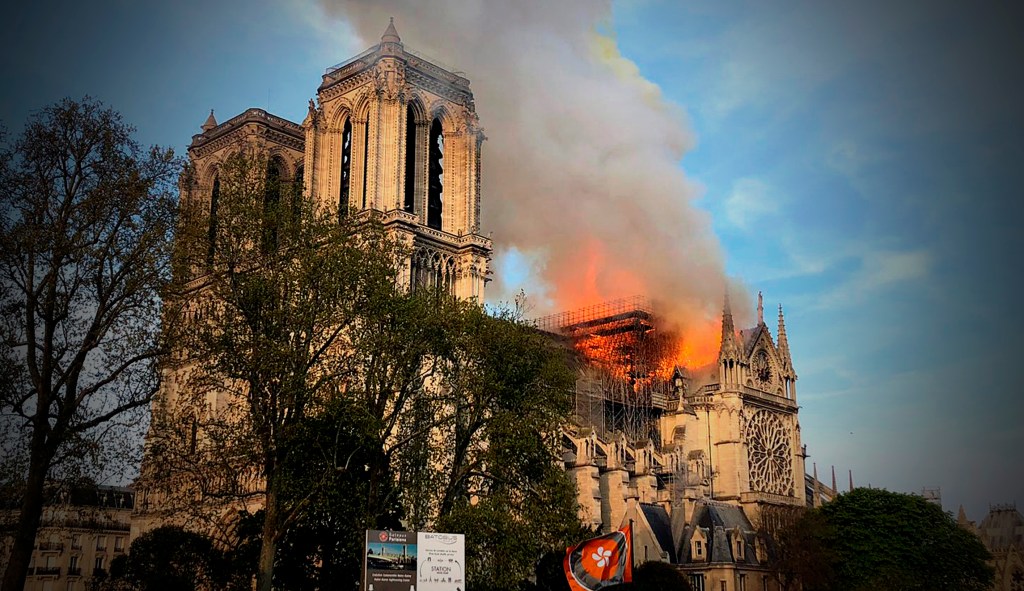
On April 15, the anniversary of the death of Abraham Lincoln, one of Western civilization’s great icons was nearly destroyed. A catastrophic fire broke out in the exquisite, centuries-old Notre Dame Cathedral in Paris. The medieval roof and 19th century spire were destroyed, and the vast interior was flooded by water from the Seine used to fight the flames. Had the fire been allowed to blaze for just a few minutes longer, the bell towers and much of the rest of the exterior might have been lost.
Parisians thronged the quays to watch, joined by millions of television viewers around the world. The crowds were mostly silent; some softly sang “Ave Maria.” All were transfixed by a spectacle both horrifying and oddly compelling. Sorrow was naturally the dominant emotion, but as day turned to night and the flames leaped high in the air in an incandescent display, fascination mingled with sadness as the work of centuries was undone within hours. The citizens of London were similarly enraptured when the Palace of Westminster burned down in 1834, a scene captured by eyewitness J.M.W. Turner in a dazzling pair of paintings. The sight of destruction at a safe distance inspires both fear and wonder.
Real journalism.Trusted by millions.
Unlimited access to in-depth reporting, expert analysis, and the stories that shape our country.
Already a member? Log in