

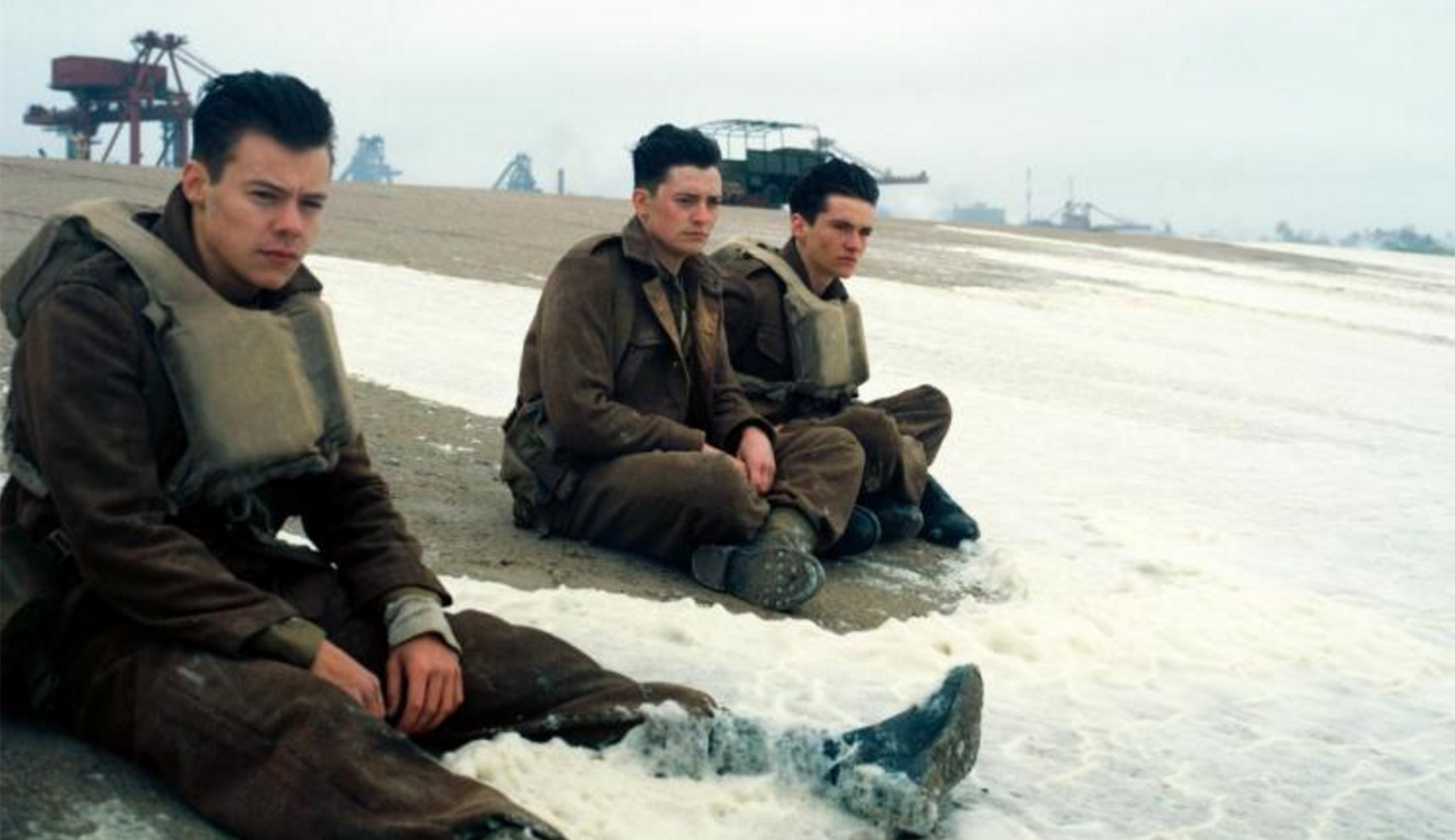
I finally saw “Dunkirk.” I’m no film critic, so I won’t offer much of that here. I do appreciate war movies more than chick flicks, and as such, found the bizarre reactions in the name of feminist pearl-clutching of the film silly at best, ignorant at worst. Modern feminism is such a weak movement now it couldn’t even critique a male-dominated film with much precision, let alone, remain stalwart in their own beliefs, in spite of such a movie.
While the evacuation of the shores of Dunkirk in real life must have surely been a miraculous event, “Dunkirk” the film depicting it seemed more dedicated to being artistically brilliant rather than a spot-on historical representation. I don’t care for the war films I see to be artistic renditions of historical events (just my personal taste), and “Dunkirk,” with its tension-filled score, visually-stunning cinematography, and little dialogue or character development fits more in the artistic category. What “Dunkirk” lacked in blood and guts it made up for in beautiful aerial shots; what it lacked in historical perspective and sequential clarity, it made up for in three narrative strands that took place over three different overlapping time periods, coalescing together, as one might predict, at the film’s conclusion.
Stay informed.Stay ahead.
Join Washington Examiner for unlimited access to the news, analysis, and commentary that matter most.
Already a member? Log in
