Abortion and the ownership of other human beings

By
Published January 11, 2020 5:00am ET


After her narrow escape to freedom, profiled in the recent film Harriet, Harriet Tubman bravely returns to the South to free her family. During the rescue, she is pursued by her former master’s son into a remote part of the forest. Then she gets the upper hand and turns her own shotgun on him. Tubman’s frustration with the lifetime of captivity that she bore at his family’s hands comes pouring down on him. She exhorts her former captor: “God don’t mean people to own people!”

The doctrine that one person can “own” another is completely contrary to the rights enumerated in the establishment of our nation. The Declaration of Independence says, “We hold these truths to be self-evident, that all men are created equal, that they are endowed by their Creator with certain unalienable Rights, that among these are Life, Liberty and the pursuit of Happiness.”

While we hold these principles in high esteem, tragically they did not apply to the slaves of the time. This sustained dissonance was not resolved until the Civil War.

Slavery has been gone for more than 150 years, but the idea of ownership of human beings still haunts our law. Roe v. Wade made abortion legal in all nine months of pregnancy, so that even as a child is developing in her mother’s belly, she has no rights in the eyes of the law. If she is unwanted, her life can be ended for any reason. Up to the point of birth, our legal precedents now give mothers as complete ownership over their children as masters had over their slaves.

Abortion enthusiasts often use terms of ownership to describe abortion, such as, “What women choose to do with their bodies,” or, “My body, my choice,” statements that are as maddeningly imprecise as they are inaccurate. We are not talking about a “choice” of sneakers or about putting one’s body on the treadmill or elliptical at the gym. Rather, such statements attempt to gloss over an incorrect, tacit assumption, that the baby is actually part of her mother’s body.

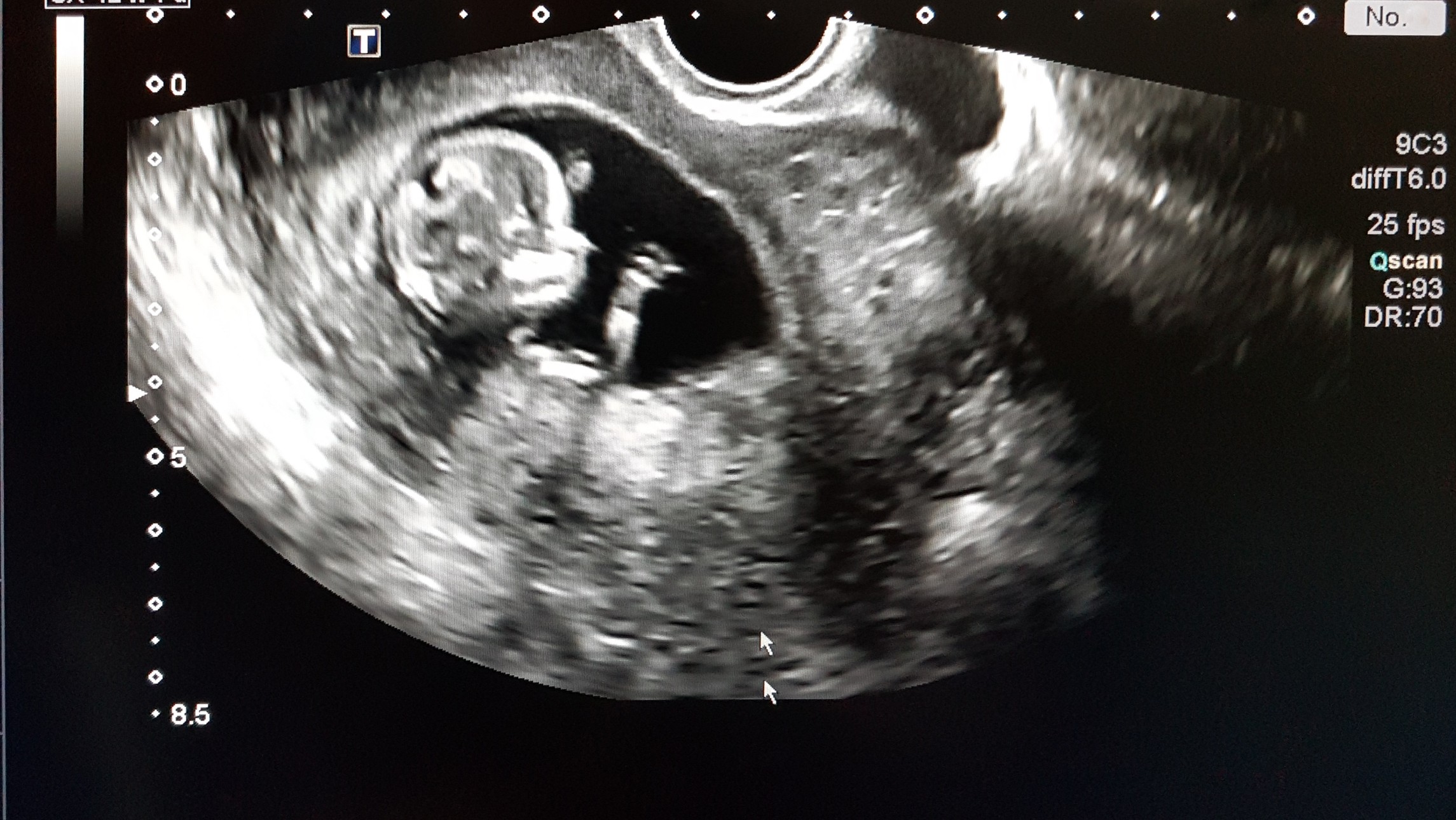
Basic science tells us that isn’t true. A baby in early development has her own heartbeat, her own body parts, and her own distinct DNA, to say nothing of the fact that this growing, human organism is destined for birth within nine months, if all goes well.

At what point does this distinct person deserve recognition? At the moment when the baby is born? When the baby’s movements can be felt by her mother? At the detection of her heartbeat in an ultrasound? Why not when another person results, namely, at the moment of conception?

Abortion absolutists contend that mothers own the lives of their children, from the moment they are conceived until the moment they are born, and perhaps beyond. Would Tubman exclaim in exasperation at this law, “God don’t mean people to own people?” She would be right to do so.

Mothers do not own the lives of their children, and neither do fathers. We do not even truly own ourselves. Life is a gift. It must be welcomed, nourished, respected, and protected within our communities and throughout our laws from the moment of its coming to be in conception until its natural fading away in death.

Evelyn H. Gardett writes for Americans United for Life.
