More on Obamacare’s legal troubles

Published March 28, 2012 4:00am ET


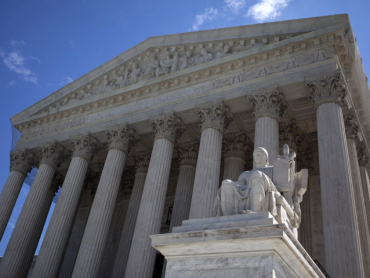
As I get ready to hear the third and final day of Supreme Court oral arguments this morning, I wanted to offer a few more thoughts on why President Obama’s health care mandate is in danger of being overturned.

To start, a lot of people have noted how poorly U.S. Solicitor General Donald Verrilli did arguing for the mandate and how masterfully Paul Clement performed in arguing against it on behalf of 26 states led by Florida. Mike Carvin, the lawyer for the National Federation of Indpendent Business, also challenging the law, was also quite good. But as somebody who has followed the case from the very beginning, it’s hard to overstate how well challengers of the law honed their argument as they moved it up the judicial food chain. By contrast, the Obama administration has been recycling the same arguments for years and didn’t up their game before the Supreme Court. And once justices pushed back against some of the administration’s core arguments, there wasn’t much left to fall back on. 

To review, the argument that this was justified under taxing power received a cool reception even from the court’s liberal justices. There may not be a single vote for the argument, so you can likely toss that aside. Going into yesterday’s session, a lot of so-called “experts” were convinced that justices would be bound by prior Commerce Clause cases. But even swing Justice Anthony Kennedy acknowledged the challengers argument that the law was unprecedented, saying “here the government is saying that the federal government has a duty to tell the individual citizen that it must act, and that is different from what we have in previous cases and that changes the relationship of the federal government to the individual in the very fundamental way.” (Emphasis mine.) So, all those arguments based on prior court decisions, such as Wickard (regulating a farmer and his wheat) or Raich (on medical marijuana)? You can toss them aside. To uphold the law, Kennedy would have to be willing to enter unchartered territory. Yet he expressed concerns about whether there could be a principle that would limit federal power if the mandate is upheld, suggesting that the government had a “heavy burden of justification” to prove the mandate was constitutional.

As I noted yesterday, Justices Antonin Scalia and Sam Alito sounded like strong votes to strike down the mandate and Chief Justice John Roberts seemed to be heavily leaning in that direction. Furthermore, it’s hard to see a scenario in which Kennedy votes strike down the mandate and Roberts is the tie-breaking vote to uphold the law. So ultimately, it comes down to Kennedy, and as we see above, he’s already rejected the arguments that the government felt were among its strongest. At other points during yesterday’s session, Kennedy seemed to have sympathy for the idea that courts may not want interfere with the means Congress uses to carry out certain functions and that somebody sitting at home without insurance is still an “actuarial reality.” So there’s a very real possibility that Kennedy can decide to uphold the law. But that said, it’s worth noting how far we’ve come. Some cocky liberals were predicting an easy, 8-1 decision to uphold the mandate, based on what they felt was clear prior precedent. Now, hopes for supporters of the health insurance mandate rest on much narrower grounds — whether Kennedy can concoct an ad hoc limiting principle in the next few months, something that the Obama administration has not been able to figure out in over two years.