

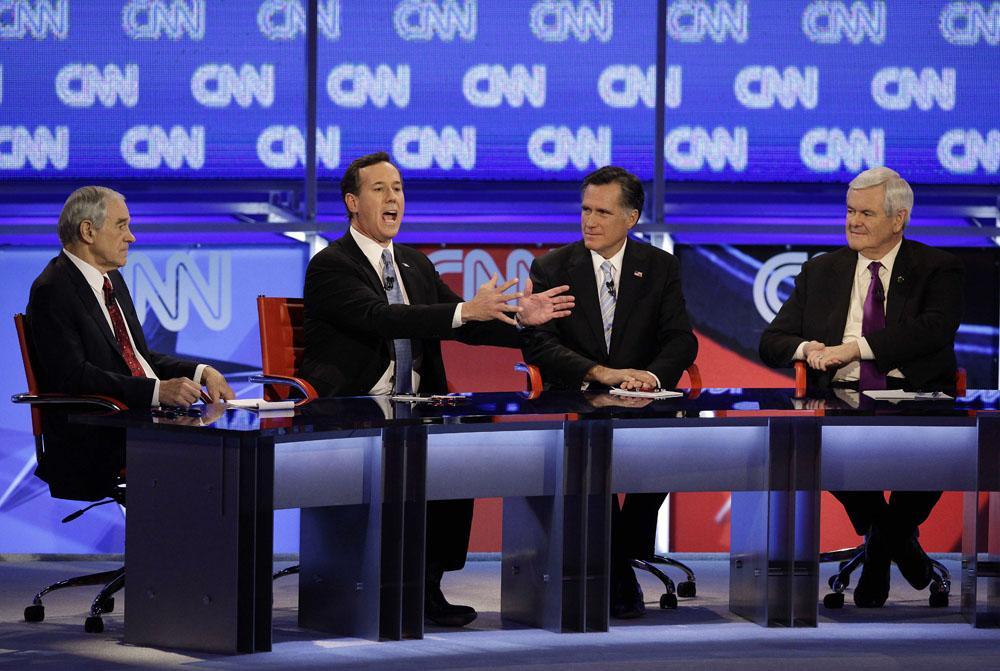
This was a debate full of surprises, at least for me. The first: CNN’s John King showed some forebearance in not leading off with a question to Rick Santorum on his statements on contraception and other cultural issues. Instead, we had an audience question on how to bring down the national debt. The second surprise was that when King did pose such a question, after the first break, Santorum gave a first-rate reply, declining to speak about his personal feelings about contraception, but instead focusing on the fact that 40% of children are now born out of wedlock, and citing the concern expressed about this fact by Charles Murray in his new book Coming Apart and by a New York Times reporter in a front page story—both of which matter of factly note the undeniable fact that children born out of wedlock and raised with a single parent tend to have huge disadvantages in life. Interestingly, Mitt Romney, who had responded before Santorum with a strong attack on Barack Obama for what he said was his attack on religious tolerance and conscience, was called on again and made a point of agreeing with Santorum. In my Examiner column today I argued that Santorum’s comments on cultural issues could hurt his candidacy; in his response he avoided the negative downside and made a good case for himself. But Romney also came off strongly from this interchange.
In some other interchanges, however, Mitt Romney seemed to have the upper hand. On the first questions on spending and earmarks, he found himself under attack from Romney and Ron Paul (who’s been running an ad calling Santorum a “fake” conservative) and failed, it seemed to me, to do much to undercut Romney’s claim to have been a fiscal conservative as governor of Massachusetts. Then there ensued a long back-and-forth on earmarks, in which Santorum made a good case that the Constitution encourages them and that Romney in his work on the Salt Lake City Olympics requested them—but which left Santorum defending a practice that today’s conservatives consider anathema. There followed an argument between Romney and Santorum on “bailouts.” Here Santorum had the advantage of the purist position, as an opponent of both TARP and the auto company bailouts, but Romney took advantage of the opportunity to make his case for managed bankruptcy for the Detroit auto companies and to tell Michigan Republican primary voters that the Obama administration had bailed out the United Auto Workers—a popular stand for Michigan Republicans.
Stay informed.Stay ahead.
Join Washington Examiner for unlimited access to the news, analysis, and commentary that matter most.
Already a member? Log in
