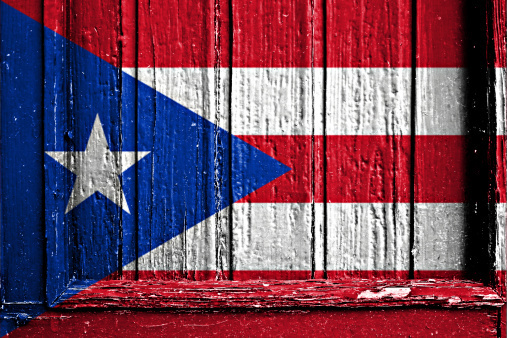
Standard & Poor’s has downgraded the debt of Puerto Rico‘s government to junk status, as Reuters’s Ryan McCarthy reports. That may be overdue: Puerto Rico’s debt has been trading at junk prices since September, and it appears that in order to sell further bonds, Puerto Rico will have to promise to pay 10 percent interest. That’s a major problem for investors, because Puerto Rico bonds, exempt from federal, state and local taxes, are widely held by bond funds. Puerto Rico’s government is a commonwealth, which is better described in the Spanish term estado liberado asociado — associated free state — it is a possession of the United States, and Puerto Ricans are U.S. citizens by virtue of an act of Congress passed in 1917. Only a tiny percentage of Puerto Ricans favor independence, but Puerto Rican voters are closely divided between two island parties, the Popular Democrats, who favor the current status arrangement with some modifications, and the New Progressives, who favor statehood.
Why is the government of Puerto Rico in such trouble? The short answer is that it has been spending more than it has been taking in. Employment is low (1.2 million in an island of 3.4 million) and one-quarter of jobs are in the public sector. The federal minimum wage law applies to Puerto Rico, which probably eliminates or moves underground many low-wage jobs. The longer answer is that Puerto Rico’s post-World War II transformation from a sugar producer to a manufacturer was stimulated by federal tax law, particularly Section 936, which gave a tax preference for income from manufacturing plants in Puerto Rico; the pharmaceutical industry was a particular beneficiary. However, in the 1990s, the Clinton administration and Congresses both Democratic and Republican moved to phase out Section 936, and Puerto Rico’s economy has sagged. In the past decade, it has suffered population loss as thousands of Puerto Ricans have moved to the mainland, especially Florida — the first big outmigration since the huge surge of migration to New York City from 1949 to 1961.