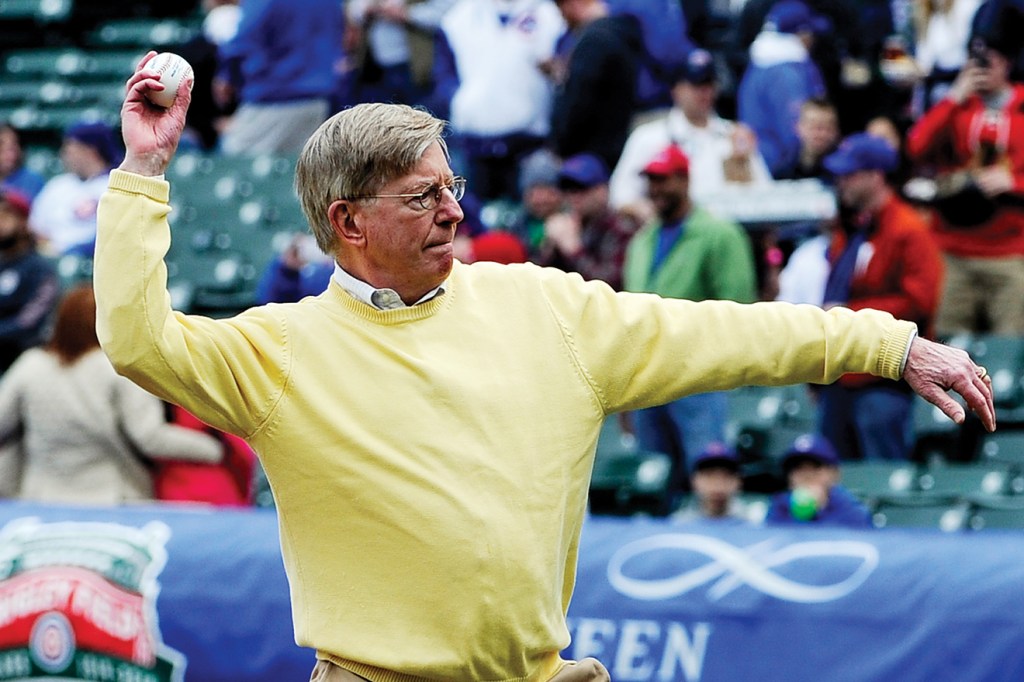
When George Will was being packed off to graduate school, his father, a professor of philosophy at the University of Illinois, asked him what, or who, he wanted to be in life: Ted Sorensen, Isaiah Berlin, or Murray Kempton? All three men were closely identified with a public trade. Sorensen, as President Kennedy’s speechwriter, was the ultimate political operative and staffer. Berlin was one of the century’s leading political philosophers. Kempton was the most revered newspaper columnist of his time, writing copiously about everything from politics to poetry in an elevated style unlike that of any other newspaperman.
Will studied at Oxford and got a Ph.D. in political philosophy from Princeton, on the assumption that he would pursue the calling of Berlin. It didn’t take. He moved to Washington to be an aide, Sorensen-like, to a conservative Republican senator. After two years, he had had enough of the hill-rat race. That left Kempton and the scribbling life. “I phoned Bill Buckley at National Review,” he recalled the other day. “I said, ‘You need a Washington editor.’ He said, ‘Yeah, I do, and you’re it.’ ” A few months later, in January 1973, the editorial page editor of the Washington Post offered him a three-times-a-week column, to be syndicated nationally. At the age of 32, Will had arrived at the summit of political punditry.