

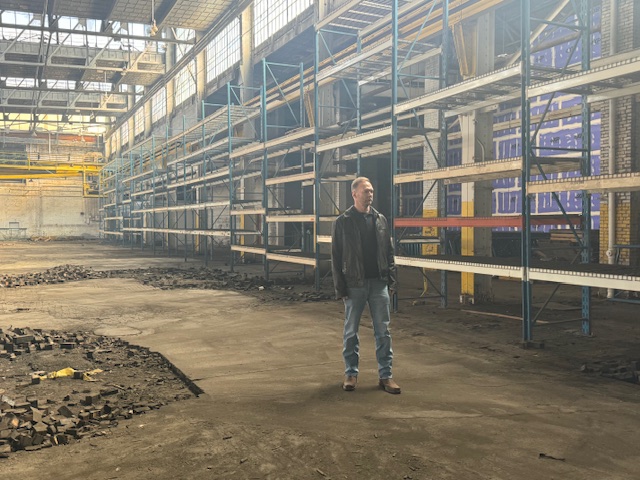
NEW KENSINGTON, Pennsylvania — Thomas Tull is walking along the old wooden brick floor of what began as the Pittsburgh Reduction Company and later became Alcoa, a place where researchers and manufacturers created a hub of foundational aluminum manufacturing for nearly a century.
In truth, this was the center of innovation and manufacturing in America. And after lying dormant for decades, Tull took his vision for remaking and rethinking U.S. manufacturing from an idea and ethos into reality two years ago.
Stay informed.Stay ahead.
Join Washington Examiner for unlimited access to the news, analysis, and commentary that matter most.
Already a member? Log in
For exactly 80 years, the people who stood along these wooden floors fueled America’s leadership and industrial growth, producing things now common in our lives, such as cooking utensils, aluminum sheets, foils, and specialized materials — the things that we take for granted today but are conveniences that changed people’s daily lives for the better.
Tull is giving a tour of Re:Build, an advanced manufacturing company whose goal is to revitalize America’s manufacturing base — not just for now, but for future generations.
Tull said he bought into Re:Build when Jeff Wilke, the former president of Amazon, called and told him that he was very concerned about America losing its ability to make complex things stateside. Wilke explained that instead of continuing at Amazon, he wanted to build manufacturing hubs in the country. And he wanted Tull to invest in that moment and be on board.
“So we did that,” Tull said matter-of-factly. To say that the Binghamton, New York, native is understated is spot-on — and not just in manner, but appearance, as well. Tull, dressed in jeans and a black jacket, blends right in with the western Pennsylvania scenery.
Few would know from his comportment that he is a longtime minority owner of the Pittsburgh Steelers and the New York Yankees; that he founded Legendary Entertainment, which has produced some of the most iconic films of the century; that he plays guitar in a rock band called Ghost Hounds that opens for the Rolling Stones; or that he is co-chairman of TWG Global, which invests in artificial intelligence and other technologies in the race for U.S. superiority in this industry. He also sits on the boards of Carnegie Mellon University, the Massachusetts Institute of Technology, the Smithsonian Institution, the National Baseball Hall of Fame, and the Naismith Basketball Hall of Fame. He has had numerous successes in his charitable work in education while demanding zero credit.
Tull is everywhere, yet visibly, he is nowhere. He is the quiet man with a deep-rooted patriotism that is measured in substance, not flash.
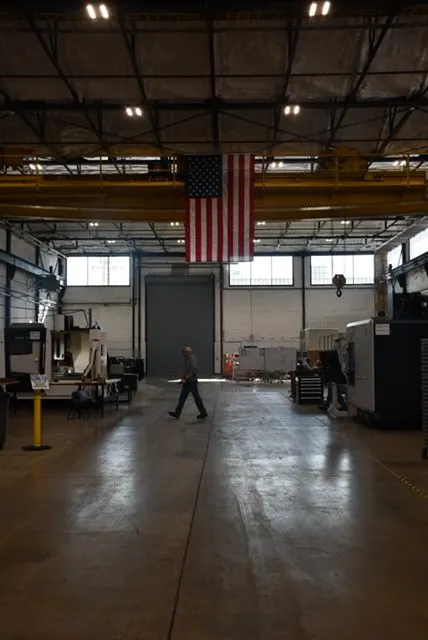
The Re:Build plant is massive, 1 million square feet massive, part of Tull’s vision to restore U.S. factory work that the country has lost overseas. But there is another reason underpinning it all. He wants to revive and rebuild something equally important: the U.S. workforce, and with the same spirit of the U.S. workforce that built the country 100 years ago. For him, those two things are patriotism at its deepest core.
Tull said the reason the region is so important to building the future is threefold, and it begins with the universities located within the city limits.
“There’s a lot of local know-how, between engineering, research, and robotics at Carnegie Mellon University, but also the legacy of manufacturing expertise that is the heritage of this place,” he said.
Tull smiles and points to the high-tech advanced manufacturing, robotics, and 3D manufacturing, many of which are being used in aerospace and defense, that are being researched, developed, and built as we walk around the plant.
“I think they’re going to do some pretty spectacular things out of this building,” Tull said.
PITTSBURGH PULLS OFF A FLAWLESS DAY 1 OF THE DRAFT
When you pull up to the building along the Allegheny River, about 18 miles upriver from Pittsburgh, you can see that the decay that has defined New Kensington since the 1970s has left its mark. Alcoa and other supporting manufacturers started shutting down, and the population was halved. That exodus has left its imprint.
It’s not a surprise to find that Tull is drawn to places such as New Kensington and western Pennsylvania in general. His hometown of Binghamton shares striking similarities. Both are a part of the Appalachian region. Both are surrounded by rolling hills. And both are situated along the confluence of major rivers, in Binghamton’s case, the Susquehanna and the Chenango.
Like western Pennsylvania, commerce along the rivers and the railroads made Binghamton a transportation hub for manufacturing, with major employers such as IBM creating a middle class that was able to live the American dream of homeownership through hard work and a sense of purpose.
Looking back at the people he grew up around, Tull said that while his upbringing might not have always been ideal, the community around him was strong.
“They were hardworking,” Tull said. “They believed in our country. They believed in community and the value of hard work. That is the kind of place I grew up in.”
It remains a sense of place that drew him to Pittsburgh. Not because he has admittedly been mildly obsessed with the Steelers since childhood, but because he feels that same familiarity of priorities here. So much so that he left a pretty good home behind when he relocated here years ago from California.
As a high school student who helped the family make ends meet, juggling several jobs, Tull thought law school was where he should go after Hamilton College, until a friend told him it was a lot less L.A. Law and a lot more paperwork.
MARK CUBAN SHINES AS PITTSBURGH’S POTENTIAL TAKES CENTER
So he began his entrepreneurial career by buying and operating a chain of laundromats. Always a tinkerer, he wanted to make it more efficient and profitable, so he developed demand-based washing machines, beginning a trend of using data mixed with daily cultural habits that would eventually define his successful trajectory in the film industry.
Tull said he knew early on, after college, that he would be better working for himself.
“I always thought that I was unemployable because that would work out very poorly for both parties,” he said with a broad smile.
“But that’s one of the things that I love so much about this country, is somebody would come from a place like I did, and with some hard work, and knowing that success is rarely measured in a straight line, I might do OK.”
As a young man, sports taught Tull both discipline and that being rough around the edges might be an asset.
“Grit, resiliency, and I think working together as a group, because there’s nothing that you can accomplish on those teams if you don’t work together,” Tull said.
In life, there are people who experience things in the middle of the country, such as he did in Binghamton, and saw a bit of their soul ripped out when their communities started to hollow out.
“I think that is one of the reasons why we’ve all been called to come to this company and called to serve the higher purpose and the mission,” he said of Re:Build. “It’s quite fulfilling, actually, to feel like you could do something about reversing the course of American manufacturing, also getting young people excited about being part of it, through the trades.”
This is where Mike Rowe comes in. The Dirty Jobs host and evangelist for the trades was attending an energy summit orchestrated by Sen. Dave McCormick (R-PA) in July 2025 in Pittsburgh. Rowe had just finished a vigorous back-and-forth on a panel with Commerce Secretary Howard Lutnick on the dangerous level of skills gap that is expanding in the country, when Tull made a beeline toward him at CMU.
Rowe said he didn’t know who Tull was.
“But he kind of pulled me aside, saying, ‘You don’t know me, but I’m in violent agreement with everything you just said. I believe our workforce is the most pressing issue of our time, and I would like to talk to you about furthering the goals of your foundation and expanding your scholarship program,’” Rowe said.
Rowe, who launched the MikeRoweWORKS Foundation, which awards scholarships to people pursuing careers in the trades, said he responded in deadpanned fashion: “Awesome.”
Within days, Tull was on Rowe’s podcast, and a relationship was formed that will soon bring a Pittsburgh-based event, in conjunction with U.S. Steel and CMU, to highlight the importance of both researchers and the workforce needed to build, maintain, and power AI data centers. And all while working together to fill the workforce gap and showing young people the future that they can have in building the country’s future.
The last time manufacturing employment peaked was 1979, when nearly 20 million jobs were in the trades. But that workforce fell out of favor in our culture, as society pushed higher education, a preference for white-collar workers, and an often comical portrayal of the working class in every aspect of film and television. Offshoring and free trade became the political pile-on, and those entering the trades dwindled.
That has reversed course, Rowe said, but not quickly enough. And this is why he called Tull a patriot at a critical moment — one who is coming to the rescue while we are hovering over a cliff.
PITTSBURGH IS JUST BUILT DIFFERENT
“Thomas is like the epitome of a tech entrepreneur, a blue-collar patriot who is determined to triangulate all of these different things,” Rowe said. “He understands that all of these great American companies and our defense production is going to be impacted if we don’t fix the skills gap problem.”
Rowe isn’t wrong. U.S. companies, particularly those in AI, robotics, defense, manufacturing, and energy, need a skilled labor force for their portfolios, their shared price, and their businesses to be successful.
Rowe said all of that is affected by the number of electricians and welders who can fast-track in the next three to four years.
“Thomas sees that, and he is ahead of the curve,” Rowe said. “The guy has something in him that you can find in his laundromat story, his auto repair story, his sports franchise story, his philanthropy, his AI. Whatever it is, it’s a certainty, a conviction, and it’s a default to act.”
In other words, Tull is not only the guy who makes the trains run on time. He had the foresight to make sure the engineer was even able to run the train, Rowe said.
“A lot of times in our culture, we don’t think about that person,” Rowe said. “We just think about the shiny train.”
Halfway across the country, the president of the Massachusetts Institute of Technology, Sally Kornbluth, said she sees Tull’s impact in much the same way. Kornbluth said she can see it applied to STEM programs and research and innovation in engineering, computer science, and AI, all working with the trades on a more level playing field.
Kornbluth said she met Tull when the cell biologist-turned-university president arrived on campus in 2022. Tull left a unique impression.
“He’s very unassuming if he walks into a room,” Kornbluth said. “Nobody would sort of know or think that he was this highly successful entrepreneur who has his hands on so many things that drive our culture.”
“He’s totally unassuming, but he’s always kind of listening and thinking,” she said of his lack of ego. “I just consider him this great source of advice, in part because whatever he is doing, it is never about him.”
Kornbluth loves Tull’s pragmatic approach.
“He actually understands how things work, so you never get these sort of generalized, aggrandizing statements from him,” she said.
“He knows he can sort of see all possible avenues of approach, and his advice is never born by ‘We always do it this way at MIT.’”
She also appreciates that he is frank without being overbearing.
“I never get the sense like he’s telling me what I want to hear, but kind of what I need to hear, but not in an obnoxious way,” Kornbluth said. “Just very calm and thoughtful.”
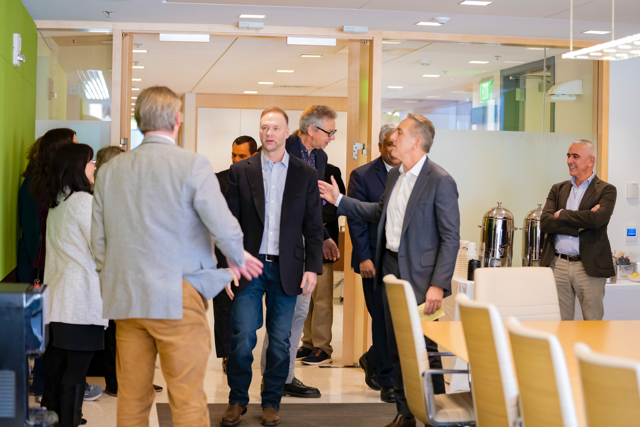
Sen. Tom Cotton (R-AR), who was on a tour of MIT with Tull, Kornbluth, and Sen. Susan Collins (R-ME), said that in working with Tull, he has found a man who is profoundly patriotic. And not in a superficial way, but in looking for what is best for the country and what can be done behind the scenes to make it happen, particularly when it comes to military efficiency.
HIGHMARK CEO’S PLEDGE TO LEAVE PITTSBURGH BETTER OFF THAN HE FOUND IT
MIT’s Center for Transportation and Logistics is one of those collaborations with the military, along with the Military Fellows program, in which logistics officers participate in the MIT Supply Chain Management master’s program.
The logistics of getting supplies, ammunition, and food to soldiers have been a challenge for military leaders since Henry Knox traversed over 320 miles to deliver cannons to George Washington to get the British out of Boston some 250 years ago.
Tull, who has been data-driven since his first laundromat, has not lost that passion. He applies it to the military with a keen interest in improving and investing in defense technology, AI, and strengthening the military supply chain.
Cotton said his experience in government has taught him how unique Tull is.
“He is both a great patriot, and he works hard for the country’s future,” the senator said. “And he avoids all credit or publicity for it.”
Cotton observed that Tull also has an advanced view of the future, noticing “things that are coming down the road but might not materialize for years to come. He has a very good eye for spotting, and he’s brought that to my attention.”
Case in point: Cotton said Tull was talking to him about AI well before ChatGPT was ever released to the world, appreciating what it meant, and not just for technology but for security, too.
“And he’s been very generous in his support for philanthropic causes and higher education in service of national security and economic prosperity,” Cotton said. “Again, without trying to take credit or seek the limelight. He is the most extraordinarily accomplished and visionary and patriotic person I have ever met that no one knows about because he is very modest and humble.”
Cotton said he often uses Tull as an example to his sons. They heard him talking on the phone with him, know that he is part-owner of the Yankees and Steelers, and that he came from nothing, and they think that’s the coolest thing.
“I tell them, ‘You guys go out and shovel snow or rake the yard because we tell you to, or [because] you think it’s going to be fun to build a snow sliding hill or a leaf pile that you can jump into. Well, he did it because the heat would get turned off if he didn’t,’” Cotton said of Tull’s upbringing in a single-parent household.
“Tull is a great example for anyone, a voice of what you can become in America. His ideals, his sense of urgency, [and] not just about robotics and AI, but also about getting our young people in front of the possibilities that they could have if they become a plumber or electrician or welder.”
It is something that few people grasp. Some people might be bound for MIT to make pathbreaking quantum computers. Lots of others can be welders and mechanics that are needed in the trades, careers that are a good path to economic security and middle-class prosperity and that are also badly needed for national security.
Tull is clearly humbled by Cotton, Rowe, and Kornbluth’s assessment of his impact on the country. He sees it as patriotism. The nation is secure when people are manufacturing on their own shores and when communities are not fragile because of an exodus of jobs.
“We use the word ‘confluence’ here a lot because of the rivers, but it really is also the confluence of a manufacturing heritage and base that is truly pivoting into tomorrow’s tech that will keep us secure on multiple levels,” Tull said.
THE EMOTIONAL DISPLACEMENT OF LOSING PART OF YOUR COMMUNITY
Tull said the story of the America of today and tomorrow is not that we left places like New Kensington behind, but that we made them the center of the future.
“That is not just our obligation,” Tull said. “That is our guiding purpose.”
