<mediadc-video-embed data-state="{"cms.site.owner":{"_ref":"00000161-3486-d333-a9e9-76c6fbf30000","_type":"00000161-3461-dd66-ab67-fd6b93390000"},"cms.content.publishDate":1655680782526,"cms.content.publishUser":{"_ref":"0000017b-3108-d928-a77f-73ccd2e60000","_type":"00000161-3461-dd66-ab67-fd6b933a0007"},"cms.content.updateDate":1655680782526,"cms.content.updateUser":{"_ref":"0000017b-3108-d928-a77f-73ccd2e60000","_type":"00000161-3461-dd66-ab67-fd6b933a0007"},"rawHtml":"
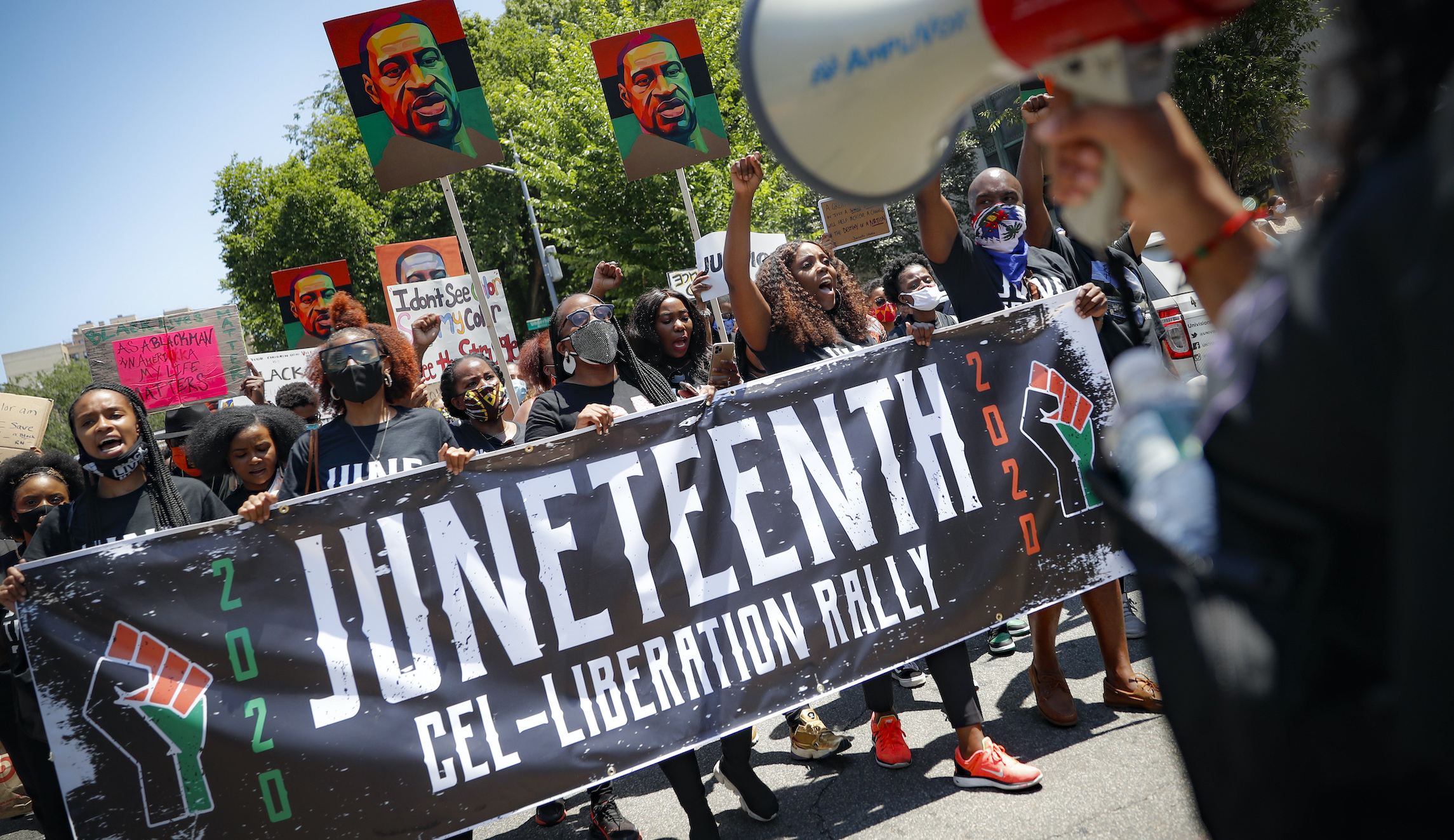
var _bp = _bp||[]; _bp.push({ "div": "Brid_55680763", "obj": {"id":"27789","width":"16","height":"9","video":"1035122"} }); ","_id":"00000181-7e43-ddb6-a5eb-7e73c1120000","_type":"2f5a8339-a89a-3738-9cd2-3ddf0c8da574"}”>Video EmbedToday is Juneteenth, a new federal holiday celebrating the emancipation of enslaved black people in the United States. It marks the anniversary of Union Army Gen. Gordon Granger entering Texas on June 19, 1865, and declaring all slaves free by General Order Number 3, which read: