Where does Trump go from here after latest Iran attack?

Where does Trump go from here after Iran’s Apache attack?

Published June 9, 2026 4:37pm ET | Updated June 9, 2026 4:57pm ET


President Donald Trump has vowed to retaliate after Iran shot down a U.S. Apache helicopter, but it’s unclear what that response will mean for the state of negotiations and the war.

U.S. military personnel in the region have come under repeated Iranian attacks despite the ceasefire agreement Trump announced on April 7, and they have defended themselves and responded in kind. But the shooting down of a U.S. Army AH-64 Apache on Monday, and Trump’s subsequent promise to “respond to this attack,” raises additional questions about the state of the conflict moving forward.

Even on Monday night, before Trump announced a day later that Iran was responsible for downing the helicopter, he told reporters that if he decides to restart offensive military operations against Iran, it would likely delay the reopening of the Strait of Hormuz.

“We’re very close to having a very, very good, strong, powerful deal,” the president said. “If we go and bomb — which we could do very easily if we want, and we spend another two or three weeks bombing — they’ll have nothing left whatsoever. But you won’t have the strait open for months.”

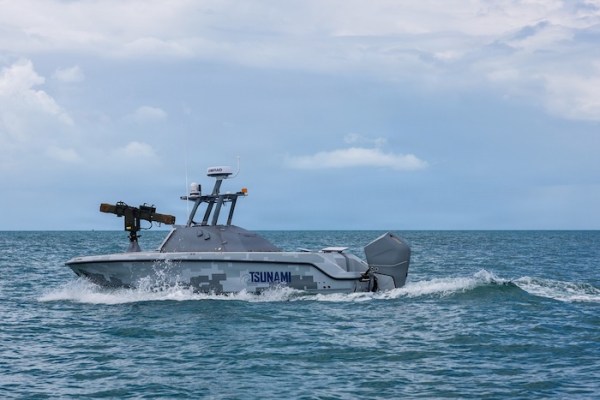
The two pilots were rescued by a U.S. Navy Corsair unmanned surface vessel, or drone boat, which picked them up, took them to a nearby location, and then hoisted them up to a helicopter for further transport, a Central Command spokesperson told the Washington Examiner.

Trump is likely being presented with several different options for how to respond, but he will have to weigh the importance of responding to this attack against his overarching goal of getting an agreement with the Iranian government completed.

TRUMP VOWS US RESPONSE AFTER CONFIRMING IRAN SHOT DOWN APACHE HELICOPTER

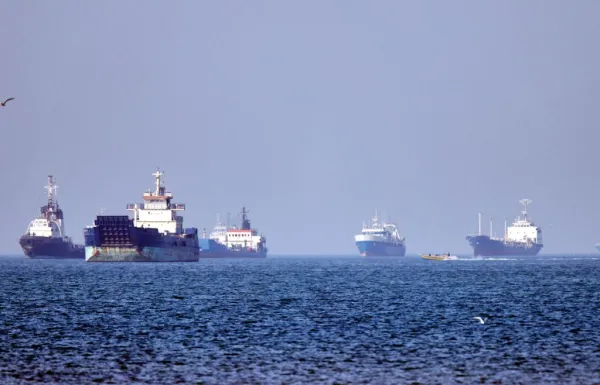
Container ships
Container ships sit at anchor in the Strait of Hormuz off Bandar Abbas, Iran, Saturday, May 2, 2026.(Amirhosein Khorgooi/ISNA via AP)

‘Diminishing returns’

The U.S. and Israeli militaries badly damaged Iran’s navy and air force, targeted its defense industrial base and ballistic missile stockpiles, and went after senior Iranian political and military officials. And yet, Iran still maintains some capabilities as evidenced by Monday’s attack, the latest in a long string of Iranian attacks.

Resuming the war to hit the same target set “would appear to be a mission that may have diminishing returns,” Richard Goldberg, a former National Security Council official under the first Trump administration, told the Washington Examiner, though he suggested the president could approve a new operation “targeting the critical infrastructure of the regime,” which “are targets that, by and large, were not hit during Epic Fury.”

Goldberg, now with the Foundation for Defense of Democracies, warned, though, that such an operation could incur an even more aggressive Iranian response, which could include the targeting of U.S. allies in the region, as they have frequently come under attack.

Anticipating how Iran will respond will factor into the president’s decision-making.

“The challenge with escalate to deescalate is that the Regime may be thinking about this differently,” former U.S. Central Command Commander retired Gen. Joseph Votel previously told the Washington Examiner. “For them this conflict is existential; it’s about survival. I think they value this over the destruction that is being wrought on their country. My concern would be that an attempt to escalate to deescalate may result in even greater escalation.”

Last Friday, Iran fired seven ballistic missiles toward Kuwait and Bahrain hours after they shot down four Iranian one-way attack drones, according to U.S. Central Command, and of the seven missiles fired, six were intercepted, and the last one did not reach its intended target.

TRUMP VOWS US RESPONSE AFTER CONFIRMING IRAN SHOT DOWN APACHE HELICOPTER

The U.S. military could try to take control of one or more of the small islands off Iran’s coast, though that comes with new risks.

“We would have to be prepared to reinforce and sustain them if they are going to hold it for an extended time,” Votel said. “Putting troops on the ground implies that we can get them there and then support, sustain and protect them. There is risk involved in all of this and of course those risks would need to be mitigated.”

The administration is pursuing a deal with Iran focused on resuming traffic through the Strait of Hormuz, which is a vital waterway off Iran’s coast for the global distribution of oil and gas from Gulf countries. Iran began attacking and threatening to attack vessels transiting the strait shortly after the war began, while the U.S. Navy began a competing blockade of Iranian ports so they would face some economic pain, as they were causing for the rest of the world.

If the United States can get a deal done to reopen the Strait of Hormuz, it would then give both sides the opportunity to negotiate on Iran’s nuclear program and more. Secretary of State Marco Rubio said last week that the administration has discussed offering sanctions relief in exchange for concessions on their nuclear program, but they have not considered doing the same for a deal to reopen the strait.