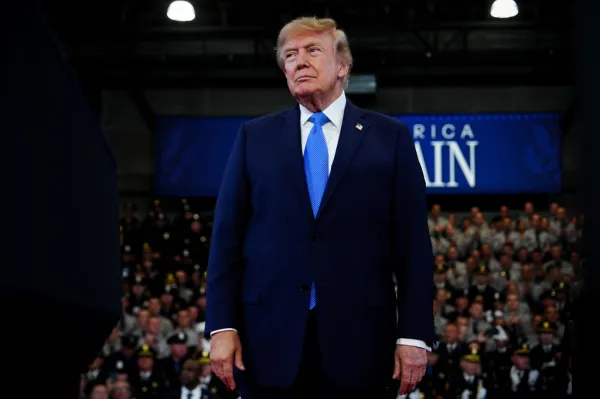
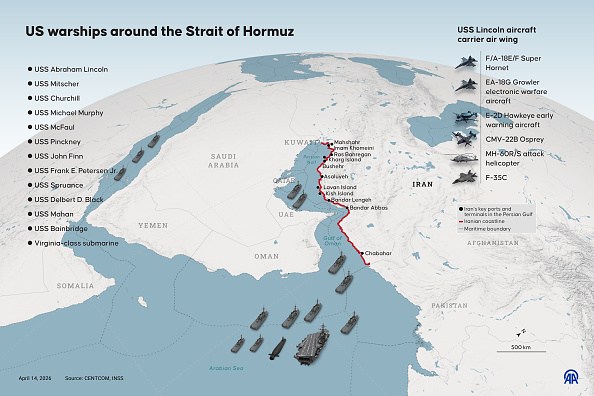
The U.S. military will restart its blockade of Iranian ports, President Donald Trump announced on Monday morning, following the most consistent weekend of violence since the deal was signed almost a month ago.
“The Hormuz Strait is OPEN, and will remain OPEN, with or without Iran,” he said on social media. “We are reinstating THE IRANIAN BLOCKADE, so named because it is only stopping Iran’s ships or customers from entering or leaving.”
Recommended Stories
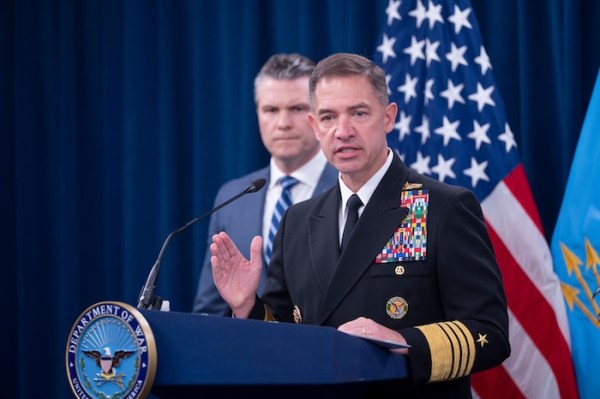
Over the last couple days, Iran has fired at commercial vessels transiting the Strait of Hormuz, and the U.S. military has, in turn, responded with multiple iterations of airstrikes. Combined with the president’s announcement that the United States would resume the blockade, there is clear momentum to a resumption of a higher intensity conflict.
Iranian Foreign Ministry spokesman Esmaeil Baghaei said during a press conference on Monday that the June 17 memorandum of understanding “has entered a crisis stage” and argued that Iran has not fulfilled some of the requirements as laid out in the agreement because he accused the U.S. of having “violated its commitments.”
U.S. Central Command said Tuesday that U.S. forces hit more than 80 targets; conducted another round of strikes Wednesday, striking approximately 90 targets; hit another roughly 140 targets in another round of strikes on Saturday; and hit dozens of targets in strikes on Sunday.
Iran fired a barrage of strikes at U.S. bases in Jordan, Bahrain, Kuwait, and Oman over the weekend in retaliation for the American strikes against the Islamic Republic.
In a Monday morning interview on Fox & Friends, Trump said, “We hit them very hard last night. Every time they send a drone, we hit them very hard. But we had a deal. But nobody knows we had a deal. It was a done deal. And then they broke it.”
Trump also said the U.S. is “taking over the strait,” adding, “We’re going to keep the strait, and we’ll probably run it. We’ll become the guardian of the strait. Maybe we’ll call it the guardian angel of the strait, and we should be reimbursed for that.”
He noted in his subsequent social media post that the U.S. “will be reimbursed” at “the rate of 20% on all cargo shipped, for any and all costs necessary to do the job of providing safety and security to this very volatile section of the world.”
Shortly after the war began, Iran began threatening and targeting commercial vessels heading from Gulf States near its coast. Those threats and attacks led to increased oil and gas prices as the flow of ships through the area decreased dramatically, though it has since improved since the signing of the MOU last month.
The U.S. military has the capability to take over the Strait of Hormuz, but it would reduce the threats to the troops involved, according to former CENTCOM Commander Frank McKenzie.
“That would include opening the Strait of Hormuz, maintaining the Strait of Hormuz open, and in fact, seizing Kharg Island, should we elect to do that,” he said on Sunday on CBS’s Face the Nation. “And I would just say, as an aside, that’s something we should think about doing because possession of Iranian soil would be a significant factor in future negotiations with Iran.”
THE NATO COUNTRIES THAT ARE AND AREN’T MEETING THEIR DEFENSE COMMITMENTS
It would also require sending U.S. warships “up into narrow waters,” along the strait, he said, which he acknowledged is something “the U.S. Navy doesn’t love to do.”
McKenzie also warned that American “bases are going to be hit, and buildings are going to be destroyed, and tragically, people are going to die. And if we’re going to stay in this game and continue to confront Iran, which I believe is in our interest to do, we’ve got to be prepared for this.”