US carries out new strikes against Iran following attacks on US service members

Published September 1, 2026 12:52pm ET | Updated September 1, 2026 1:47pm ET


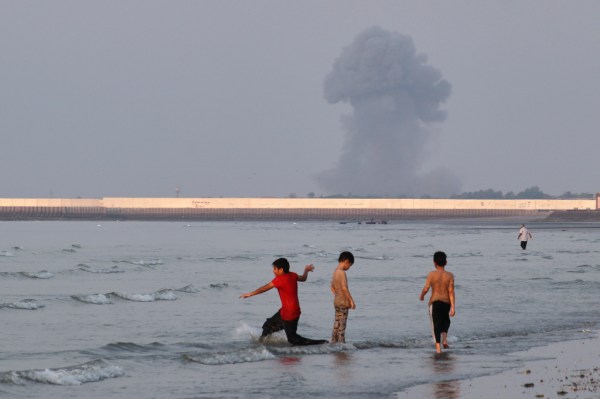
The U.S. military began its latest round of strikes against Iran on Tuesday evening local time.

U.S. Central Command said the United States “began striking Islamic Revolutionary Guard Corps (IRGC) targets in Iran” at noon Eastern time.

“The strikes follow recent attempted attacks by the IRGC against commercial shipping in the Strait of Hormuz and against American service members deployed to the region,” the statement reads.

President Donald Trump confirmed the strikes in a social media post shortly after CENTCOM’s announcement.

“The strikes are large and powerful, and in retaliation for the Iranians’ failed attempt at adding sea mines to the Strait, which currently has no mines (They have been completely removed or detonated!), and the Iranians shooting eight missiles, all successfully knocked down, at our Military Base in Jordan,” Trump said on Truth Social.

“If the failed Nation of Iran retaliates for this very justified attack, they will be hit again at a much harder and higher level, but it will not be the biggest attack of them all, that is waiting in the wings and, when it is over, there will be very little left of the Islamic Republic of Iran!” he added.

This is the second time in recent days the U.S. has carried out strikes against Iran, potentially shattering what had been a steady quiet between the U.S. and the Guard. The Trump administration had leaned further into trying to impose economic sanctions and punishments against the Islamic regime.

Potentially a foreshadow to Iranian retaliation, the U.S. Embassy in Qatar issued a new warning on Tuesday.

“Due to tensions in the Middle East, the security environment remains complex with the potential for unforeseen escalation,” the warning reads. “Americans currently in the Middle East should exercise heightened vigilance and be aware of potential flight cancellations, airspace closures, and travel disruptions.”

U.S. bases in the Middle East have routinely come under Iranian attack over the course of the war, including in Kuwait, Bahrain, Qatar, Saudi Arabia, and Jordan.

On Sunday, CENTCOM said, “U.S. forces took limited, precise action against IRGC minelaying forces posing an imminent threat in the Strait of Hormuz.”

The military still has roughly 50,000 troops in the region, and the Navy is continuing to carry out a blockade of Iranian ports. CENTCOM said on Tuesday that as of September, U.S. forces have redirected 84 commercial vessels, disabled three, and boarded two of them.

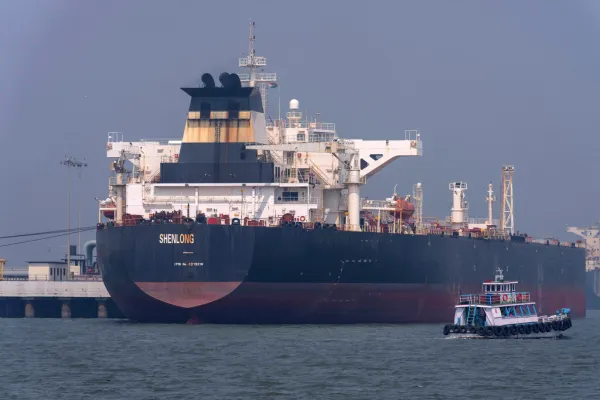
The focus of the war has been the Strait of Hormuz for months. The waterway is vital for the global transportation of oil and gas, and Iran’s attacks on commercial vessels transiting the waterway and the reduced traffic through it have caused economic pain felt globally.

SIX-MONTH IRAN WAR PUTS PRESSURE ON THE PENTAGON’S PROCUREMENT TRANSFORMATION TO MEET THE ‘1939 MOMENT’

Over the course of the war, 18 U.S. service members have been killed, and more than 750 have suffered injuries, though many of them were not serious. The continued military presence in the region has strained the armed forces, particularly the Navy.

U.S. and Iranian leaders signed the memorandum of understanding in June, which called for a 60-day ceasefire during which the two sides could hammer out agreements on various other aspects, such as Iran’s nuclear program, support for terrorist proxies, and control of the strait.