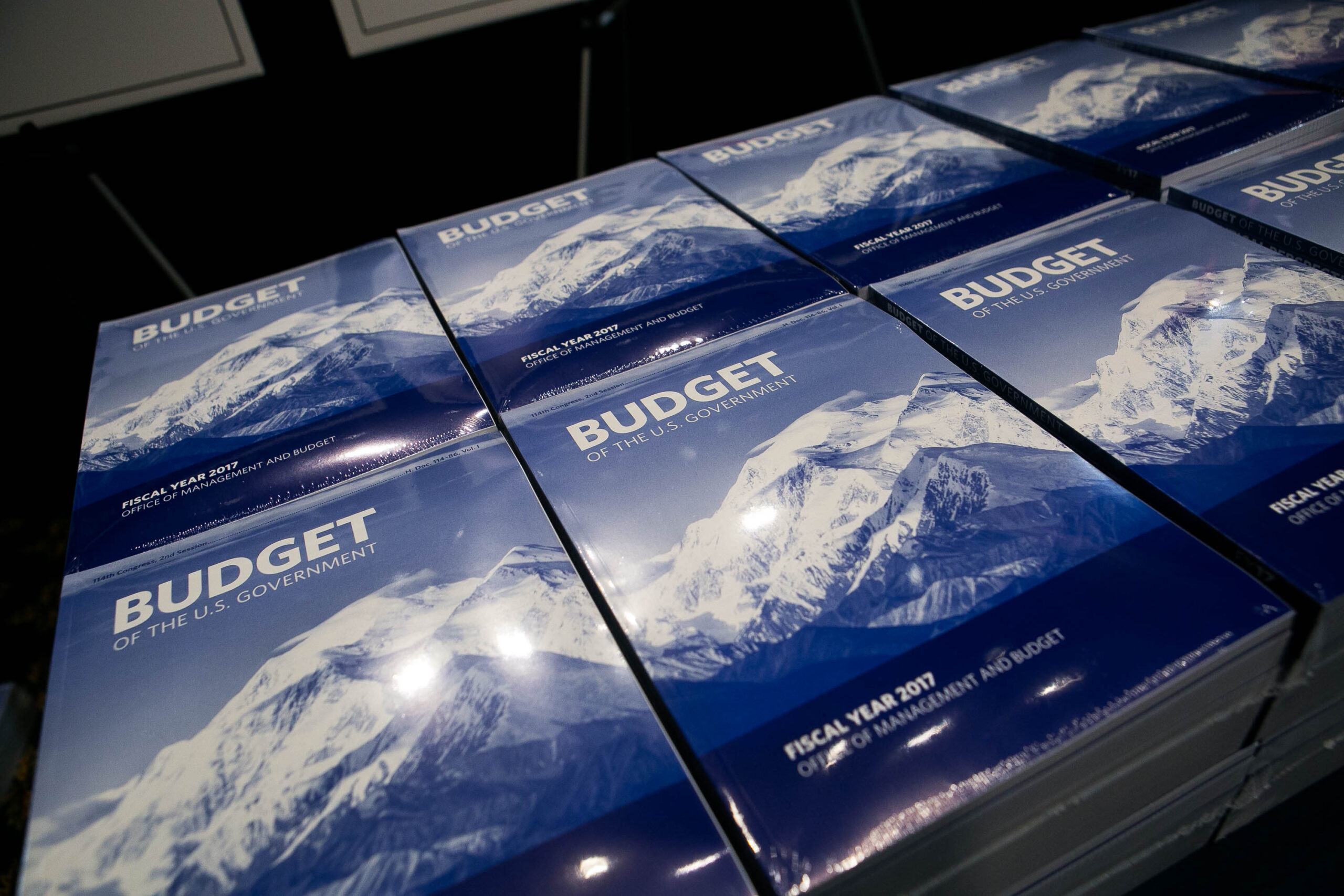
President Obama on Tuesday proposed the first $4 trillion federal budget in history.
In the last budget outline he will offer as president, Obama suggested adhering to the terms of the budget deal reached in December with congressional Republicans for fiscal year 2017, the last year he will be in office. That would allow another $30 billion in spending in 2017, and Obama’s budget clocks in at $4.147 trillion for that year.
Recommended Stories
In subsequent years, Obama would recommend rewriting the government’s tax-and-spending plans, calling for tax hikes on wealthy earners, savings on health care programs, and comprehensive immigration reform that the White House says would help expand the tax base. In exchange, the White House wants a lifting of statutory caps on government spending.
Obama’s ambitious proposals for new government initiatives and programs, however, were shot down immediately before Tuesday’s unveiling by a GOP Congress that does not share his view of government and is already preparing for after his tenure.
“This budget joins his others by placing America on a fiscal path that is unsustainable and threatens our long-term economic growth,” said Senate Budget Committee Chairman Mike Enzi, R-Wyo. “It is not the budget effort that hardworking taxpayers deserve, and our times and country require.”
A senior administration official said Tuesday morning that the new budget outline was not “not about looking back. It is about looking forward” past recent years’ budget squabbles with Republicans toward making government investments. “The president is absolutely determined to use every minute of the last year to make such progress,” the official said.
The Obama budget does not contemplate the government reaching a balanced budget in the next decade, a goal that Republicans have set in their own budgets.
Instead, the plan envisions the government spending on new infrastructure and other programs in a way that is “compatible with putting the nation’s finances on a strong and sustainable path,” a senior administration official said. He said the federal debt shrinking slightly as a share of the economy over the next 10 years, but only because of growth in the economy, not because of cuts to spending.
Specifically, the president calls for spending of $4.1 trillion and taxes of $3.6 trillion in fiscal years 2017, for a budget deficit of $503 billion, $58 billion less than currently expected.
Those numbers reflect the government’s call that it should stick to the spending caps set in negotiations between Obama and outgoing Speaker of the House John Boehner late last fall.
Beyond his years in office, Obama would raise statutory discretionary spending caps. By 2026, he proposes spending $6.46 trillion on the government, and anticipates $4.5 trillion in new revenues over that period beyond what is currently expected by the Congressional Budget Office.
Much of that revenue, $955 billion, would come from curbing tax increases for the wealthy laid out in past Obama budgets. An additional $375 billion would come from reforms to federal health care programs to find savings beyond Obamacare. Comprehensive immigration reform would add another $170 billion.
With those tax revenues, the White House plans for the federal debt to fall from 76.5 percent of gross domestic product today to 75.3 percent in 2026, as opposed to rising to 87.6 of the economy under current projections.
The Obama administration also again recommended business tax reform, but this year proposed that it raise $549 billion for the government. Those added revenues, officials said, would offset the cost of the “tax extenders” bill passed by Congress in December, which made permanent a number of expiring temporary tax breaks that predominantly benefited businesses.
