The United States is looking to turn up the economic pressure on Iran to make the country more amenable to a long-term agreement that meets the Trump administration’s objectives.
The U.S. has requested Gulf countries to do a deeper investigation into possible Iranian funds in their banking systems, and they may be more willing to divulge that information after facing Iranian retaliatory attacks, Treasury Secretary Scott Bessent said during a White House press briefing on Wednesday.
Recommended Stories
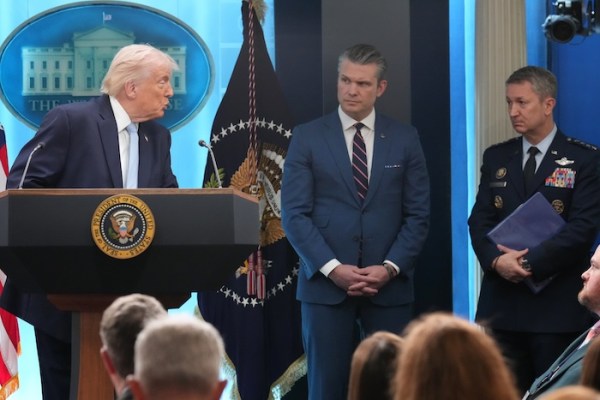
Iran’s attacks on Gulf countries “may prove to be fatal mistakes” because those governments “are now willing to be much more transparent in terms of the funds or do a deeper dive in investing the funds that are held within their banking system,” Bessent said.
On Tuesday, the Treasury Department threatened to add new secondary sanctions to financial institutions that are helping Iran as part of the Trump administration’s “Economic Fury” effort, an allusion to Operation Epic Fury.
“The Iranians should know that this is going to be the financial equivalent of what we saw in the kinetic activities,” Bessent added, affirming that this was an expansion of economic pressure as opposed to military escalation.
He also said the U.S. will not renew a general license that the administration granted for the sale of Russian and Iranian oil already in the process of being shipped prior to March 11.
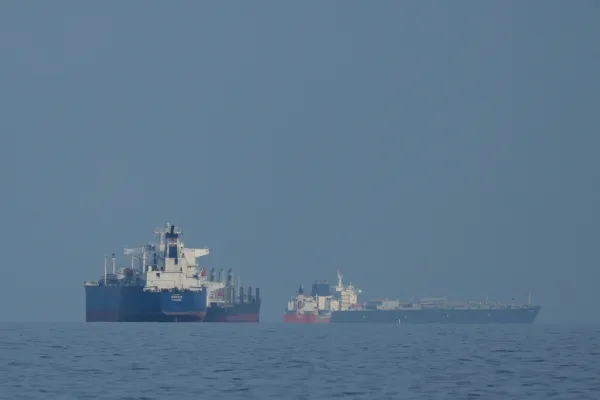
President Donald Trump also announced over the weekend that U.S. forces would begin blocking vessels transiting to or from Iranian ports. The administration’s goal is to force Iran to suffer the same economic fate it’s forced on the rest of the world — higher oil and gas prices — because it blocked ships heading to and from other Gulf countries from navigating through the waterway off Iran’s coasts, including the Strait of Hormuz.
China is a primary purchaser of Iranian oil, and the U.S. blockade could have negative implications for Beijing. Two banks, Bessent added, have received letters from the Treasury stating that if they can prove they have Iranian funds, the U.S. will place secondary sanctions on them.
On Wednesday, the Treasury Department’s Office of Foreign Assets Control said it is sanctioning more than two dozen individuals, companies, and vessels operating under the oil magnate Mohammad Hossein Shamkhani, the son of now-deceased senior Iranian security official Ali Shamkhani. Some of those people and companies involved are based in the United Arab Emirates.
U.S. and Iranian leaders met in Islamabad, Pakistan, on Saturday for negotiations, but the meeting concluded without a breakthrough agreement.
The two sides have not formally agreed to a new round of talks yet, though they would likely take place in Islamabad as well, White House press secretary Karoline Leavitt said. She also denied that the U.S. had requested an extension of the two-week ceasefire, which is expected to end Tuesday unless a deal is agreed upon sooner.
Several senior Iranian leaders have been killed during the war. While the Trump administration maintains that it’s a sign of regime change, Iran’s unwillingness to meet U.S. demands raises questions about how serious the new leaders are when it comes to making a deal.