

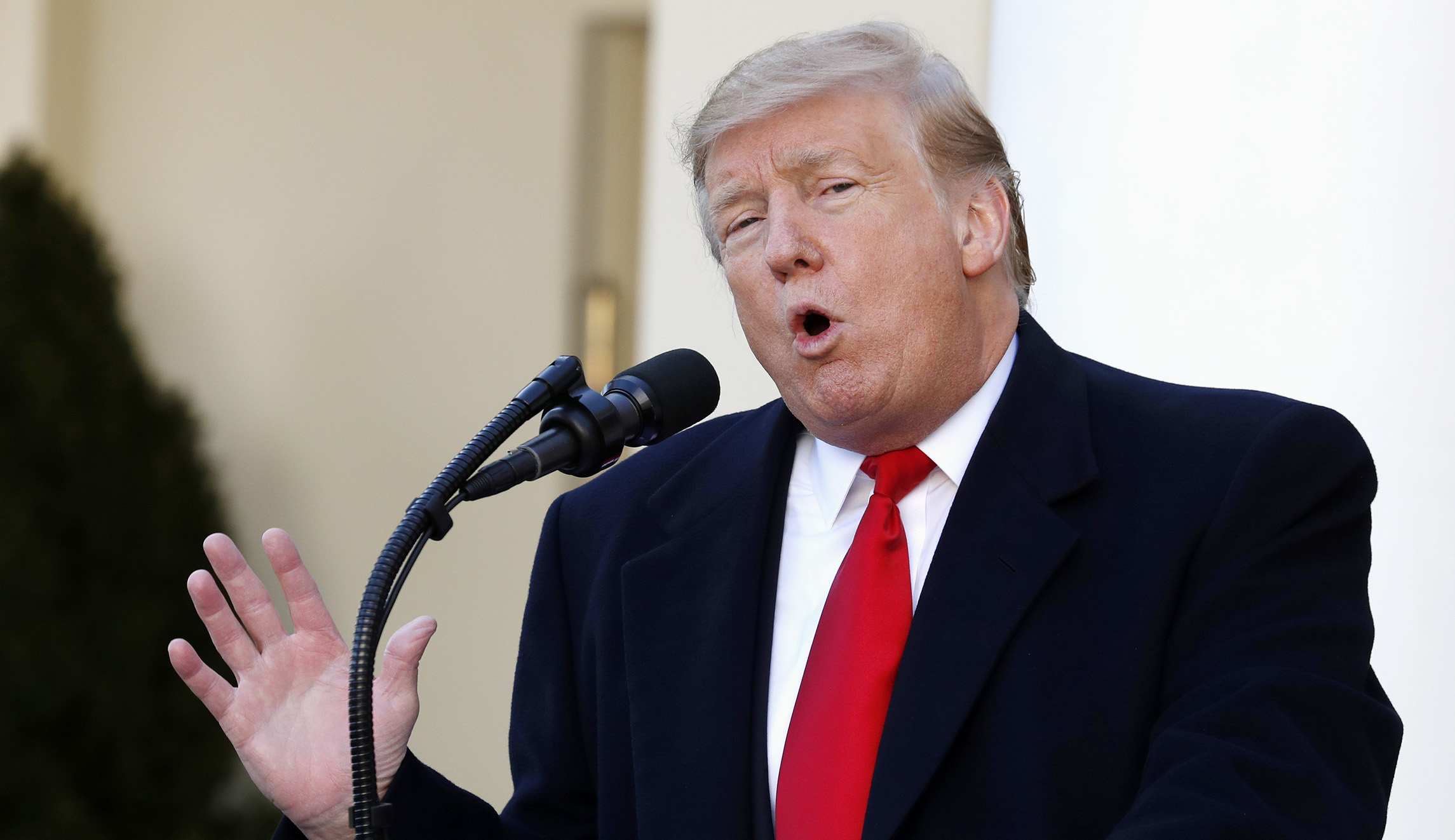
The Trump administration wants global support in its bid to block Venezuela’s Nicolas Maduro from earning oil sales revenue — the country’s economic lifeblood — but is stopping short of punishing countries that continue to buy from him.
Alongside new sanctions against Venezuela’s state-run oil monopoly, PDVSA, the Trump administration placed the company on the Specially Designated Nationals and Blocked-Persons List maintained by the Treasury Department’s Office of Foreign Assets Control, or OFAC.
Recommended Stories


This designation, meant to discourage money laundering and terrorist financing, would likely dissuade international banks from being a party to transactions with PDVSA, likely crimping sales to some countries.
“Most international banks will cease dealings with a person or entity on the SDN list out of concern for risk exposure,” Joseph McMonigle, a former chief of staff at the Energy Department in the George W. Bush administration, told the Washington Examiner. “Therefore, the sanctions are likely to have broader application than just U.S. commercial transactions.”
The Trump administration on Monday announced sanctions against PDVSA, diverting the proceeds of U.S. purchases of the country’s oil to a blocked account, preventing the Maduro regime from receiving it. It also urged other countries to do the same.
“We continue to call on all of our allies and partners to join the United States in recognizing Interim President [Juan] Guaido and blocking Maduro from being able to access PDVSA funds,” Treasury Secretary Steven Mnuchin said at a White House briefing Monday.
The sanctions act as an effective unofficial embargo, because Maduro would likely not allow oil to be sold to U.S. Gulf Coast refiners that rely on Venezuela’s heavy crude if he can’t use the revenues.
Energy industry experts say Maduro would turn to alternative buyers, such as Russia and China, a possibility the Trump administration is looking to prevent.
“I doubt the Trump administration wants U.S. refiners to be the only ones feeling the pain from a policy they reluctantly took,” McMonigle said. “They would want this to apply to everyone.”
McMonigle, and other experts, say it’s unlikely China and Russia will stop buying Venezuela’s oil, which Maduro would likely offer at steep discounts. Venezuela sells oil to China and Russia to pay off loans provided by those countries.
“But other potential buyers will think twice about it,” McMonigle said.
For example, he said, India is a potential replacement buyer that could be swayed to stop.
The biggest buyers of Venezuelan crude in December were the U.S., at 407,400 barrels per day, followed by India, with 293,500 barrels per day, and China, at 238,700 barrels per day, according to data compiled by Bloomberg.
Despite prodding U.S. allies rhetorically, the Trump administration’s sanctions on Venezuela do not formally prevent other countries from buying PDVSA’s oil.
That is a different approach than the administration took with Iran oil sanctions last year.
Those penalties, known as “secondary sanctions,” explicitly punished nations that buy oil from Iran by cutting them off from the U.S. financial system. The Trump administration ultimately granted exemptions to eight countries, fearing the impact on oil and gas prices of cutting too much crude from the global market.
Experts, however, say it’s unlikely the Trump administration would impose sanctions on other countries that buy from Venezuela’s PDVSA.
“Secondary sanctions are coercive because they are applied outside U.S. jurisdiction, which makes them untenable to partners and allies,” Brian O’Toole, a former senior adviser at OFAC, and a senior fellow at the Atlantic Council, told the Washington Examiner. “It’s a tool you want to use very sparingly.”
O’Toole said secondary sanctions are typically applied to deter other countries from engaging in inappropriate behavior with a sanctioned country that goes beyond simply continuing with commercial transactions. An example would be if another country smuggled oil for the Maduro regime.
PDVSA is already encouraging such behavior in trying to evade U.S. sanctions, Reuters reported Tuesday, urging buyers to renegotiate contracts, and use intermediaries to continue purchasing Venezuelan oil.
