

Taxpayers may face a wildfire season with a soaring price tag, as aviation fuel costs, sharply higher since the outbreak of the war with Iran, threaten to push expenses to $100 million or more.
Although the federal government leads suppression efforts on major fires, the roughly 500 aircraft used each year are overwhelmingly operated by private contractors. Most of those contracts include clauses that allow companies to pass rising fuel costs directly on to the government, meaning taxpayers have to foot the bill.
Recommended Stories


Willis Curdy, a former aerial firefighting pilot, told NPR that the job demands far more from aircraft than typical commercial flying.
“This isn’t like climbing a 737 to cruising altitude,” he said.
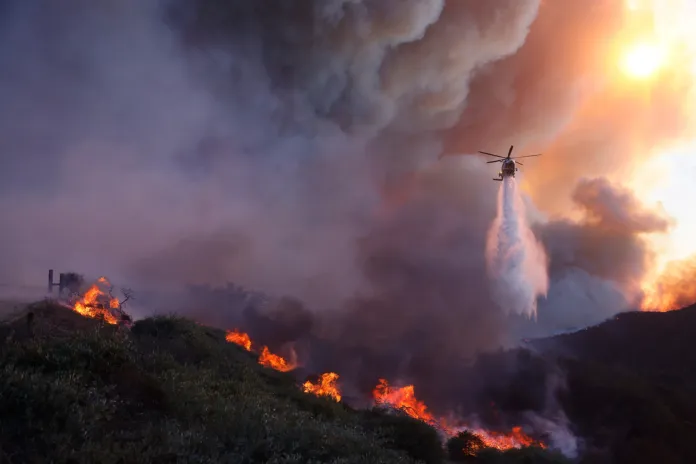
After nearly four decades battling wildfires from the air, Curdy explained that the aggressive, low-altitude maneuvers required on fire lines burn through fuel at a much faster rate.
“You’re constantly pushing the engines,” he said. “It takes significantly more fuel than steady, high-altitude flight where you’re just cruising.”
The U.S. Forest Service has set aside $45 million for aviation fuel this year, a surprising $7 million less than it spent in the previous season. That figure now looks increasingly tight as conditions point toward a severe fire year. Much of the West endured unusually dry, even record-dry, winters, raising the risk of widespread outbreaks.
For operators, the concern goes beyond price. Brett L’Esperance, CEO of Dauntless Air, warned that supply shortages could become the real crisis.
“That’s what’s keeping me up at night,” he told the news outlet.
L’Esperance’s focus is on fuel flows into California, a key refining hub for jet fuel used across the western U.S. The California Energy Commission reports refinery stockpiles are at their lowest level in more than two years.
According to the American Petroleum Institute, California depends more heavily on imported oil than most states, supplies that have been disrupted by the conflict.
“When things get really, really busy and scary in that late June, July, August, and September time frame, if we don’t have the fuel to respond, we just can’t respond,” L’Esperance said.
Meanwhile, President Donald Trump has downplayed rising fuel costs, arguing last month that prices remain manageable compared to the stakes of preventing Iran from acquiring a nuclear weapon.
“Well, they’re not very high,” Trump told reporters two weeks ago. “If you look at what they were supposed to be in order to get rid of a nuclear weapon, with the danger that entails. So the gas prices have come down very much over the last three, four days.”
“We have to make sure that Iran does not have a nuclear weapon, because if they do, you want to talk about problems, you’d have problems,” the president added.
THE GOP MUST DELIVER IMMEDIATE TAX RELIEF BEFORE THE MIDTERM ELECTIONS, AND IT CAN START AT THE PUMP
Still, consumers across the country are feeling the impact.
The national average for gas climbed to $4.39 a gallon Friday, according to AAA—more than 44% higher than when the conflict began. In California, prices reached $6.06, up over 30%. Researchers at Brown University estimate Americans have spent an additional $29.9 billion on fuel since the war started.
