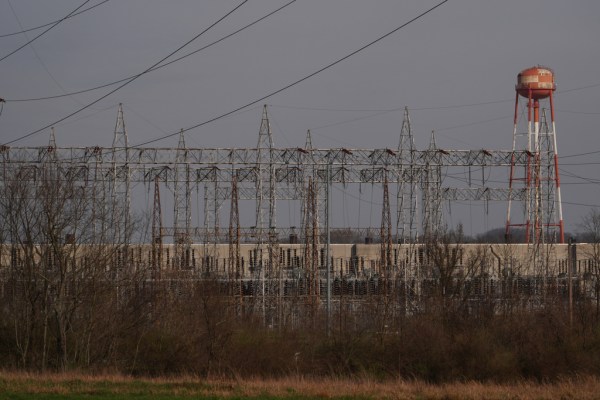
Utah state officials have launched a new transparency tool focused on the state’s Military Installation Development Authority amid mounting backlash over a massive proposed data center project in Box Elder County.
The new “Transparent Utah” dashboard, unveiled by the Utah state auditor’s office, compiles nearly two decades of public records and financial data related to MIDA into a centralized, interactive platform designed to help residents better understand the agency’s powers, projects, and operations.
Recommended Stories

“The new interactive dashboard is designed to provide publicly available information to help the public better understand MIDA: what it is, what it does, what authority it has, and how that authority has changed over time,” the auditor’s office said in a news release.
The online tool allows users to explore MIDA’s legislative history dating back to 2007, along with projected developments through 2026. Officials said the database will continue to expand as more information becomes available.
The launch comes as MIDA faces increased scrutiny over its involvement in the proposed Stratos data center development in Box Elder County, a sprawling project backed by Shark Tank investor Kevin O’Leary that has sparked protests and environmental concerns across Utah.
The proposed development would encompass roughly 40,000 acres of privately owned land divided into three separate sites. One site is slated for large-scale energy generation and a hyperscale data center, while the remaining areas could eventually include manufacturing facilities, retail businesses, restaurants, hotels, and public infrastructure projects.
MIDA estimates the broader project could create more than 2,000 jobs in northern Utah. Project supporters have argued the development would strengthen domestic energy capacity and support national defense priorities.
In April, MIDA approved the Stratos project, and the Box Elder County Commission later voted unanimously to authorize the creation of the project area.
But the proposal has triggered growing opposition from residents and environmental advocates concerned about water usage, energy consumption, and the long-term environmental impact of large-scale data centers in Utah’s arid climate.
The backlash has spread beyond Box Elder County. Earlier this week, the Iron County Commission voted to temporarily halt approvals for new data centers and large energy projects for six months as debate over the industry intensifies statewide.
O’Leary has pushed back against criticism surrounding the project, arguing opponents are relying on outdated perceptions of data center technology.
“The narrative about data centers that were built in Virginia 20 years ago — they were old technology,” O’Leary said. “They used a lot of water, they were very noisy, they created a lot of heat. But like every other technology, it’s advanced dramatically.”
WHAT TO KNOW ABOUT THE FREEDOM 250 UFC FIGHT ON THE WHITE HOUSE LAWN
He argued that modern facilities use closed-loop cooling systems and air-cooled turbines that significantly reduce water consumption.
“This narrative about data centers destroying the environment is an old story,” O’Leary said. “We have to build it more responsibly, and that’s exactly what’s going on now.”