

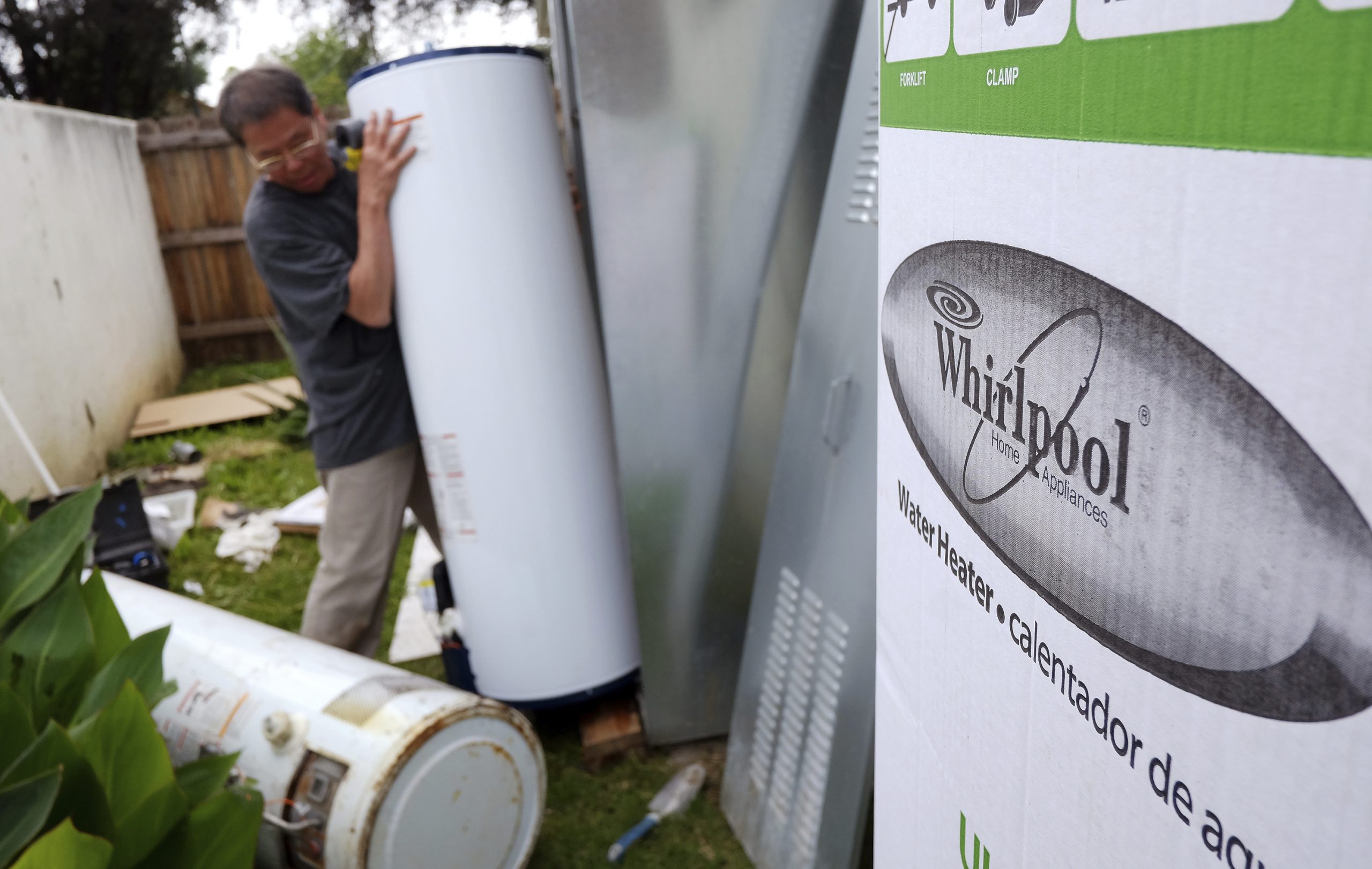
Regulators in California intend to ban the sale of new natural gas space heaters and water heaters beginning in 2030, adding to a trend of jurisdictions around the country cracking down on fossil fuel-fired appliances in pursuit of slowing climate change.
Recommended Stories


The California Air Resources Board voted Thursday to approve its proposed implementation plan for reducing greenhouse gas emissions and improving air quality. The proposal would impose a zero-emissions standard for household appliances in 2030, meaning 100% of sales of new space heaters and water heaters in the state would need to comply with the emission standard.
SENATORS PROPOSE SECONDARY SANCTIONS ON NATIONS BUYING MORE RUSSIAN FOSSIL FUELS
Space and water heating make up nearly 90% of all building-related natural gas demand, and buildings contribute to some 25% of California’s greenhouse gas emissions, accounting for fossil fuels consumed on-site, electricity demand, and refrigerants used in air conditioning systems and refrigerators, according to the CARB.
Under the CARB proposal, retrofits in existing buildings would not be mandatory, but it noted that some buildings would require retrofits in order to accommodate new technologies that this measure would require. Electric heat pump technology is expected to take the place of the gas-fueled technologies.
California’s proposed standard is part of a larger movement in which governments are putting restrictions on new appliances and building construction in order to phase out gas-fueled appliances, including heaters and stoves.
CLICK HERE TO READ MORE FROM THE WASHINGTON EXAMINER
New York City approved a measure in December to prohibit the installation of gas hookups for cooking and space heating in most new buildings in the coming years, and other cities in California, Oregon, and Colorado have enacted similar measures.
Some have criticized the regulations, arguing that heat pumps can be less energy efficient and less effective in extremely cold weather.
