Warsh set to test limits of Fed reform

Published April 29, 2026 7:00am ET


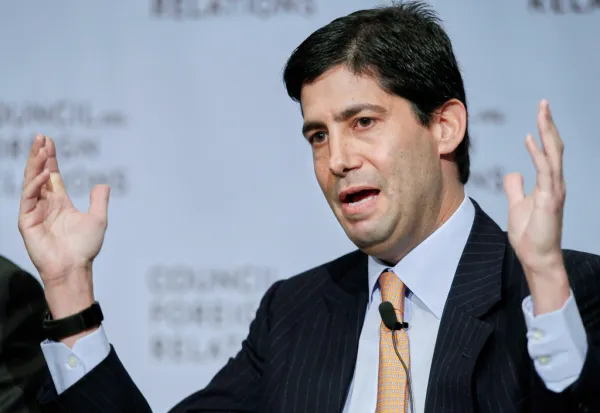
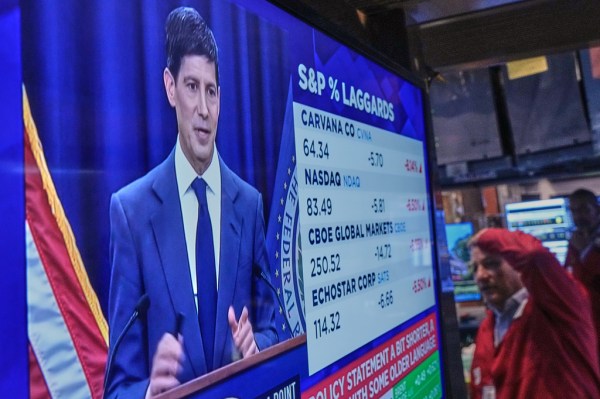
Kevin Warsh, President Donald Trump’s nominee for chairman of the Federal Reserve Board of Governors, has said he intends to bring reform to the Fed if confirmed. While he will have some latitude to steer the central bank, he will also face a number of obstacles to any course he tries to chart.

The Senate Banking, Housing, and Urban Affairs Committee is set to vote on advancing Warsh’s nomination on Wednesday, and his confirmation will then head to the Senate for a full vote. He is meant to replace outgoing Fed Chairman Jerome Powell and has pledged to make significant changes at the central bank.

WARREN CLAIMS TRUMP THREAT TO FED HAS ONLY GROWN DESPITE DOJ INVESTIGATION CLIMBDOWN

Still, there are limitations to what the Fed chair can do alone — especially when it comes to interest rates, which have been of the most importance to Trump.

That is because while the Fed chairman leads the Fed board and messaging, interest rate decisions are made by a 12-person board known as the Federal Open Market Committee. The FOMC decides collectively on the course of interest rate policy.

“Very little, if anything, can be done of substance single handedly, it’s almost always either a vote of the Board of Governors or a vote of the committee,” Dennis Lockhart, former president of the Federal Reserve Bank of Atlanta who worked with Warsh for several years at the Fed, told the Washington Examiner.

The Fed’s mandate and ‘mission creep’

One thing that Warsh emphasized during his confirmation hearing is that the Fed needs to return to its core mandate of price stability and maximum employment.

The Fed nominee has argued that in recent years, including under Powell, the central bank has stretched the bounds of its remit by pushing politics and entering in policy conversations that don’t fit into its mandate.

Some Republicans and others have criticized the Fed and its regional banks for studies and research on climate change and other politically charged issues.

The Fed chair, though, won’t be able to unilaterally stop such activities. A lot is done by the Fed system’s 12 regional banks, which are under the leadership of various Fed presidents.

Stephen Kates, a financial analyst at Bankrate, said attempts by Warsh to reform in that area might fall into the “soft power” category.

“Because if he tries to be a cooling influence on some of that more marginal, extraneous work — he might not outright be able to say, ‘You have to stop,’ but he might say, ‘Look, we don’t need to be doing, this isn’t the work we want to be doing,’” Kates told the Washington Examiner.

He said that influence over curbing some of those studies and work might take place over a longer period of time as Warsh exerts sway across the Federal Reserve system.

Ryan Young, senior economist at the Competitive Enterprise Institute, pointed out that both Powell and former Fed Chairman Ben Bernanke have come out and said they don’t believe the central bank should be a climate regulator, and expects that Warsh holds similar views.

“That said, the Fed is the largest employer of PhD economists in the country, more than any university, and a lot of them are interested in climate research,” Young told the Washington Examiner.

Staffing

While not discussed at his hearing, Warsh has indicated that he might try to make some staffing changes at the central bank. He has indicated in interviews that there is “dead wood” at the independent agency and that change will involve “breaking some heads.”

And if he is confirmed as the next Fed chairman, Warsh would be able to go in and start implementing staff changes, Aaron Klein, a senior fellow in economic studies at the Brookings Institution, told the Washington Examiner earlier this year.

“As chair of the board, he has significant authority among staff, not just about the size of the operation, but also about who is in charge — the staff report to the chair, so he has a lot of authority,” Klein said.

Still, Klein said, there is a long history of outsiders who have called for smaller government but then, once in charge, find that much of the staff is essential.

“Could he slash the staff of the Fed? Yes. Is he likely to? History says no. Could he change senior officials? Absolutely,” Klein said.

It would also be more challenging to reshuffle staff at the Fed’s regional banks, given that they answer to the individual banks’ presidents. Changes at the Fed’s headquarters in Washington would be more likely.

“If he wants to make cuts at, say, the St. Louis Fed’s FRED database staff, I don’t think he can do that, I think that’s under the St Louis Fed’s control,” Young said Tuesday, referring to the data mapping and charting unit used by the central bank.

Forward guidance and messaging

One reform that Warsh mentioned during the hearing and he might have some sway over, is how he messages to the public.

During his confirmation hearing, Warsh said that he thinks there is too much “forward guidance” from the Fed board — basically, that they put out too many public projections for interest rate policy decisions and inflation.

One clear example of this is what is known as the “dot plot.” The dot plot is currently released every other Fed meeting and is a visual survey that shows where each member thinks interest rates should be in the coming months and years.

Warsh indicated he wanted to push back on some of that forward guidance.

“I think if the Fed were to wait until it gets into a meeting before making a decision, that incremental deliberation can keep the central bank from compounding its errors,” Warsh said. “I think these are big changes that are needed, and if confirmed, I look forward to doing it.”

But Lockhart said that any changes to forward guidance, such as the dot plot, would likely require the formation of a committee to discuss and make decisions on communication more broadly, rather than a decision Warsh makes alone.

“If he wants to do away with the dots, it will be a discussion, probably of a delegated committee to focus on communication, which the FOMC has had in the past,” Lockhart said.

WARSHACH TEST: TRUMP’S FED CHAIRMAN PICK KEEPS MONETARY ANALYSTS GUESSING

Also, Powell gives press conferences every single Fed meeting where he fields questions for 45 minutes to an hour. Those, Warsh would have far more leeway in changing. Warsh will be able to use his own discretion as to how much he communicates to the public.

“He can do whatever he wants, from no press conferences to continuing with Powell’s practices after each meeting, he can certainly do that,” Lockhart said.