

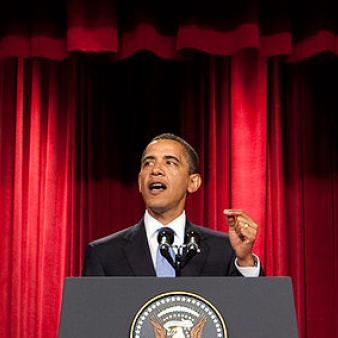
Say what you will about Barack Obama, but his approach to the Middle East has been ruthlessly consistent. He was elected on the promise to end America’s involvement in the post-9/11 wars in Iraq and Afghanistan. He didn’t fulfill those promises as rapidly as his supporters wished – he preferred what his advisers thought would be a “responsible” retreat rather than a full-fledged bug-out, and in Afghanistan masked his withdrawal timetable behind a temporary troop surge – but he’s made and making good on his word. No event – not the slow-motion collapse of post-Bush Iraq, nor the many failures of governance in Afghanistan – has shifted the president from his course. Indeed, since the killing of Osama bin Laden, the pace of retreat has picked up measurably.
Beneath these strategic promises kept lies a geopolitical premise: The Middle East isn’t really that important. This was, initially, the logic of the “Pacific pivot,” but as the last several years have made plain, the pivot was not so much to East Asia as away from the Middle East. This isn’t an entirely ridiculous idea, at least so long as Iran stops short of fielding nuclear weapons. After all, energy resources are fungible and the United States is fracking its way to freedom. And though the region is full of dangers, none of the threatening actors seems strong enough to pose a serious balance-of-power challenge.
Stay informed.Stay ahead.
Join Washington Examiner for unlimited access to the news, analysis, and commentary that matter most.
Already a member? Log in
