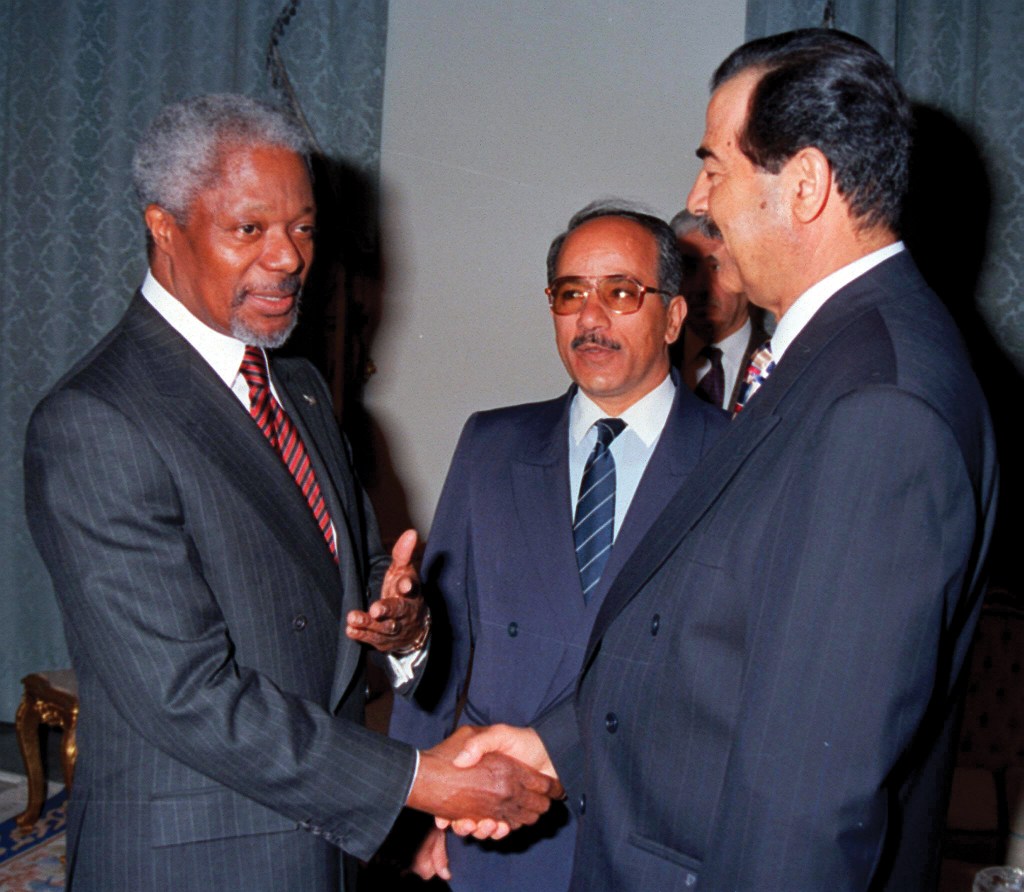
In United Nations circles, Kofi Annan’s death last Saturday is being mourned in terms more befitting a saint than a former secretary general. Ted Turner’s U.N. Foundation eulogized him as “a fearless champion for the powerless.” Departing human rights commissioner Zeid Ra’ad Al Hussein called him “humanity’s best example.” Current U.N. secretary general António Guterres tells us he was a “a guiding force for good” and a leader of “matchless dignity and determination.” He added, “In many ways, Kofi Annan was the United Nations.”
That much, at least, is true. Annan was the first U.N. chief to rise through the organization’s bureaucracy, where he first began working in 1962. For decades he focused on personnel and budget issues, navigating the U.N. maze. In 1993, he became head of peacekeeping, and from 1997 to 2006 he served as secretary general. In that post, he played a significant role in shaping the U.N.’s policies as it emerged from its Cold War paralysis with the aim of becoming supreme arbiter of the New World Order. In 2001, the Norwegian Nobel Committee awarded its Peace Prize jointly to Annan and the U.N., “for their work for a better organized and more peaceful world.”