

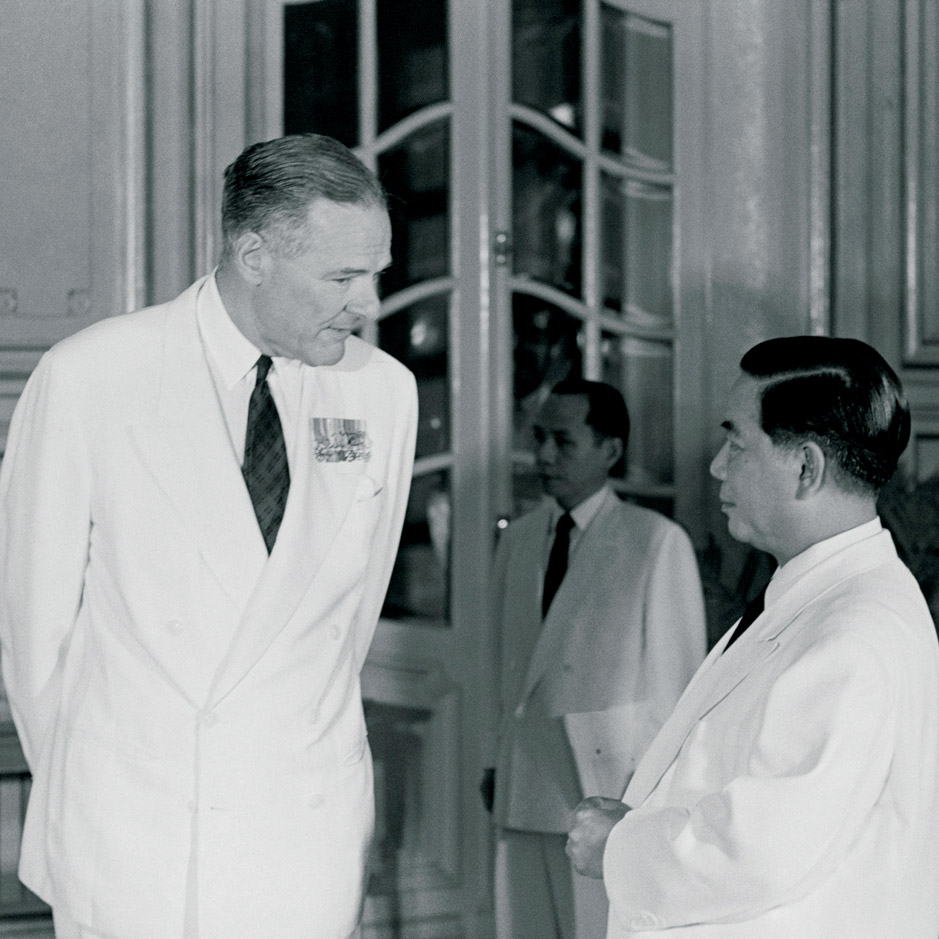
Fifty years ago this coming All Saints’ Day, the United States government concluded its patronage of Ngo Dinh Diem by dispatching him from the presidency of South Vietnam. His removal, in a U.S.-countenanced Vietnamese military coup, might have been less dramatic had President Diem not perished, with his brother and svengali Ngo Dinh Nhu, at the hands of junior Vietnamese officers entrusted with their safe exfiltration. But the coup’s consequences remained the same: a succession of keystone-kops military governments that finally settled on Nguyen van Thieu, who won elections and survived his own incompetence, and American impatience, even longer than Diem had.
The story of the coup against Diem was quickly obscured by the real and unmitigated pressures that had led to it—escalating U.S. alarm about the ability of South Vietnam to defeat the Communist insurgency—and the assassination of John F. Kennedy three weeks later. The 16,000 American military personnel in South Vietnam at the time of the 1963 coup grew tenfold within two years and more than thirty-fold within five. The rest is a sad and better-known story. It was only a decade later that Congress, drawing lessons from the Diem affair—and the attempts, successful and otherwise, on the lives of Patrice Lumumba, Rafael Trujillo, Fidel Castro, and others—banned the practice. After 9/11, the assassination ban suddenly seemed quaint.
Stay informed.Stay ahead.
Join Washington Examiner for unlimited access to the news, analysis, and commentary that matter most.
Already a member? Log in
