
Doug Elmendorf, a low-profile economist who leads a little-known congressional office, may hold more sway in the debate over President Barack Obama’s health-care overhaul than many lawmakers, administration officials or lobbyists.
The 47-year-old head of the Congressional Budget Office is the official scorekeeper for the cost of health-care proposals on Capitol Hill.
Recommended Stories

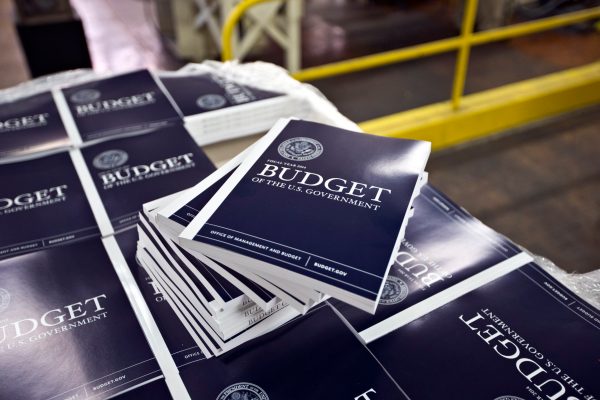

Elmendorf’s agency gets the final word on the price of a government insurance plan, the savings from fighting obesity and whether a bill fulfills Obama’s pledge to expand health-care coverage and cut costs without raising the budget deficit. The fate of the entire effort may rise or fall on that judgment.
“They’re god,” said Iowa Senator Charles Grassley, the top Republican on the Finance Committee. “If they say something costs X number of dollars, we can disagree all we want but unless you got 60 votes to override them it doesn’t do any good.”
At stake is legislation to revamp an industry that makes up 17 percent of the U.S. economy. Changes may affect insurers such as UnitedHealth Group Inc., of Minnetonka, Minnesota, and drug companies such as Indianapolis-based Eli Lilly & Co., along with every company that offers employee health-care benefits.
With a deficit the administration projects at $1.8 trillion this year, paying for broader health coverage is central to a bill’s prospects. Budget rules require lawmakers to use the nonpartisan CBO’s cost estimates unless Congress takes extraordinary steps — such as a supermajority Senate vote — to ignore them.
Budget Haggling
In what Obama calls a “make-or-break” effort to pass health-care legislation this year, two sets of negotiations are under way: political wrangling to assemble a package that can pass the House and Senate, and fiscal haggling over projections by Elmendorf’s budget experts.
Members of Congress have “not always been pleased by the numbers we’ve produced,” Elmendorf said during an hour-long interview. While CBO will “listen very carefully” to congressional views, Elmendorf said resisting political pressure is part of his job.
“We’re getting paid to provide them with our best estimate and what happens after that is up to Congress,” he said. “It’s not our job to get legislation passed.”
Senate Finance Committee Chairman Max Baucus told Elmendorf in February that the CBO “can make or break” a health-care bill. “We’ve got to be ever more creative to find intellectually honest pathways to get the savings that we’re going to have to have,” Baucus said.
Costs of Prevention
Illustrating the potential for disputes, the CBO has frustrated lawmakers who want credit for savings from steps to head off illness, such as expanded anti-smoking programs and cancer screenings. Among the reasons: the agency has said, essentially, that it may be cheaper if people die. Longer lives may mean bigger Social Security payments and higher Medicare costs for people who live long enough to develop other ailments.
Senate Budget Committee Chairman Kent Conrad said he has had a “bone of contention” with the budget office about a plan to have case managers coordinate care for Medicare patients seeing multiple specialists. “It just strikes me as obvious that it would save money,” said Conrad, a North Dakota Democrat. “Well, it’s not obvious to them.”
Lawmakers often try to pressure CBO without much success, Conrad said. “You can go make your case to them and, once in a while, you get some changes around the edges,” he said. “But usually not. I’ve never succeeded in getting anything major.”
Budget Deficit
White House budget director Peter Orszag, Elmendorf’s predecessor at the CBO, said yesterday that Obama will find budget savings to keep a health-care overhaul from swelling the deficit.
Democratic President Bill Clinton’s push for a health-care overhaul 15 years ago failed in part because the CBO said the plan would increase the deficit. Baucus, a Montana Democrat, said this time lawmakers have “spent a lot of time with CBO” trying to avoid a similar fate.
Elmendorf, who had worked at the CBO in the early 1990s, was appointed to the top job in January. While earning a doctorate at Harvard University in Cambridge, Massachusetts, Elmendorf’s dissertation advisers included Lawrence Summers, director of Obama’s National Economic Council. Elmendorf has worked at the Federal Reserve, the Treasury Department and the Washington-based Brookings Institution, a policy research group.
‘Tremendous’ Uncertainty
At CBO, more than 50 economists and public-policy analysts — almost a quarter of the agency’s staff — are churning out analyses as members of Congress put forward their own ideas for health-care changes.
There’s often room for debate because cost estimates are based on assumptions about how millions of businesses and individuals may respond to unprecedented changes.
“There should be no illusions about the precision with which we can make these projections,” Elmendorf said. “There is a tremendous amount of uncertainty.”
Resolving that uncertainty takes both skill and patience, said Robert Reischauer, a former CBO director. “I had many heated discussions with members of Congress,” he said. “You get good at listening and holding the phone about six inches from your ear, and if you have a weak stomach or are offended by colorful language, it’s not a job you should have.”