
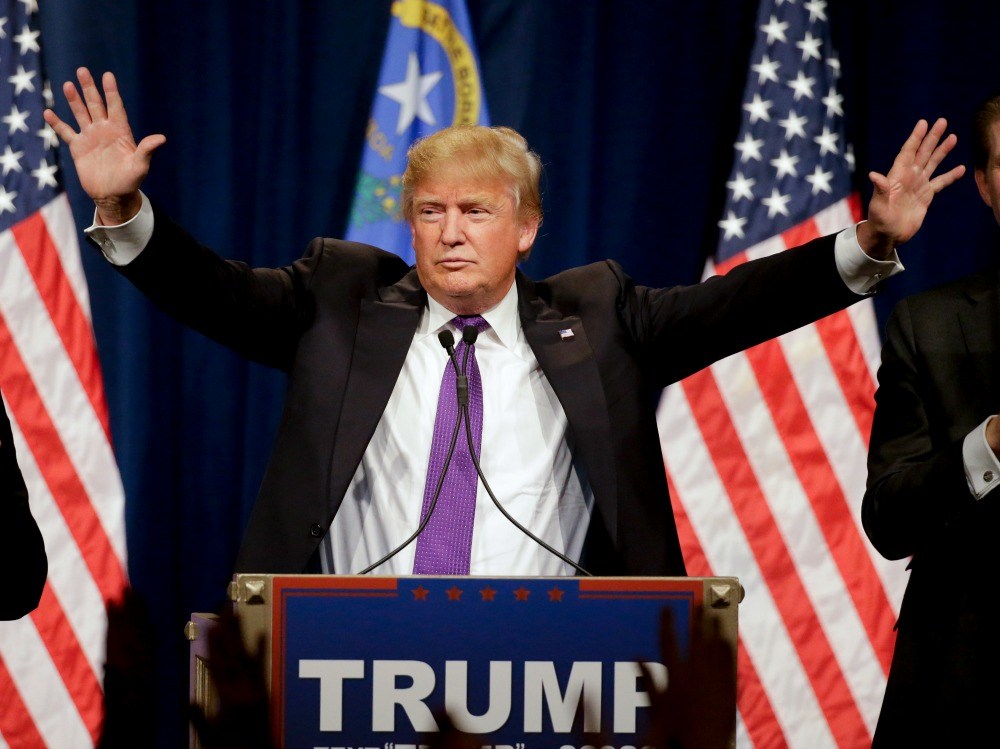
Donald Trump’s Republican opponents are panicking.
Time is running short to block the New York celebrity businessman from the GOP presidential nomination, and anxiety is mounting that he stands on the cusp of hijacking the party and refashioning it for brash populism. Republicans who oppose Trump fear that it would be the end for the traditional role the party has played in American politics as a bastion of conservative ideology and vehicle for conservative governance.
Recommended Stories
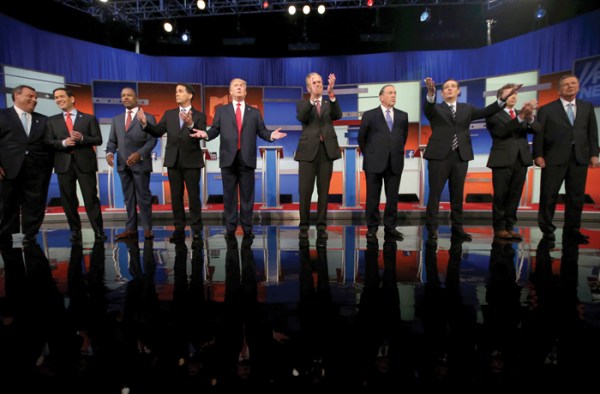
These worries extend beyond so-called establishment Republican politicians, who continue to hold out hope that Sen. Ted Cruz of Texas and Sen. Marco Rubio of Florida might derail Trump.
Republican voters who oppose Trump also fret about what the billionaire real estate mogul’s nomination would mean for the GOP. And they’re perplexed. These Republican primary voters describe themselves as every bit as frustrated with Washington and the direction of the country as their friends and neighbors who support Trump. But they have trouble understanding how that sentiment leads to support for a candidate they view as autocratic and ideologically vapid.
“I don’t want to insult people. But on the other hand, how anyone could vote for Trump is beyond me,” said Margaret Taormina, 74, a Rubio supporter from Henderson, Nev., who spoke with the Washington Examiner on Sunday while attending a Las Vegas rally for the Florida senator.
“The front-runner in this race is a liberal Democrat who wants to paint himself as a conservative,” Joseph Ramirez, 42, a Cruz supporter from Las Vegas, added during an interview with the Examiner earlier the same day, while attending a rally for the Texas senator in Pahrump, Nev.
Republicans in the “anyone but Trump” camp, as many refer to themselves, are downcast following the bombastic reality television star’s landslide victory in Tuesday’s Nevada caucuses. That comes on the heels of consecutive victories in New Hampshire and South Carolina.
Trump won with 46 percent of the vote amid a record turnout in the Silver State for a GOP caucus election. Rubio finished a distant second with 24 percent, followed by Cruz at 21 percent. That has shattered assumptions (at least for now) that Trump’s support is loyal but limited, and that his victories have been enabled chiefly by the fact that his multiple rivals keep dividing the anti-Trump vote among themselves.
Republican insiders and movement conservatives responded by ratcheting up their calls for the party, and the remaining candidates in the presidential race, to take Trump seriously. Stop focusing on consolidating the race and setting up a one-on-one matchup with Trump, and try and take him out — if that’s even possible ahead of next week’s Super Tuesday “SEC” primary. Thursday evening’s televised debate in Houston offers Trump’s opponents to answer this call, if they so choose.
Immediately following the Nevada race being called for Trump, his rivals responded by attacking each other, rather than Trump, striking many influential Republicans and conservatives as tone deaf.
Tuesday evening, as the results in Nevada were still coming in, the Washington correspondent for the Toronto Star, Daniel Dale, tweeted: “Trump is winning evangelicals, moderates, northeasterners, southerners, westerners…and his rivals are still attacking each other.” Conservative writer Guy Benson circulated Dale’s tweet to his followers, adding in his re-tweet: “The Stupid Party.” Many of Trump’s GOP opponents are imploring long shots Ben Carson and John Kasich to exit the race and spur consolidation.
Neither Carson nor Kasich are listening. Carson, the retired pediatric neurosurgeon, responded to his fourth consecutive back-of-the-pack loss by saying that the race is just getting started and he’s not going anywhere. On Thursday, the super PAC supporting Kasich, Ohio’s governor, unveiled a new television ad attacking … Rubio. Republicans who prefer Cruz and Rubio argue that it’s time the other sack their campaign because they can’t win.
“These are fine people, they just don’t have a pathway to victory. I don’t know what their motivation is [for] staying in the race,” Texas Lt. Gov. Dan Patrick, a staunch Cruz backer, told reporters earlier in the week. “Maybe someone wants to sell books, maybe someone wants to be vice president, maybe someone wants to be in a cabinet position. But they sure as heck aren’t going to be the nominee of this party. It’s either going to be Donald Trump or Ted Cruz.”
“The only candidate who can unite enough of the party to stop a Trump nomination at this point is Marco Rubio,” countered Republican consultant Josh Holmes, who is neutral in the race but no fan of Cruz. “The question is whether the field will narrow enough by the March 15 winner-take-all states in order to give him a shot to do that. If they are still splitting the anti-Trump vote three ways on March 15, it is going to be very difficult for anyone to catch him.”