
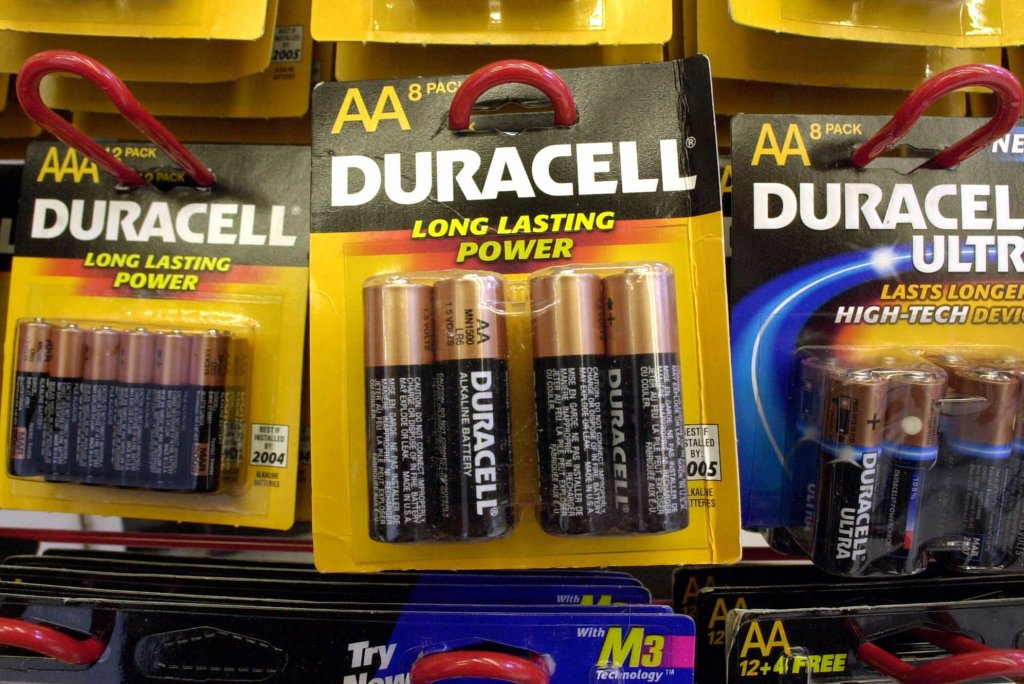
As the presents are unwrapped on Christmas morning, so too are the scores of batteries that make the electronic fare light up the holiday.
But underlying that need for electricity at our fingertips in the form of Energizers and Duracells is a dirty little secret: We are desperately dependent on lead.
Recommended Stories


And it’s not just for toys. Lead batteries are everywhere: cars, hospitals, nuclear power plants and in the data centers owned by the likes of Google and Apple that make cellphones, laptops and tablets so useful and fun.
Lithium, used to power cellphone batteries, is far from displacing lead for electricity storage. Lead demand is growing globally, and the U.S. is becoming more dependent on imported lead to satisfy its fix.
Even electric cars, such as the Tesla Model S, and other green models need lead batteries to run their systems, while the large, expensive lithium-ion batteries drive the vehicles. Lead proponents and others say lithium is too rare and expensive to displace the lead used in batteries and electronics anytime soon. Plus, lithium can’t be recycled and there is no established secondary market for lithium-ion batteries.
It’s not something people think about much, but because U.S. demand for lead is increasing, the nation is becoming more dependent on other countries.
The U.S. Geological Survey, the government’s main source of data on metals and consumption trends, shows the demand for recycled lead has been shipped abroad with the closure of the last lead-recycling facility in the U.S. in 2013. Now, most of America’s lead for batteries comes from secondary market recyclers in Mexico, Canada and Asia.
The amount of lead recovered each year from scrap batteries increased from 900,000 metric tons in 1995 to more than 1.1 million in 2012, according to the Geological Survey, with the percentage of lead production from battery scrap rising from 65 percent to 87 percent.
That paints a picture of a vicious cycle in which the U.S. uses lead-acid batteries domestically, then has to pay to export them to be recycled, only to have them shipped back as imported lead to make more batteries and electronics in the U.S.
That’s an important fact, since the agency says lead demand will only rise, leaving the U.S. with no capacity to recycle its own lead.
The agency says one of the reasons for the lack of lead refining capacity is the Environmental Protection Agency’s more stringent air quality rules, which has driven the big smelters to close up shop. Most of the lost U.S. capacity has moved to Mexico. That has led to increased competition for any would-be U.S. lead refiners, which must fight with Canadian and Mexican facilities for market share, the Geological Survey said.
About four years ago, Canada began losing ground, and Mexico is rising as the lead king. In 2012, “the amount of lead scrap exported to Canada had decreased to about 10 percent, and the amount of lead-based scrap products, primarily batteries, exported to Mexico from the United States had increased to 47 percent,” the agency said.
The Obama administration appears to recognize the growing lead gap and is taking action to speed up the integration of more distributed, and cleaner, lead-production facilities beginning in the Western states.
Steve Cotton, the chief commercial officer for the company Aqua Metals, received a tidy $10 million loan guarantee from the Department of Agriculture recently to build a new lead-recycling facility in Nevada that uses a cleaner, electrochemical refining process, not boilers and high-emitting smelters, to strip the lead out of batteries.
Reuters described Aqua Metals’ process as having the “potential to transform the $24 billion global lead industry.”
Cotton said the growing global demand for lead is requiring the nation to rethink its dependency on the metal, and instead of using smelters offshore, doing more of the recycling in the U.S.
“Therein lies the market opportunity” for his technology, he said. His company’s technology can produce much better lead at less cost, while eliminating emissions and the vicious export-import cycle.
In addition, the new facility the administration is helping the company build in Nevada will use renewable energy to generate the plant’s electricity, as opposed to smelters that use natural gas.
Nevada’s energy portfolio is at about 40 percent renewables, so the state energy mix is a good match for the facility, he says.
Cotton said the EPA “needs to be more aware of what we are doing. We have a lot to talk about.”