
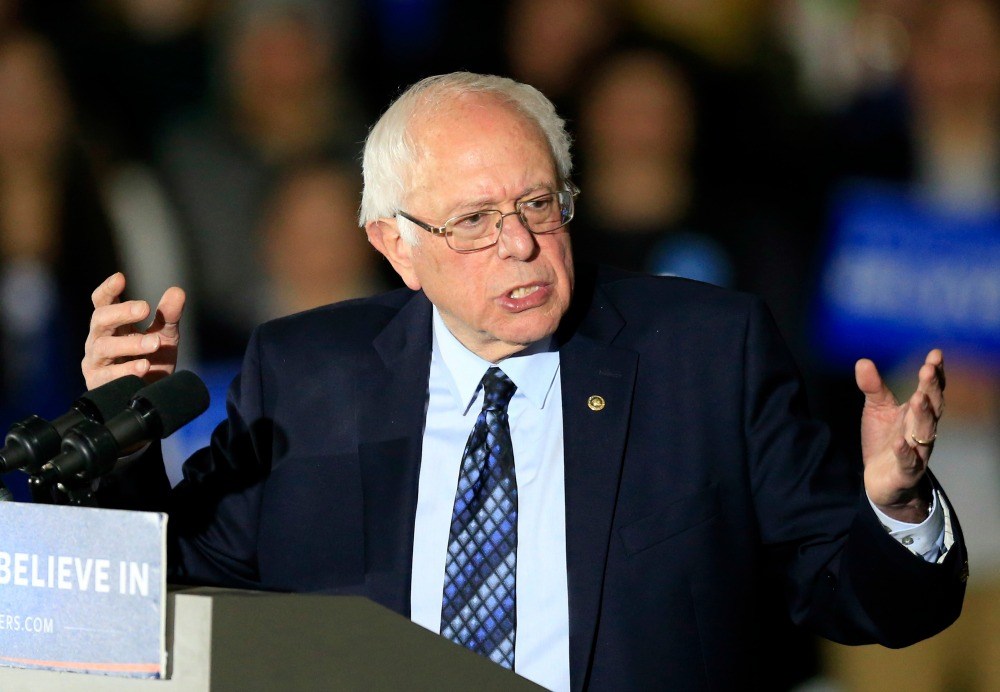
Bernie Sanders’ presidential campaign proposals would raise taxes by $15.3 trillion, according to an analysis published Friday, with the burden of the new taxes falling on everyone, but hitting the rich especially hard.
The Vermont senator’s tax plans, meant to finance an ambitious slate of new government programs, would raise taxes by $9,000 on average, according to the study. He would nearly halve the after-tax income of the top 0.1 percent of income earners, those making more than $3.7 million today, but everyone would pay significantly higher taxes.
Recommended Stories
“Sanders is clearly betting that people are willing to pay for his expansive new welfare state and he’s very explicit about how the burden is going to be shared,” said Len Burman, the director of the Tax Policy Center, the Washington think tank that conducted the analysis. “There’s a giant tax increase, mostly on the rich, but everyone will pay more.”
Sanders’ proposed tax hikes, Burman noted, are larger in size than the tax cuts promised by Republican presidential candidates on the campaign trail. They would boost total federal revenues by nearly 40 percent over the next 10 years.
Sanders, a socialist who is running a left-wing populist campaign for the Democratic nomination, has outlined plans for single-payer health care, massive infrastructure spending, an expansion of Social Security and free college tuition.
He has spelled out how he would fund those programs by raising revenues and also has proposed additional taxes meant to curb financial speculation and reduce carbon emissions. His plans include returning income tax rates to pre-Ronald Reagan levels, raising capital gains taxes to the same rates as those on income, capping tax breaks for the wealthy, boosting the estate tax, and cracking down on corporate tax avoidance, in addition to a host of other tax hikes.
The biggest tax increases in his plan, accounting for two-fifths of the overall sum, would be the new 6.2 percent payroll tax and 2.2 percent income tax implemented to pay for Sanders “Medicare-for-all” health care plan.
Critically, Sanders’ campaign has maintained that middle-class households would benefit in the deal: They would save more in health insurance premiums, which would be eliminated, than they would have to pay in new taxes.
But the result of those and other new taxes is that middle-class families would be hit with significant tax increases, an election-year liability for the Democratic candidate.
“Bernie Sanders is very open about raising taxes on everybody,” Burman said, even though, as he noted, the majority of the burden would fall on very high earners.
The middle fifth of taxpayers, households earning about $45,000 annually, would see a tax increase of $4,692 starting in 2017, or nearly 9 percent of their income.
Even the bottom fifth, earning less than $23,000, would have to pay $165 more in taxes to start out, although the tax bite would be diminished in future years as Sanders’ carbon tax scheme kicked in and they started to receive rebates.
Those middle-class tax hikes are a major difference between Sanders and his Democratic rival, Hillary Clinton. Her plan, according to the Tax Policy Center, would entail nominal middle-class tax increases, generated indirectly by new taxes on businesses.
In addition to raising taxes on the middle class, Sanders’ plan also would raise tax rates on work, savings, and investment, potentially crimping economic growth.
According to the Tax Policy Center analysis, the marginal effective tax rate for new business investment would soar from 23.2 percent today to 32 percent under Sanders’ plan.
Marginal effective tax rates on labor would rise across the board but especially steeply for high-income earners, who are most sensitive and most likely to change their behavior in response to taxes. The combined payroll and income tax rate on the top 0.1 percent would rise from 43.1 percent today to 64.2 percent.