

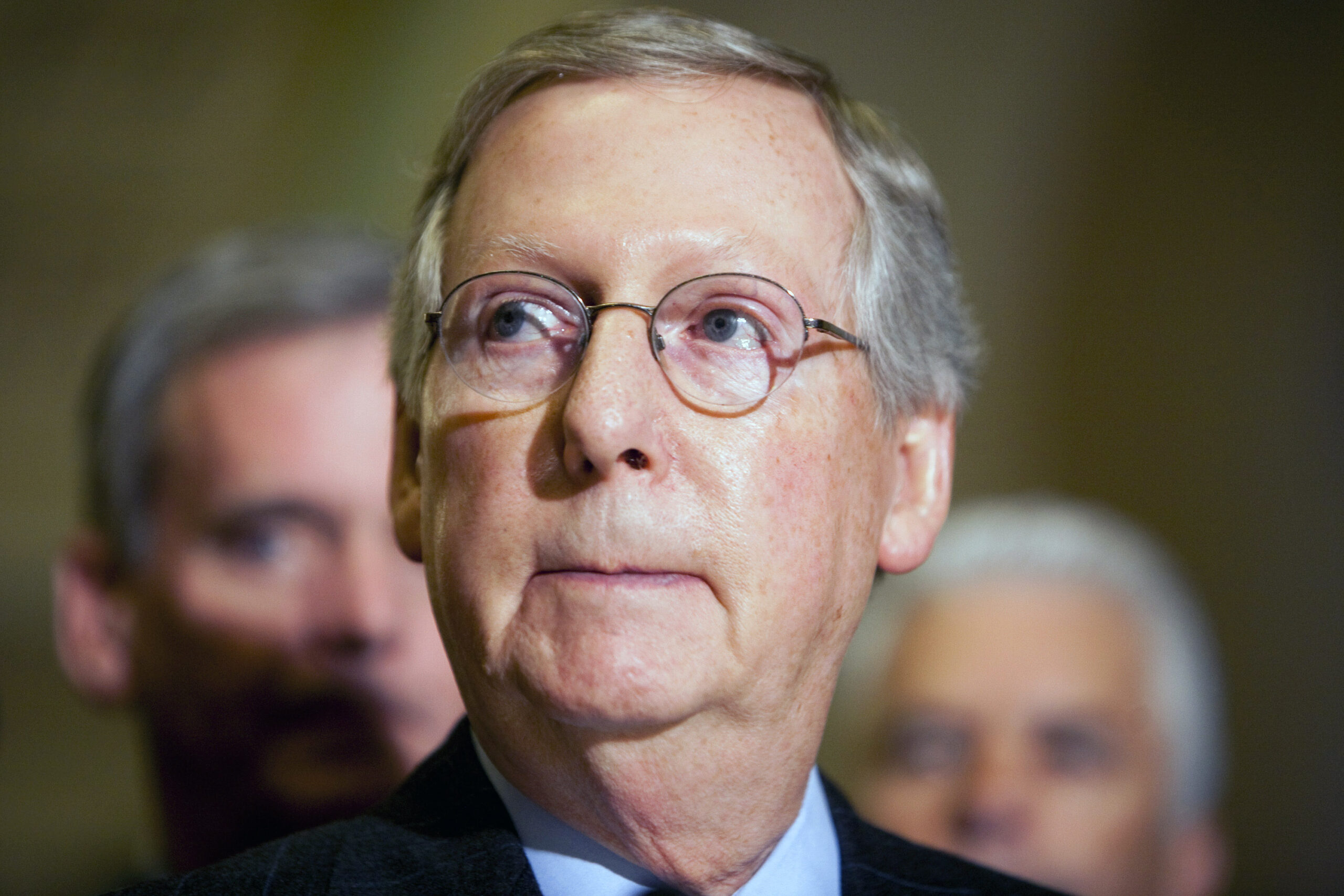
Republicans enter the 2016 election year with unified control of Congress, but the stark contrast in the styles of House Speaker Paul Ryan and Senate Majority Leader Mitch McConnell is likely to push the two legislative bodies down different paths.
Ryan rose to national prominence as the GOP’s idea man, nudging the party to adopt sweeping reforms to federal entitlement programs and challenging assumptions about what was politically possible. He has consistently argued that to win elections, Republicans have to offer a bold policy vision that serves as a compelling alternative to the Democrats’ agenda.
Recommended Stories



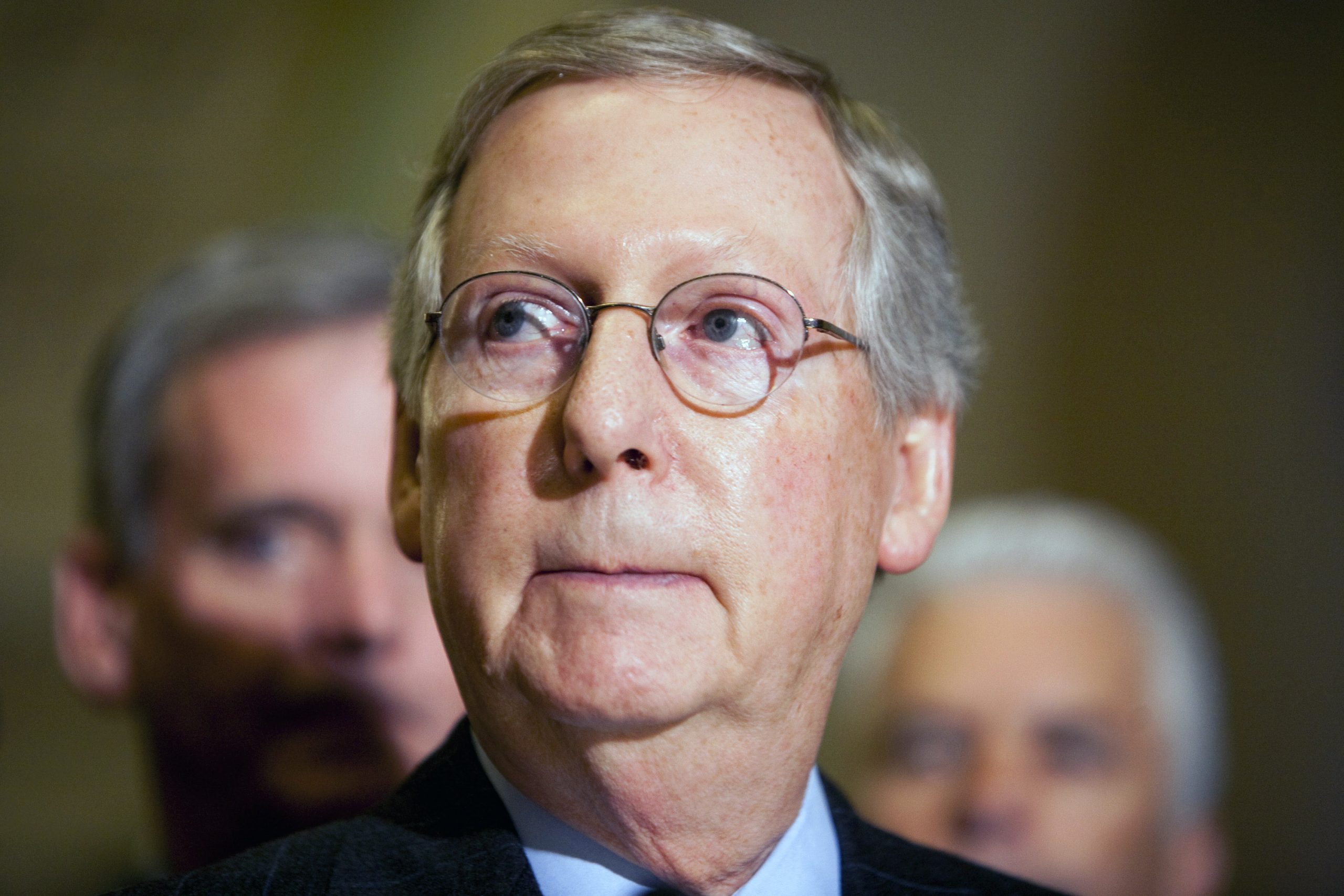
When Republicans were in the minority, McConnell used his mastery of arcane procedural rules to thwart Obama’s agenda. (Bloomberg)
In contrast, McConnell, who was first elected in 1984, the same day as Ronald Reagan’s reelection landslide over Walter Mondale, is a creature of the Senate. When Republicans were in the minority, and as Ryan was pumping out policy papers, McConnell used his mastery of arcane procedural rules to complicate President Obama’s legislative ambitions and tie up his judicial and administrative appointments.
Since assuming the leadership of the Senate following Republicans’ 2014 victory, McConnell has focused more on creating a functional Senate that avoids major conflicts and passes bipartisan legislation. His aim is to ensure that Republicans are seen as responsible enough to hold the reins of power.
As the business of Congress starts to be overtaken by the election this year, Republicans can choose between two directions.
One path is for Republicans to hold targeted votes aimed at embarrassing Democrats and boosting GOP candidates in key races and in important swing states. The other is to present an alternative agenda that, even if Senate Democrats filibuster bills or Obama vetoes them, provides something for Republicans to run on and enact should they recapture the White House.
Democrats pursued the latter strategy in the run-up to the 2008 election, when they controlled both chambers of Congress, but not the presidency. They passed legislation that was either blocked by Senate Republicans or vetoed by President Bush. Much of it was re-passed in 2009 and swiftly signed into law after Obama took power.
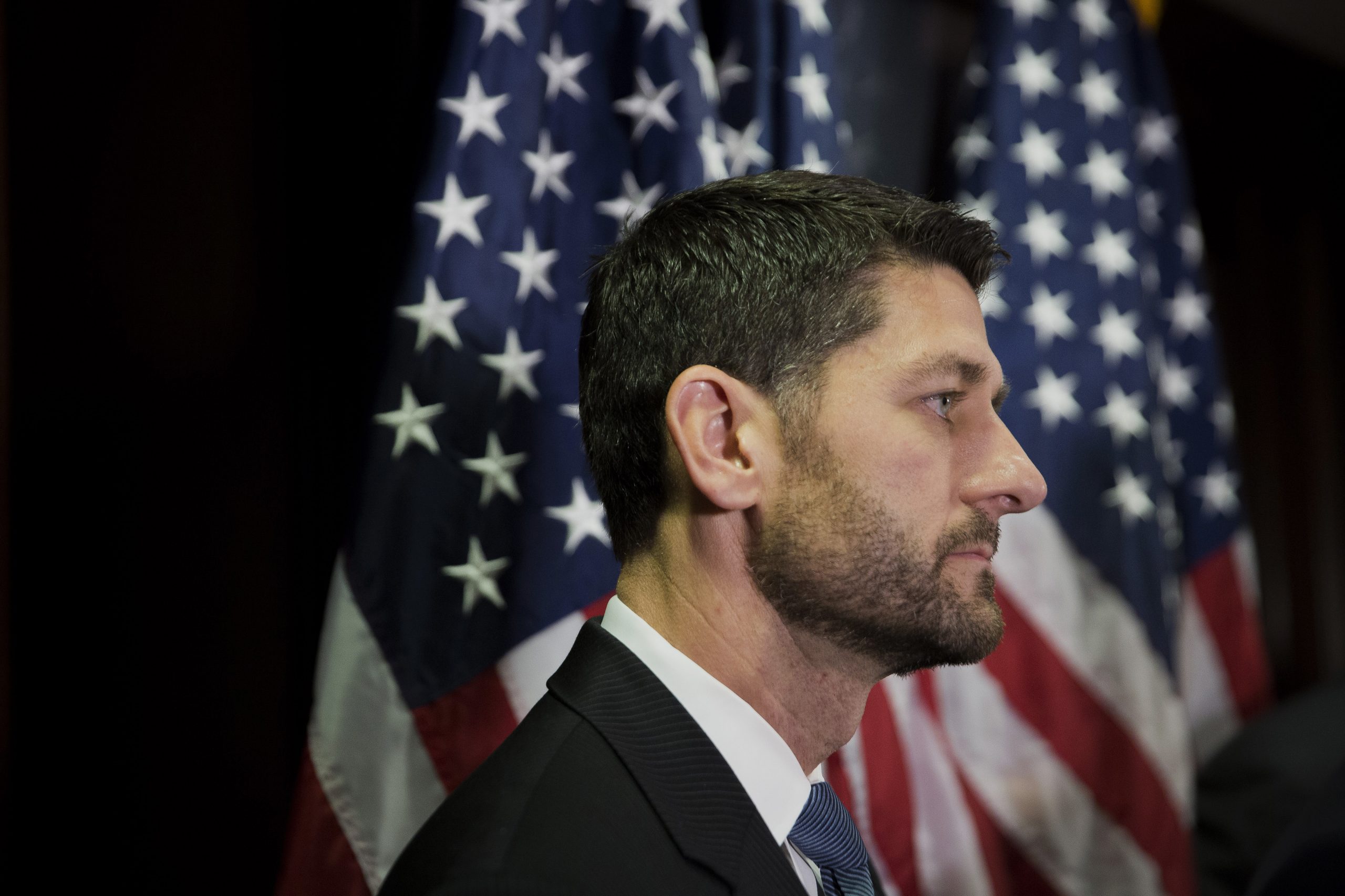
In the early Obama years, Ryan wrote a “Roadmap for America’s Future”: a conservative vision for overhauling the U.S. social safety net and U.S. tax code. (Bloomberg)
Ryan has made clear that this is his preferred path. A disciple of Jack Kemp, whose 1978 tax legislation in the House helped form the basis for what would become the historic 1981 Reagan tax cut, he has consistently talked about the need for Republicans to be bold.
In the early Obama years, when Republicans were in the minority and most GOP lawmakers were focused on attacking the president’s priorities, Ryan wrote a “Roadmap for America’s Future.” It was a conservative vision for overhauling Medicare, Medicaid, Social Security, healthcare and the U.S. tax code. After Republicans took control of the House in 2011 and Ryan became House Budget Committee chairman, a streamlined version of the bill became the basis of Republican budgets ever since.
In an interview with the Washington Examiner in the run-up to the 2014 midterm elections, Ryan criticized the “play it safe” attitude that many Republicans had during an election year in which they smelled victory.
“This idea of running as a referendum, assuming a wave, assuming you’ve got the wind at your back, assuming with an unpopular president we therefore by default will win, I don’t buy that,” he said. “I think you’ve got to give people a reason to vote for you.”
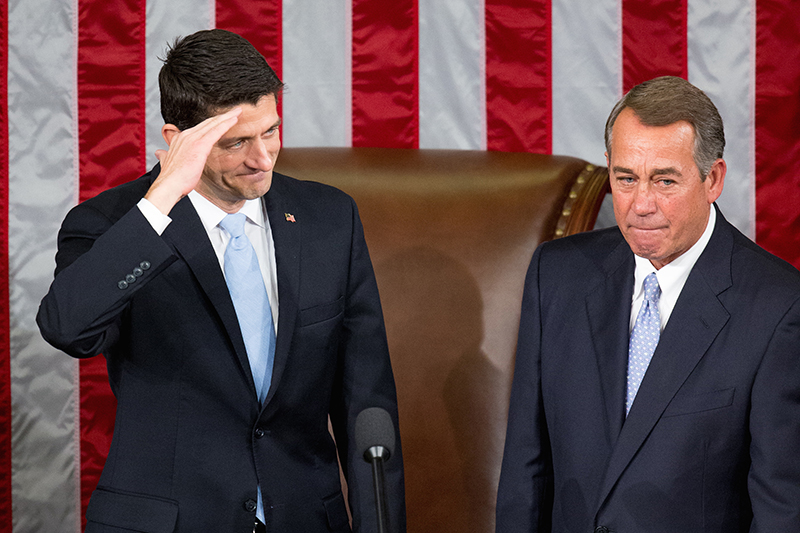
Ryan took command of the speakership from John Boehner in late October, and spent the balance of 2015 closing the year’s congressional business. (AP)
Having taken command of the speakership in late October, Ryan had to spend the balance of 2015 closing the year’s congressional business. McConnell, along with Ryan’s predecessor John Boehner, cleared the decks for 2016 by setting spending levels, allowing the renewal of the Export-Import Bank, easing sequestration, passing a highway bill and replacing the No Child Left Behind law.
Ryan has promised to advance a bold conservative policy agenda, given the few lingering items remaining from last year.
“If we want to save the country, then we need a mandate from the people,” Ryan said last month in a speech at the Library of Congress. “And if we want a mandate, then we need to offer ideas. And if we want to offer ideas, then we need to actually have ideas. And that’s where House Republicans come in. So, our No. 1 goal for the next year is to put together a complete alternative to the Left’s agenda.”
Ryan sketched out positions on issues including reforming the tax code, replacing Obamacare, advancing free trade and overhauling anti-poverty programs.
“We are not here to smooth things over,” he said. “We are here to shake things up.”
He challenged conservatives to have confidence in their own ideas. “Don’t give [Democrats] a win by default,” he said. “Put together a positive agenda, and take it to the American people. Give people the choice they are yearning for. And if next year, this House can say we have done that, then we will have done our job.”
Ryan has vowed to work with committee chairmen to translate conservative philosophical ideas into tangible policies that could be passed through the House. That process will begin in earnest this week, when Republicans meet for a policy retreat.
AshLee Strong, Ryan’s press secretary, told the Examiner, “In 2016, House Republicans will present Americans with a complete alternative to the Left’s failed agenda. Speaker Ryan believes we can’t simply say what we’re against, rather we need to define ourselves with policy solutions.”
McConnell, however, has been much more cautious in laying out expectations for the year.
His aim since taking over Senate leadership has been to prevent Republicans from being thought of as irresponsible and nihilistic, an image he fears was fostered by fights over the debt ceiling and defunding Obamacare. He declared early on that there would be no shutdowns on his watch.
Late last year, McConnell took to the Senate floor to tout what he considered the great bipartisan accomplishments of 2015 under his leadership. He’s made an effort to move away from Minority Leader Harry Reid’s top-down leadership style toward a more open process that allowed committees to do their work and provided an opportunity for senators to offer amendments.
“Last election, the American people chose a new direction with a new Republican majority in Congress,” McConnell said. “We’ve been working hard ever since to get Congress back on their side and back to work. Over the past year, Americans have seen committees up and running again. Americans have seen bills passing again. Americans have seen meaningful, bipartisan bills being signed into law again. Americans have also seen members of opposing parties working together to make progress on important issues.”
Heading into 2016, McConnell outlined goals that were much narrower than Ryan’s.
“What we decide to allocate floor time to in the Senate, to be quite candid with you, is going to be to some extent … dictated by concerns I have about places like New Hampshire and Pennsylvania and Ohio and Wisconsin and Illinois,” McConnell told The Wall Street Journal in an interview about his plans for the year. All of the states he mentioned have tight Senate races.
He also argued to the newspaper that “the House is just better suited to be kind of an idea factory and to pursue things that the speaker hopes will be picked up by the presidential nominee.”
While Republicans control the Senate, any sort of legislation they attempt to pass will be vulnerable to a Democratic filibuster since Republicans lack 60 votes.
It’s easy to see a scenario for 2016 in which Ryan and McConnell work together on any must-pass legislation, but otherwise go their separate ways. Ryan could shepherd legislation through the House that reflects the kind of bold agenda he’s long spoken about, whereas McConnell could focus mainly on avoiding major conflicts and holding targeting messaging votes.
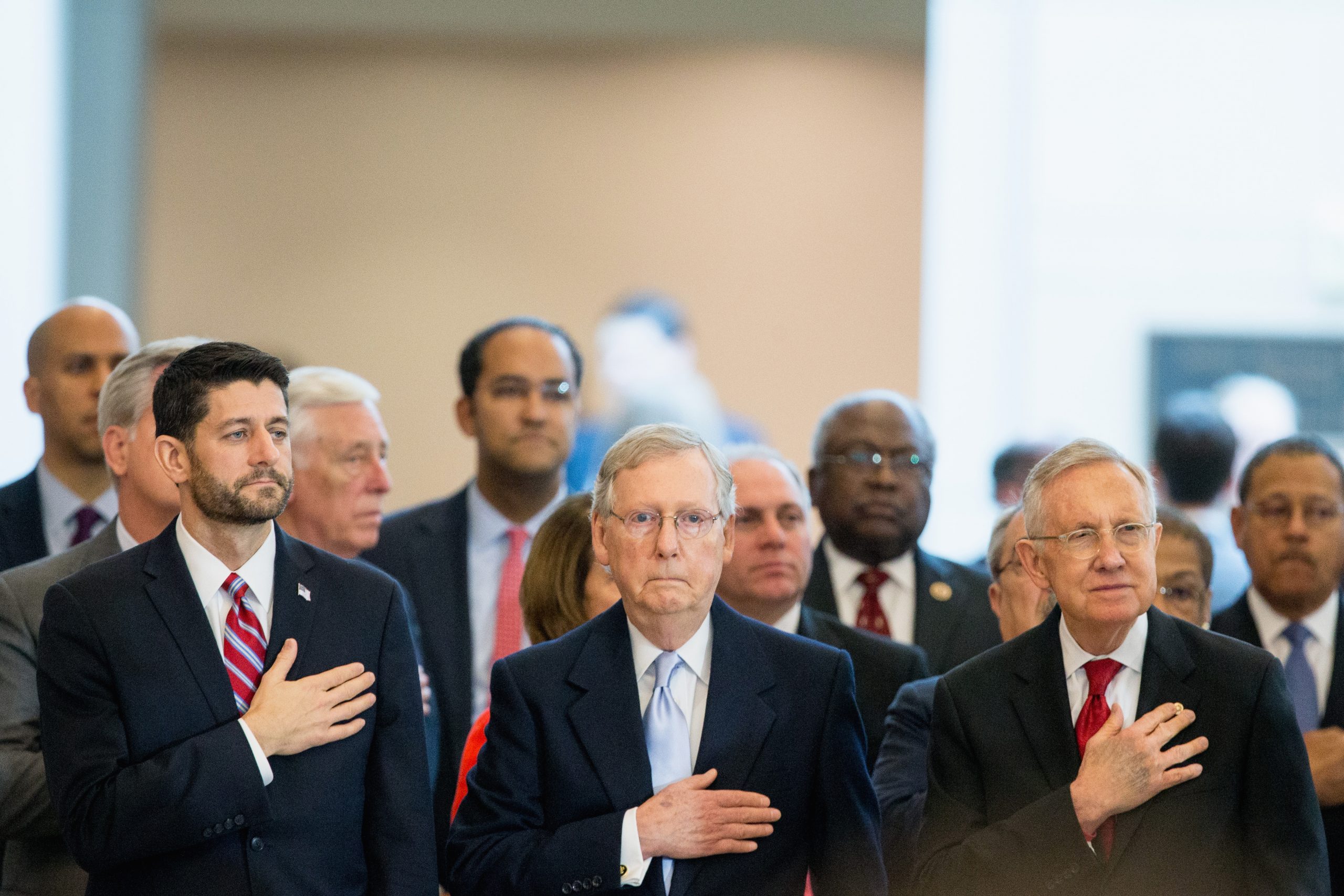
While Republicans control the Senate, any sort of legislation they attempt to pass will be vulnerable to a Democratic filibuster since Republicans lack 60 votes. (AP)
But in choosing the path of least resistance, McConnell may not actually end up avoiding conflict, especially with conservatives who are fighting for Congress to be more aggressive on the policy front.
As Donald Trump has gained traction in the Republican primaries, one line of analysis has been that the root of his success lies with the party’s leaders, who for years, in the face of a populist revolt against Washington, overpromised and under-delivered when it came to providing solutions to the nation’s problems.
Michael Needham, one of the promoters of the 2013 effort to defund Obamacare as CEO of Heritage Action for America, has put McConnell on notice that conservative activists would be pushing Congress to be bold in 2016.
“We’ve been saying for five years that there is this populist notion out there in this country and if you don’t harness it with a big policy agenda and show how people’s frustration with Washington is correct, and here are the solutions that it should be channeled to, and if you don’t do that, you’re either going to get some sort of negative populism or you’re going to get the Democrats, the traditional populist party, to channel it,” Needham said.
Though Needham said Ryan could have pushed further on conservative policy goals in late 2015, he was encouraged by his vow to advance big ideas in 2016, in contrast to McConnell.
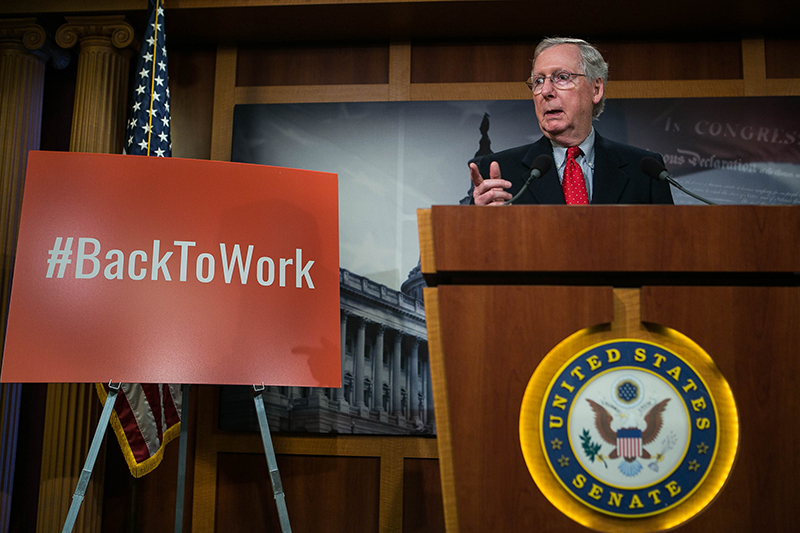
“Last election, the American people chose a new direction with a new Republican majority in Congress. We’ve been working hard ever since to get Congress back on their side and back to work.” (Washington Examiner)
“McConnell clearly cares more about the process of bills moving through the Congress, less about the content of them,” he complained, suggesting that to the majority leader, “signing ceremonies are necessarily a victory regardless of whether it’s advancing Obama’s agenda or a conservative agenda.”
Needham said that this year, conservative activist groups such as Heritage Action would be pushing the Senate to take up House-passed legislation, and welcoming any Democratic filibuster.
“When the Democrats control the Senate, they make us filibuster bills,” he said. “They put forth their agenda and the media start hyperventilating about ‘Senate Republicans are filibustering bill X,’ and I think part of the purpose of passing big bills through the House is to send them over to the Senate.
“And if Harry Reid wants to filibuster tax reform that would get our economy started, then mazel tov, go filibuster, and we’ll make sure that every American knows that what the presidential election and what all these tight Senate races are about is whether you want tax reform going through or whether you approve of Harry Reid’s blocking tactics.”
He argued that, “Strong messaging votes that are designed to create a negative TV ad is the kind of divisive politics that people are sick of. People want to see a big, bold vision.”
Ryan, throughout his career, has straddled the line between an innovative policy guy and a party loyalist with an eye on the politically possible. His careful balancing act gained him credibility, enabling him to convince the normally timid GOP to embrace transformational reforms to Medicare, typically seen as a political third rail.
The question for Congress heading into 2016 is whether Ryan will try to get McConnell behind his strategy of outlining an ambitious policy agenda, or if the two leaders will guide the House and Senate in different directions.
