

Only five years after the Afghanistan War was abandoned and victory handed to the enemy, America is at war again. This time we’re fighting Iran. Ayatollah Ali Khamenei is dead. Good riddance. This old soldier is no pacifist. But after seeing my war in Afghanistan fall so horrifically into the long list of American losses, I had been encouraged by the popularity of peace. For a while, the conservative comment-o-sphere boasted about President Donald Trump’s commitment to no new wars. Now those same people are excited about the Iran war. They argue, “This war’s different.” Except it isn’t. The Iran war is the latest chapter in a very old story.
Trump and many pundits tell us that the Iran war had to be fought right now, or else Iran would perpetrate devastating attacks, possibly with nuclear weapons. We’ve heard versions of this from Lyndon Johnson’s Gulf of Tonkin address to George W. Bush’s 20 September 2001 ultimatum to the Taliban, and his WMD alarmism before Afghanistan and Iraq. America’s many wars always begin with righteous urgency.
Some claim the Iran war is different because of America’s amazing military might, comparing our plentiful advanced weapons to the enemy’s smaller, less sophisticated arsenal. We had the same advantage in Vietnam, Afghanistan, and Iraq (twice).
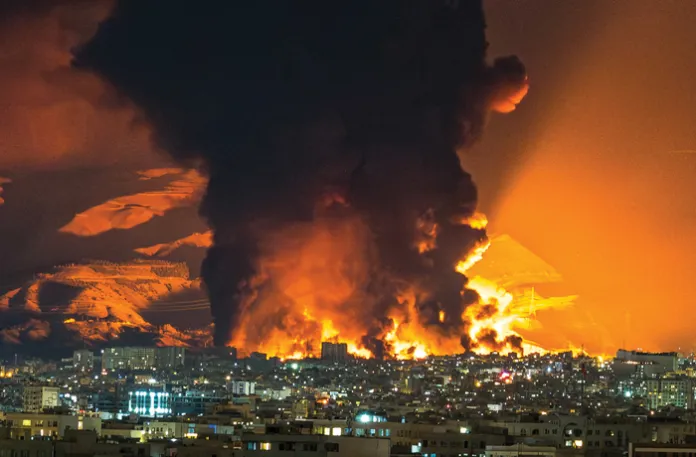
In the early days of many wars, we marveled at how quickly we destroyed the enemy so that victory was right around the corner. We bombed the enemy in Vietnam, and the public was assured that it would stop the communists. The communists are still there. Our invasion force in Iraq had trouble keeping up with the retreating Iraqi military. Then our troops endured thousands of IEDs. Our sophisticated bombs deposed the Taliban quickly. The Taliban still won.
When will we stop pretending that history’s many examples of costly and deadly military failures are the exception, not the rule? Will we ever stop sacrificing our soldiers on the altar of “This Time Will Be Different?”
I hope my worries about the Iran war are unfounded. I hope America achieves a swift, lasting victory in Iran. It may happen.
I don’t suggest we abandon the Iran war. War’s like open heart surgery. It’s best avoided, but once it’s been opened up, the procedure needs to be completed successfully, or else the situation is far worse. We need to finish what we started.
We don’t need American lawmakers sabotaging the war effort by stunts like the recently defeated war powers resolution, attempting to prevent the war from continuing without congressional approval. One cannot support the troops by dumping on their mission or trying to arrange its loss.
Bill Maher recently read, “The president had the constitutional authority to direct the use of military force because … such use of force was in the national interest.” When Sen. Adam Schiff (D-CA) rightly complained that language was too vague, Maher reminded him that it was President Barack Obama’s justification for war in Libya. Conservatives point out Schiff’s hypocrisy in opposing Trump’s power to make war with Iran, forgetting that they had Schiff’s same objections to Obama’s words.
America’s military deserves a government that’s united when it comes to war. To that end, we need laws that make war impossible without a clear congressional mandate. Since both parties view attempts to limit their president’s war powers as an attack on the party, Congress should vote, not to stop this president and this war, but the next president and the next war.
In its 250 years, not counting many smaller conflicts, America has been at war roughly 62 years, about one-quarter of its history. Half of that time, we were sending our soldiers to die or get messed up in wars we didn’t win. I pray for the families grieving their loved ones who have died in the Iran war. I pray for the safety and success of America’s warriors, for victory in Iran. But we have all seen this before. Something needs to change.
Trent Reedy, author of several books including Enduring Freedom, served as a combat engineer in the Iowa Army National Guard from 1999 to 2005, including a tour of duty in Afghanistan.
*Some names and call signs in this story may have been changed due to operational security or privacy concerns.
