

In the first Book of Samuel, the prophet delivers a clear command from God to King Saul: Utterly destroy the Amalekites, a vicious enemy of Israel, and leave nothing alive — not man, woman, child, or beast. Saul obeys in part, routing their army, but when he captures King Agag, he spares the tyrant’s life out of misplaced mercy. The prophet Samuel confronts the king in fury, then executes Agag himself. Rabbinic tradition records the devastating aftermath: Agag’s lineage survives, eventually producing Haman, the Persian vizier who plots the first attempted genocide of the Jewish people in the Book of Esther. From this episode, the sages distilled a timeless warning: “He who is merciful when he must be cruel will be cruel when he must be merciful.”
That ancient diagnosis of misplaced compassion now echoes with terrifying precision in the Democratic Party’s swift condemnations of President Donald Trump’s decisive military campaign against the Iranian regime. Just weeks after Iran’s rulers massacred thousands of their own citizens in the January 2026 uprising — estimates range from 3,000 confirmed deaths to as many as 36,000 — the United States and Israel launched Operation Epic Fury. The strikes targeted nuclear sites, military infrastructure, and the regime’s command structure, culminating in the death of Supreme Leader Ali Khamenei. Trump made clear the goal: End the threat once and for all and let the Iranian people reclaim their nation.
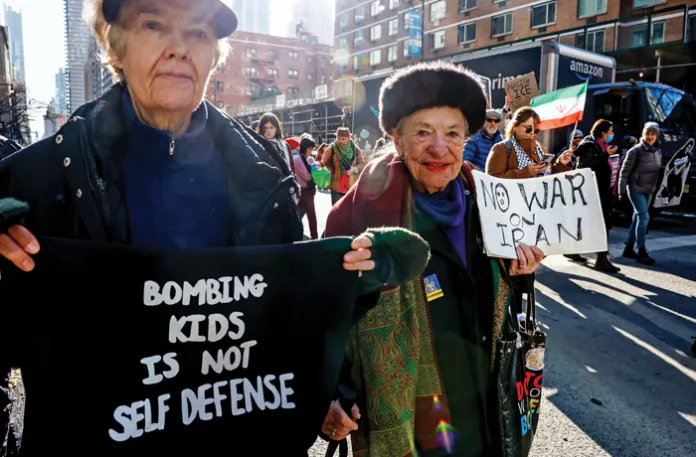
Radical Democrats responded not with relief for the Iranian people or gratitude for the removal of a regime that has sponsored terrorism, hostage-taking, and regional slaughter for nearly five decades, but with immediate condemnation. New York City Mayor Zohran Mamdani called the operation “a catastrophic escalation in an illegal war of aggression,” decrying “bombing cities” and “killing civilians” while insisting “Americans do not want another war in pursuit of regime change.” Rep. Ilhan Omar (D-MN) labeled it “an illegal regime change war,” claiming Trump was “unilaterally dragging this nation into an illegal and unjustified war.”
How could leading Democrats rush to shield the world’s most repressive regime, one that had just slaughtered its own citizens by the thousands, against decisive American action? The answer lies not merely in “Trump derangement syndrome,” though that pathology remains potent. It is something deeper, more insidious, and more dangerous: something that I call “empathy derangement syndrome.”
Derived from evolutionary psychologist Gad Saad’s concept of “suicidal empathy,” EDS describes the pathological warping of a healthy human impulse, compassion, into a self-destructive refusal to confront evil when it must be confronted. Empathy becomes deranged when it extends to the cruel at the direct expense of the innocent, the citizen, and the nation itself.
A regime that devoured its own
The facts are not in dispute. In January 2026, nationwide protests erupted across Iran after years of economic collapse, brutal theocratic rule, and simmering rage. The regime responded with unprecedented savagery. Security forces, backed by imported foreign militias, opened fire on crowds in Tehran, provincial cities, and beyond.
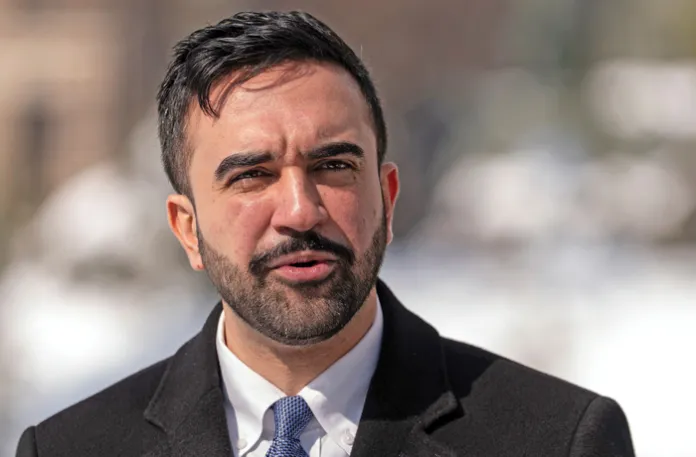
Amnesty International documented massacres on Jan. 8 and 9 alone that pushed the death toll into the thousands. Iran’s own supreme leader later admitted that thousands were indeed killed. Independent tallies from Human Rights Activists News Agency and others put confirmed deaths above 6,000, with credible estimates reaching 36,000. Tens of thousands more were arrested, and many were tortured in hidden facilities. (If you’ve seen Jafar Panahi’s It Was Just An Accident, which was nominated for Best International Film at this year’s Oscars, you have an inkling as to just how horrific and life-altering these facilities can be.)
The regime’s brutal crackdown was no aberration. Since seizing power in 1979, the Islamic Republic has executed political opponents by the thousands, funded Hezbollah and Hamas to sow regional chaos, taken American hostages, and pursued nuclear weapons in defiance of the world. It is the most murderous regime of the past half-century, a sponsor of global terrorism that has American blood on its hands from Beirut to Baghdad to the streets of Israel. Yet when Trump and Israel moved to dismantle its capacity for further slaughter, prominent Democrats could muster no outrage for the victims, only reflexive defense of the butchers.
The condemnation was swift and uniform on the Left. Mamdani, the socialist mayor of America’s largest city, issued his statement within hours of the strikes, framing American and Israeli action, not the regime’s mass murder, as the true aggression. Omar, who has long positioned herself as a voice for the oppressed, invoked her own refugee background to argue that military force solves nothing, ignoring that the force here targeted the very oppressors who export horror. Senate Minority Leader Chuck Schumer (D-NY) focused not on the regime’s nuclear ambitions or its fresh atrocities but on the supposed domestic cost of confronting them and the lack of congressional authorization. These were not cautious calls for congressional oversight. They were immediate moral inversions: The regime’s victims became afterthoughts, while the regime’s enablers became the aggrieved.
The pattern extended across the party. House Minority Leader Hakeem Jeffries (D-NY) denounced the strikes as lacking proper authorization, warning that troops were being put in harm’s way without justification while acknowledging Iran as a “bad actor” that must be confronted — but not this way, not now. Former Vice President Kamala Harris declared her opposition to a “regime-change war in Iran,” insisting that Trump’s actions placed American lives at unnecessary risk for a war of choice. Gov. Gavin Newsom (D-CA) called the operation an “illegal, dangerous war” that risked American service members, even as he condemned the regime’s repressiveness in separate remarks. Rep. Rashida Tlaib (D-MI) framed the strikes as fulfilling “violent fantasies” of political elites and the “Israeli apartheid government,” insisting voters wanted “No More Wars.” These voices coalesced almost instantly, prioritizing procedural objections, fears of escalation, and anti-interventionist rhetoric over any celebration of the regime’s weakening or the Iranian people’s potential liberation.
Amid this chorus, one prominent Democrat stood apart. Sen. John Fetterman (D-PA) praised the strikes as “entirely appropriate” and necessary, declaring on social media that he was “baffled” why so many in his party refused to support action to prevent Iran from acquiring nuclear weapons. He celebrated the elimination of “49 leaders of one of the most evil regimes in recorded history,” questioned who would grieve for such figures, and affirmed that Trump had done “what’s right and necessary to produce real peace in the region.” Fetterman vowed to vote against any resolution limiting the operation, bucking his party leaders to stand with the military effort and the goal of dismantling a murderous theocracy. His position highlighted the rarity of moral clarity within Democratic ranks, where most rushed to condemn rather than confront evil.
This pattern is not isolated. It is the predictable outcome when empathy becomes deranged.
Saul’s shadow

Saul’s failure was not a lack of empathy. It was empathy untethered from justice, proportion, or divine command. He looked upon Agag and saw a fellow king worthy of mercy rather than the embodiment of generational evil. The sages understood the danger: Compassion misdirected does not remain neutral. It metastasizes. Mercy to the predator becomes cruelty to the prey. The Democratic Party today exhibits this same inversion. Its empathy flows freely toward criminal migrants, Hamas sympathizers, and the Iranian regime’s apologists while hardening against American citizens murdered by illegal entrants, Israeli civilians slaughtered on October 7, and the Iranian protesters gunned down in the streets.
Gad Saad, as I mentioned, has documented this phenomenon as “suicidal empathy”: the evolutionary mismatch where modern humans extend tribal altruism to out-groups that actively seek their destruction. In evolutionary terms, empathy evolved to strengthen in-group survival. When weaponized against the in-group — through open borders that empower cartels, sanctuary policies that shield killers, or foreign policies that appease theocrats — it becomes suicidal. Democrats have institutionalized this derangement. They cannot bring themselves to prioritize American lives over those who would harm them.
The State of the Union test that Democrats failed
The syndrome was on grotesque display during Trump’s Feb. 24 State of the Union address. Trump invited every member of Congress to stand if they agreed with a simple proposition: “The first duty of the American government is to protect American citizens, not illegal aliens.” Republicans rose as one. Democrats remained seated. Many refused even to applaud when the president highlighted families whose loved ones had been murdered by illegal immigrants — families the president invited as guests of honor. When Trump pressed the point, some Democrats shouted interruptions. Omar reportedly interjected accusations against the administration during remarks on protecting citizens.

The chamber offered a live-action demonstration of EDS. Empathy for the perpetrator class—illegal entrants who commit crimes, regimes that export terror — had crowded out basic solidarity with American victims and the fundamental duty of government. “You should be ashamed of yourselves,” Trump rightly castigated them. Their refusal to stand was not mere partisanship. It was the public manifestation of deranged empathy: compassion so warped that it cannot affirm the self-preservation of the nation it was elected to serve.
Empathy derangement syndrome operates through several mechanisms. First, selective outrage: The deaths of Iranian protesters receive minimal attention. Second, moral equivalence: Trump’s targeted operation to neutralize a nuclear threat and end a massacre machine is equated with “aggression” or “regime change war,” as if removing Khamenei’s death cult were morally identical to the cult’s own crimes. Third, domestic inversion: Foreign tyrants and domestic criminals become the objects of protective instinct, while law-abiding citizens and victims are treated as abstractions.
This is not compassion. It is a psychological disorder dressed in the language of virtue. It leads directly to policy failures, such as open borders that have flooded communities with fentanyl and violence, reluctance to confront Islamist terror, and hesitation before existential threats like a nuclear Iran. Saad’s framework explains why: Once empathy detaches from rational boundaries and in-group loyalty, it becomes a suicide pact. The party that once understood evil, whether Soviet communism or radical Islam in earlier eras, now flinches from naming it when doing so requires force.
The ancient rabbis saw this clearly in Saul. Modern observers see it in the reflexive Democratic instinct to criticize Trump’s success against Iran while the blood of the regime’s victims is still fresh. The pattern repeats: empathy for the Amalekite king, empathy for the mullahs, and empathy for the criminal at the expense of the citizen.
What deranged empathy costs America
The consequences extend far beyond one military operation. EDS erodes the moral clarity required for national survival.
First, it weakens deterrence. Adversaries from Tehran to Beijing to the cartels on our southern border sense weakness and exploit it.
Second, it fractures the social contract: When government officials prioritize outsiders over citizens, trust collapses.
Third, it distorts elections and discourse: Voters who watch Democrats sit during a call to protect Americans recognize the betrayal.
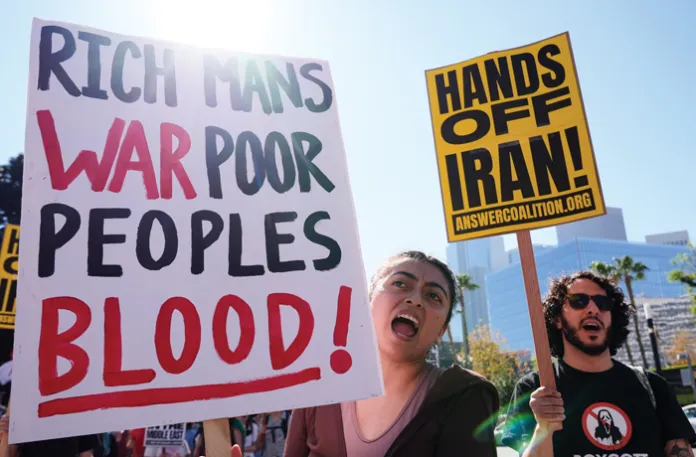
Trump’s action in Iran demonstrates the antidote: moral courage rooted in clear-eyed realism. By moving decisively with Israel against a regime that had just proven its willingness to slaughter its own people en masse, he reaffirmed that America will not indulge evil out of misplaced compassion. The operation has already degraded Iran’s nuclear program, crippled its military projection, and signaled to the Iranian people that the world will not forever tolerate their oppressors.
Democrats’ response reveals a party captured by ideology over instinct, by performative empathy over genuine justice. Their instant alignment against the strike exposes their EDS in real time. This is not principled anti-war sentiment. It is derangement: the inability to distinguish between aggressor and defender, between tyrant and liberator.
ROYAL RECKONING: JEFFREY EPSTEIN IN STRANGER THAN FICTION
History will record the January 2026 massacres as among the worst state-sponsored slaughters of the modern era. It will record Trump’s February strikes as the necessary response that a deranged opposition tried to thwart. The sages’ warning to Saul rings across millennia: Mercy to the cruel invites cruelty in turn. Democrats, in their empathy derangement, risk proving the lesson once again — at the expense of American security, Iranian freedom, and the basic duty to protect one’s own.
The regime that destroyed tens of thousands of its citizens now faces the consequences of its evil. The party that rushed to its defense faces a reckoning of its own. America, under decisive leadership, has chosen strength over suicidal sentimentality. The contrast could not be clearer.
Daniel Ross Goodman is a Washington Examiner contributing writer and the Allen and Joan Bildner Visiting Scholar at Rutgers University. Find him on X @DanRossGoodman.
