

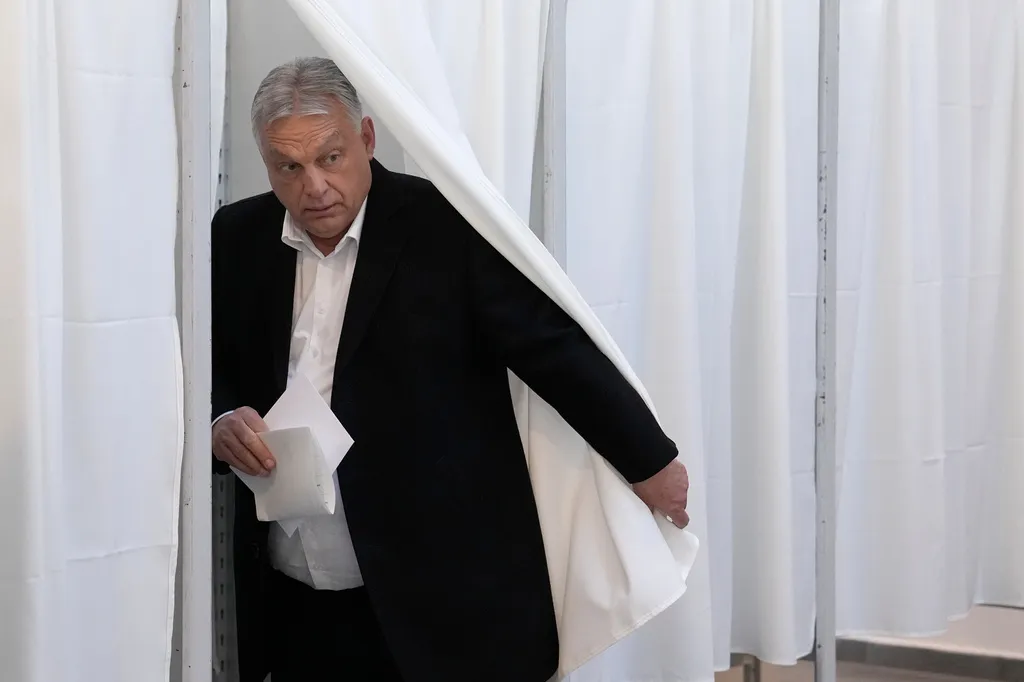
Never ignore the voters. After 16 years in power, Hungary’s corpulent Prime Minister Viktor Orban lost touch with the conservative base that supported him from the start, believing he could gerrymander his way to permanent victory. A smarter conservative, incoming Prime Minister Peter Magyar, did the opposite. He used retail politics to listen to Orban’s voters and responded to their constant refrain: “Russia go home!”
Magyar’s victory is a win for Hungary, the United States, and smart campaigning. His victory created a political earthquake in Hungary. Conservatives in America should cheer this result in one of our most important Central European allies. Magyar’s new supermajority means he can amend the Hungarian constitution and roll back Orban’s worst political excesses while keeping the conservative movement alive in Hungary.
Stay informed.Stay ahead.
Join Washington Examiner for unlimited access to the news, analysis, and commentary that matter most.
Already a member? Log in
Orban’s political defeat is historic. Back in 1989, he jumped into politics as an agile, free-market friend of America. He learned how to talk like an American conservative.
When socialist politicians cratered the Hungarian economy in 2010, Orban sailed into office by championing the everyday voter. He defended the traditional family and questioned the EU’s federalist overreach. Once in power, he lost his way.
As Orban and his ministers dined with Vladimir Putin and picked unnecessary fights with neighboring Ukraine, Magyar broke ranks with Fidesz, Hungary’s ruling conservative party, in 2024. He returned to basics, campaigning on kitchen-table issues and highlighting malign Russian influence over Hungary in Orban’s stronghold: the conservative heartland.
Credible reports indicate that the GRU, Russia’s military intelligence unit, deployed to assist Orban’s campaign.
Since Russia’s invasion of Ukraine, most of Europe has moved to isolate Moscow. Meanwhile, Hungary has resisted that consensus, slowing or blocking EU sanctions on Russia and other financial support for Kyiv. Orban simultaneously made his country more dependent on Russian energy imports.
Hungary continues to rely heavily on Russian oil delivered via the Druzhba pipeline, and Orban has emphasized Russian energy as central to Hungary’s national security.
Like Putin, Orban has portrayed Hungary as a “fortress of conservatism” that defends traditional values. Also like Putin, he has flattered President Donald Trump as a “truly strong and powerful leader.” Trump rightly praised Orban for his resistance to the unexpected wave of mass migration from the Middle East in 2015. But at the same time, Orban opened his economy to Chinese influence on a grand scale and hardened his country’s dependency on Russian energy. Hungary even offered to help Iran after Israel’s infamous “pager attack” on Hezbollah terrorists.
During Operation Epic Fury, Orban refused to help the U.S. even as Trump complained that our closest friends were sitting on their hands. Instead, Orban picked up the phone to Moscow. He complained to Putin about the loss of energy shipments from the fighting, especially European-bound LNG deliveries from Qatar and rising prices for consumers. Putin lavished praise on Orban, thanking him for vetoing EU aid to Ukraine and his “principled” foreign policy.
All eyes are now looking to Magyar for a return to predictable, pro-Western politics in Budapest. Among voters, Magyar built his appeal on a promise to reset Hungary’s political system by rooting out corruption, restoring institutional checks and balances, and realigning Hungary with Europe. As the head of the Tisza party, he has focused on bread-and-butter concerns such as tackling inflation and unlocking frozen EU funds while deliberately sidestepping divisive culture-war politics.
YES, MUSLIMS SHOULD ASSIMILATE TO BELONG
His campaign suggests that he is a leader who understands his domestic politics without the geopolitical baggage of close ties to Russia or mischief-making in NATO. This will make him a more effective and sustainable ally that Washington can rely on.
Orban’s downfall was tragic and predictable. After championing the everyday voter, he transformed a genuine political mandate into a would-be monopoly on power. That is over. The U.S. should look upon Magyar’s new government as a conservative friend with whom we can work.
Peter Doran is Senior Adjunct Fellow at the Foundation for Defense of Democracies. Ivana Stradner is a research fellow at FDD.