

The original Devil Wears Prada was, in its own glossy and high-heeled way, a gay and glamorous Goodfellas for women. Both films romanticized brutal, unforgiving industries governed by hierarchy, intimidation, loyalty tests, and the constant threat of professional annihilation. Both conveyed the seduction of proximity to power and the moral corrosion that comes from working your way up the ladder, no matter how many bodies must be left behind. Under such grueling, dog-eat-dog conditions, the distinction between organized crime rackets and high fashion may have come down to your W-2 form.
But while the 2006 original has endured as a contemporary classic, director David Frankel’s 2026 sequel is a disorganized mess. The Devil Wears Prada 2 is a nostalgic reunion in search of a plot.
Stay informed.Stay ahead.
Join Washington Examiner for unlimited access to the news, analysis, and commentary that matter most.
Already a member? Log in
We return to Runway two decades later, only to find that the literary and editorial landscape has become a desolate wasteland. Miranda Priestly’s once-formidable magazine is now obsolete, forced to pivot into podcasts, newsletters, TikToks, and every other dull appendage of our digital age.
Reflecting modern sensibilities, Runway is now effectively governed by a mind-numbing and tyrannically sensitive HR regime, embodied by a new character, Amari (Simone Ashley), who sternly informs Miranda that she can no longer toss her coat and bag at her assistant upon entering the office, nor harshly dismiss mediocre ideas from her staff. Miranda’s mere proximity no longer strikes fear into the room. In the original film, Miranda’s first entrance had the chilling, awe-inspiring aura of Robert De Niro’s Jimmy Conway — “gird your loins,” was Stanley Tucci’s memorable admonition. Here, in her first scene, a lowly assistant physically restrains her from speaking to the press — a previously unthinkable transgression.
Miranda has even been reduced to dealing in “fast fashion,” a scandal that sets off the film’s hazy plot. Frankel is trying to highlight the desperate times that have befallen print magazines, but we are a long way from Vogue, the magazine on which Runway is based, promoting Shein. What are we doing here? “Without ads we are nothing,” Miranda concedes in one scene, acknowledging that she has virtually no influence as she caves to Dior’s taxing demands. Later, she submits to her new boss’s austerity measures and flies economy. Miranda isn’t so much the devil anymore as the downtrodden.
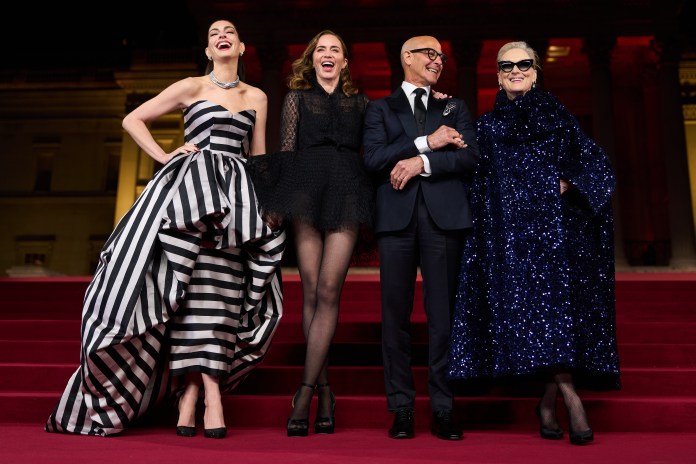
While Miranda’s mojo has been muted, Anne Hathaway’s Andy Sachs remains endlessly endearing and charming. She is now a confident and successful journalist, though down on her luck after widespread layoffs shuttered her newspaper. In search of a new job, fate brings her back into Miranda’s orbit, this time as the editor of Runway’s features page, just as the magazine braces for the battering blows of social media backlash over its sweatshop scandal.
The plot, such as it is, requires Andy to help save Runway’s reputation. Miranda’s woes are further compounded when the aging owner of the magazine unexpectedly dies, leaving the publication in the hands of his young, hip millennial son, played by B.J. Novak, whose idea of fashion is synthetic athleisure and foamy sneakers. The devil here does not, in fact, wear Prada, but Lululemon and Alo.
As the narrative saunters on, the fate and direction of Runway seesaw between various M&A offers. The sequel cannot decide whether its villains are McKinsey MBAs, billionaire AI tech bros, or the general indignities of modern media capitalism.
In a sense, they are all of them. The treacherous forces that have disrupted the tranquility of newsrooms and made traditional print journalism unsustainable at the scale it occupied in the original Devil Wears Prada’s heyday. One Silicon Valley archetype declares that magazines and runway models will soon be unnecessary because “it will all be AI,” which naturally raises the question of why he is interested in buying the business in the first place. The film wants to satirize the forces hollowing out fashion media, but it never quite understands them well enough to make the satire land.
Part of what made the original so enjoyable was the dynamic between Miranda and Andy, and the absurd ordeals Andy would overcome to prove herself. At one point, Miranda demanded that Andy procure an advance copy of the unpublished Harry Potter manuscript for her children — a Sisyphean undertaking she somehow achieved. In the sequel, the most exacting assignment is to land an interview with some billionaire’s reclusive divorcée. It is all so strangely inconsequential.
The cast in The Devil Wears Prada 2 is firing on all cylinders, but they have little substance to work with. Hathaway’s vigor drives most scenes, Streep can still convey contempt with a glance, and Emily Blunt’s return offers flashes of the comic venom that hark back to the original’s charm.
But the film keeps stranding them in narrative cul-de-sacs. Andy is also pushed into a superfluous and inorganic romance that adds nothing to the plot except another opportunity for her to wax lyrical about journalism and remind the contractor she starts dating that her work is vastly more important than the luxury condos he builds. It is as if MSNBC’s Katy Tur had been brought in as a consulting screenwriter.
NO, REALLY… WHAT HAPPENED TO TUCKER CARLSON?
There is plenty of feel-good fanfare, and for longtime fans, merely seeing these characters together again may provide some passing pleasure. But if the original Devil Wears Prada remains one of the defining comedies of the 2000s, the sequel is a largely forgettable addendum — a glossy, over-accessorized reunion. That’s all.
Harry Khachatrian (@Harry1T6) is a film critic for the Washington Examiner. He is a software engineer, holds a master’s degree from the University of Toronto, and writes about wine at BetweenBottles.com.