

President Donald Trump’s five-day extension to his ultimatum has delayed the decision point. It does not resolve the underlying constraint. The Strait of Hormuz will reopen, even if not on Washington’s timeline.
If negotiations fail, as they are likely to, the United States will force the strait open: through naval escort under fire, direct strikes, or sustained escalation. The question is not whether maritime flow will be restored, but when and at what cost.
Recommended Stories
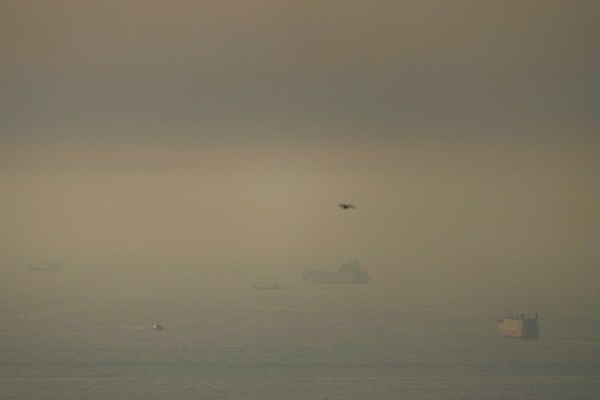
After Iranian attacks on merchant shipping earlier this month, traffic through the strait has collapsed from more than 100 vessels a day to almost none. Insurers have withdrawn coverage. Tankers idle at the entrance to the strait.
ACT NOW ON THE STRAIT OF HORMUZ — OR PAY A FAR GREATER PRICE LATER
The objective for Washington is clear: restore freedom of navigation in one of the world’s most critical trade routes and prevent the strait from becoming a tool of Iranian coercion.
Following calls for allies to contribute naval forces to secure shipping, recent statements from U.S. partners signal alignment with that objective. But alignment without contribution is deliberate risk transfer.
The pattern is already visible. Britain has signaled openness to stabilizing shipping while keeping its position on direct combat operations qualified. France, Germany, and other European states emphasize de-escalation while stopping short of committing to expanded missions under active conflict conditions.
Every day of delay raises the cost of reopening the strait, as allies defer the burden. A March 19 joint statement by seven American allies, later joined by others, signaled readiness to support “appropriate efforts,” without committing naval forces. This is not a regional crisis. It is a test of whether alliances function once costs are real.
Securing the strait under threat requires naval escort, mine clearance, and air cover. Only the U.S. can do this at scale and under fire. Even then, the U.S. Navy’s capacity for sustained escort is limited.
Europe and Asia are far more dependent on energy flows through Hormuz than the U.S. Yet they rely on Washington to secure it. In practice, allies position themselves as beneficiaries rather than participants, on the assumption that America will again underwrite the cost.
Roughly a fifth of global oil passes through Hormuz, around 20 million barrels a day. Disruption feeds directly into prices. The benefits of restoring maritime security are shared. To date, the costs are not. That gap is not accidental. It is the system’s incentive structure.
An alliance in which only one actor bears escalation risk is not a coalition. It is a subsidy sustained by allies who expect protection without assuming risk. This is not a failure of will. It is rational behavior. As long as costs can be externalized, allies maximize security while minimizing exposure. As those costs move closer to home, that position becomes harder to sustain.
The attempted strike on Diego Garcia — far from the Gulf — illustrates the shift. Distance no longer guarantees insulation. As escalation expands, the ability to externalize cost becomes unstable.
For now, the U.S. will carry the initial operational burden, while allied contributions, if they come, will lag behind the point of decision. This is not a temporary imbalance, but the operating model. As long as Washington is expected to act regardless, allies have little incentive to assume cost.
Iran’s strategy exploits that dynamic. It is not limited to disruption. It converts military pressure into economic leverage through coalition asymmetry, concentrating escalation costs on the U.S. while others remain aligned but uncommitted.
Allowing that strategy to succeed would entrench coercion against global systems as a viable tool of statecraft.
TRUMP WAIVES JONES ACT IN BID TO STANCH RISE IN OIL PRICES
Only exposure will change behavior. As risks move from abstract to proximate, the space for alignment without contribution narrows.
The strait will reopen. The question is how long allies can defer the cost before they are forced to bear it.
Stephanie Campbell is an Australian lawyer and strategist writing on geopolitics, deterrence, and alliance strategy.