Presidents have authority to stop narco-terrorists before they reach America

Americans usually think of national security threats as distant conflicts overseas. But one of the most dangerous threats facing the United States today is much closer to home.

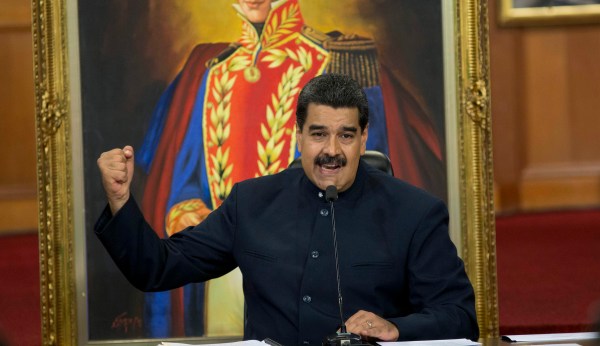
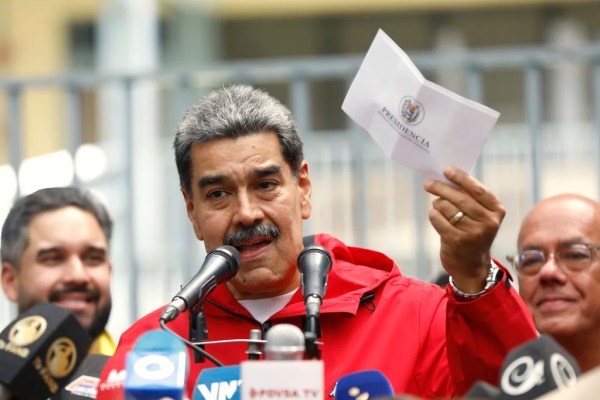
In Venezuela, a narco-terrorist network was embedded inside the government. For years, Nicolas Maduro’s regime has helped facilitate the trafficking of narcotics, criminals, and illicit money across the Western Hemisphere. Those operations do not stop at Venezuela’s borders. They are aimed directly at the U.S.

Maduro, who is not recognized by either the U.S. or the European Union as a legitimate leader, has been indicted by a federal grand jury in New York on charges of narco-terrorism and conspiracy to import cocaine into the U.S. The State Department has identified him as the leader of the Cartel de los Soles, a criminal organization operating within the Venezuelan state that moves drugs on an industrial scale.

At the same time, Venezuela has become a staging ground for foreign powers hostile to the U.S., including Russia, China, and Iran.

This is not simply a diplomatic dispute. It is a criminal and national security threat directed at the American people. That reality raises an important legal question: Does the president have the authority to act against those threats before they reach the U.S.? 

Under the Constitution, the answer is yes.

Article II designates the president as commander in chief of the armed forces and places responsibility for protecting the nation from external threats squarely within the executive branch. From the earliest years of the republic, presidents have exercised that authority to address dangers abroad when those dangers posed a direct risk to American security. For example, in 1800, the Supreme Court upheld President John Adams’s Quasi-War with France, recognizing that not all military engagements rise to the level of a constitutional war. During the Civil War, President Abraham Lincoln imposed a naval blockade against Confederate ports without congressional authorization. The Supreme Court held that while the executive does not have the power to declare war, he also “is bound to accept the challenge without waiting for any special legislative authority.” 

A more recent example is a 2011 memo from the Office of Legal Counsel at the Department of Justice. OLC explained that the use of force by the Obama administration in Libya was warranted under the Constitution because the president could “reasonably determine that such use of force was in the national interest” and “that prior congressional approval was not constitutionally required to use military force in the limited operations under consideration.” 

In other words, the Constitution does not require the president to wait for threats to cross our borders or require action from Congress before the president can defend the U.S.

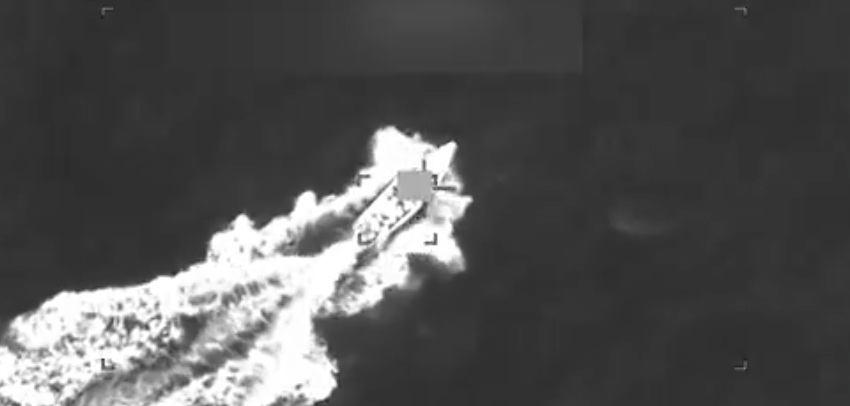
Stopping narco-trafficking operations on the high seas falls squarely within that authority. Congress has specifically directed the Department of War to detect and monitor maritime drug trafficking, and federal law gives the U.S. jurisdiction over drug trafficking aboard vessels operating in international waters. When vessels are used to move narcotics toward the U.S., directing military forces to intercept them is a lawful exercise of the president’s national security authority. 

The same principle applies to the arrest of Maduro. Maduro is not simply a controversial political leader. He has been indicted in an American criminal case by a federal court in New York. Once a federal grand jury issues an indictment, the U.S. has the authority to pursue and execute that warrant. Importantly, American courts have long held that the way a defendant is brought before the court does not prevent prosecution. The key question is whether the court has jurisdiction over the charged crimes.

We saw a similar situation play out in Panama in 1989, when President George H.W. Bush deployed military forces to apprehend Panamanian dictator Manuel Noriega after he was indicted on federal drug-trafficking charges. U.S. courts rejected Noriega’s claim that his position as a foreign leader shielded him from prosecution and allowed the case to proceed.

Maduro faces a similar situation today. The U.S. does not recognize him as Venezuela’s legitimate head of state after he refused to relinquish power following the country’s most recent election. Without recognition as a lawful head of state, he cannot claim sovereign immunity from prosecution in American courts.

IN FOCUS: THE LEFT’S INCURABLE DEI ADDICTION

In summary, the legal framework is clear. The Constitution empowers the president to defend the country from external threats, federal law authorizes action against maritime drug trafficking, and long-standing precedent confirms that indicted foreign leaders can be brought before American courts.

Narco-terrorist networks embedded in hostile regimes pose a direct danger to the U.S. Confronting those threats before they reach American soil is lawful and exactly what the Constitution expects the president to do.

Gina D’Andrea serves as general counsel at the America First Policy Institute.

Related Content