An Iran containment strategy: Managing the post-conflict threat 

Since its creation some 47 years ago, the Islamic Republic of Iran has demonstrated resourcefulness and dedication to its goals of regional hegemony and proliferation of Islamic radicalism. As a result, the extent of Iranian military recovery from the attacks in June 2025 should not have been surprising. Clearly, if the regime remains in control in Tehran, it will not relent and will continue to represent a danger to the West.

Specifically, should the present conflict leave the regime with the resources to do so, it will seek to recover quickly and even expand its capabilities, including further developing its nuclear program. The key to Iranian recovery is crude oil sales, constituting some $8 billion in 2025. Even if there were effective sanctions, these exports enable barter deals, particularly with Chinese companies, including those producing military electronics and other equipment. 
If the conflict does not result in near-term regime change, the United States needs to implement a comprehensive containment strategy that not only opens the straits to marine traffic but also cuts off Iranian crude exports, hobbles Iran’s industrial base, and constrains its importation of industrial and military equipment. Such actions will restrict the rebuilding of its military capabilities (including its nuclear program) and gestate domestic unrest, as the public sits in the dark, unemployed and unable to travel. 

WHAT ARE THE MOST IMPORTANT ENERGY ASSETS IN THE IRAN WAR?

Some have expressed concerns that cutting off Iranian crude exports would further exacerbate the upside pressure on crude prices associated with the closure of the straits. However, Iran only exports some 1.5 to 2 million barrels per day, which represents about 1.5% to 2% of global production. Saudi Arabia alone has a reserve capacity of about 2.5 million BPD and could cover any curtailment in the supply of Iranian barrels to rebalance the world market. As a result, assuming the Gulf countries have unencumbered access through the straits and production uplift elsewhere, there would be little impact on world oil prices, but a significant impact on Iran. 

Although the Trump administration has not spoken with any granularity around its threat to take out Iran’s power plants or other critical infrastructure such as desalination facilities, the goal of undermining Iran’s economy can be achieved by implementing a more selective campaign which involves the destruction of fuels, electric (substations and other transmission facilities) and civil infrastructure (rail repair facilities, locomotive storage, some bridges, port loading/unloading and certain airport facilities) and comparable industrial infrastructure (steel making, cement, chemicals, machinery fabrication), without eliminating critical infrastructure such as oil and gas wells, desalination, power plants, refineries and other critical facilities which would take years to replace should they be destroyed. There is an alternative to simply destroying everything. 

Similarly, there are a range of alternatives to stop Iranian crude exports as well as imports of gasoline, diesel, and other oil products, resulting in no energy, no fuels, and other industrial commodities, fostering conditions that should ultimately lead to the collapse of the repressive state.

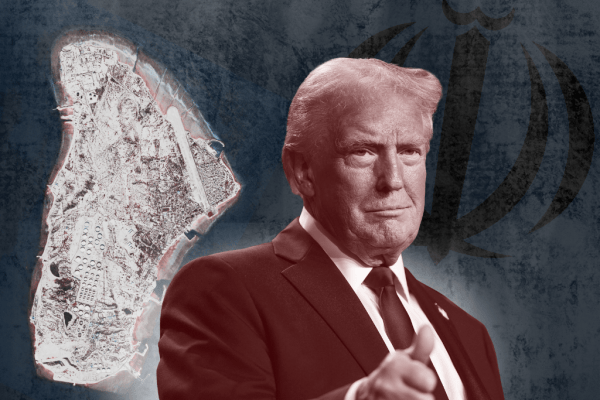
While I leave the question of military tactics to others, it appears that some combination of aerial attacks and, possibly, some limited ground action, could take out supporting infrastructure (storage, pumping facilities, power supply, pipelines), effectively suspending Iranian exports while keeping intact Kharg’s berths and other major terminal equipment in place until such time as a new government takes power. Further, analysts such as John Spencer have noted that there are options to prevent Iran from menacing marine traffic, including seizing or otherwise neutralizing the islands of Abu Musa and the Greater and Lesser Tunbs or otherwise stopping tankers heading into the Gulf seeking access to Iranian terminals.

FOUR WEEKS OF IRAN WAR: HERE’S WHAT HAS HAPPENED TO OIL MARKETS

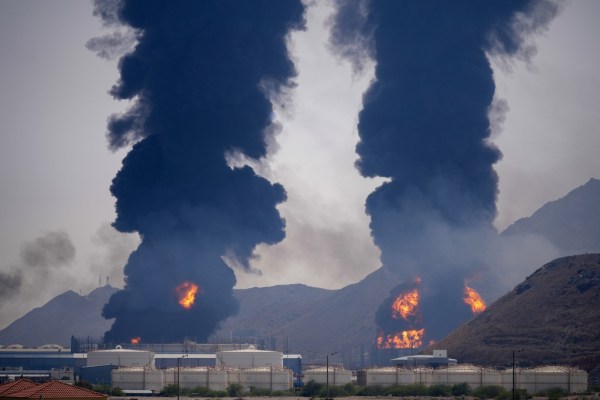
Many have expressed fears that these actions would trigger Iranian attacks against GCC energy infrastructure. However, the reality is that from the beginning of the conflict, Iran has attacked fuel storage, refining, and ports across the Gulf, with the Iranian attack against a loaded tank being the most recent. Unfortunately, at least until recently, it does not appear that the U.S. or the Gulf countries have made clear to the regime that such attacks would result in ratcheted, reciprocal actions. Meanwhile, Gulf countries should be lining up to go on the offensive against comparable Iranian targets — this should be their fight.

While we should always be sensitive to the impacts of American policies upon civilians, cutting off energy supplies without destroying core infrastructure may well be the most humane and responsible alternative available against a dedicated and evil foe, which may well be willing to precipitate an apocalypse to achieve its goals. The blood and treasure expended to date should not be in vain. At a minimum, let’s ensure that we have prevented the Islamic Republic of Iran from reconstituting itself and continuing to be a threat to us all.  

Michael Schwartz is an energy sector executive and former Gerhard R. Andlinger Visiting Professor in Energy and Environmental Studies at Princeton University.

Related Content