

In 26 months, the Republican Party will gather at its national convention in Houston to nominate a standard-bearer who will try to hold together and build upon President Donald Trump‘s 2024 coalition.
When the GOP’s then-Chairwoman Ronna McDaniel announced the selection of Houston as the site of the 2028 Republican National Convention in August 2023, it was a shrewd business decision driven by the need for the host city to begin planning early for the arrival of thousands of delegates and at least as many members of the media, from both the legacy and new platforms.
Recommended Stories


While Trump will have enormous influence over the direction of the Republican Party and perhaps over its nominee, Vice President JD Vance is widely seen as the front-runner. But there will almost certainly be other candidates in Iowa, New Hampshire, and beyond in the winter and spring of 2028. American politics has rarely followed a straight line.
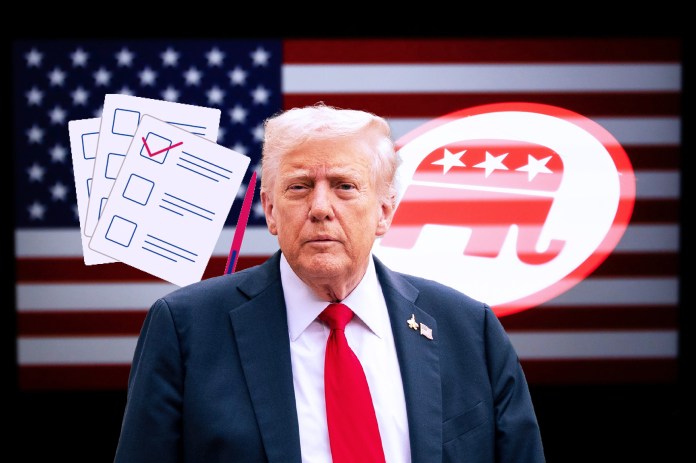
Since Trump already owns the naming rights to “greatest upset in American electoral history” with his 2016 win and “greatest comeback” with his 2024 victory, it’s very difficult to envision the post-Trump GOP. Neither of those extraordinary events was predicted by the chattering class. It would also be premature to even venture odds today.
“45-47” may choose to follow President Dwight D. Eisenhower’s example. Ike waited until March 16, 1960, to endorse his vice president, Richard Nixon, in that year’s presidential election. Nixon and the GOP base had driven Nelson Rockefeller from the field early enough to allow Ike to enter the race without controversy or risk the appearance of a failure by the incumbent president to persuade his own party.
President Ronald Reagan also stayed out of the race to succeed him until May of 1988, after Reagan’s vice president, George H.W. Bush, had beaten Sen. Bob Dole and others in the primaries and wrapped up the nomination.
The prospect of party voters rejecting a presidential endorsement may have stayed Ike’s and Reagan’s hands. But Trump is, of course, not in any way bound by precedents from the past.
Trump will almost certainly decide whether the current Republican National Committee sanctions debates among would-be contenders for the nomination. (He might even host one or more such gatherings himself and will be a highly watched commentator online during any debates.)
The president may hang back, or he might attempt to end the primary campaign before it begins, which would be a bad choice on his part — and one that could backfire as surely as Joe Biden’s manipulations of the 2024 process on the Democratic side of the aisle were of no avail to him.
The 2028 campaign has begun, however, and the quiet part will get louder and louder as the November elections draw near. Trump announced his own intention to run again on Nov. 15, 2022. Expect any such announcements from 2028 would-be presidents to be made before Christmas of this year.
There is no guessing which issues will drive the next presidential race, the first in a dozen years that will not be dominated, at least in part, by illegal immigration. Trump has sealed the southern border, and in doing so, with near-perfect implementation, has taken a major issue off the table as 2028 approaches — an issue that benefited Republicans across the board in 2024. (Republicans will try to remind the electorate of what Democrats did at the border during Biden’s infirmity — nothing — but old issues are just that: old.)
The state of the American economy was, is, and always will be the “decider-in-chief” come election time for presidents. Reagan’s party got thumped in 1982 but triumphed in 1984 because it was “Morning in America” time. The economy had turned the corner on the Carter years and the GOP benefited top to bottom.
If the economy of late 2027 is roaring along under the low-tax, low-regulation framework enacted by the Working Families Tax Cuts Act of last year, Vance will be the beneficiary. Such economic indicators would mirror those of the first Trump term just prior to the arrival of COVID, and that sort of boom would put the vice president in the pole position.
If the economy is struggling, or if the battle with Iran has gone wrong or ended inconclusively in the minds of voters, proximity to it will be poisonous, at least to the traditional “peace through strength” Republican primary voter.
This is a long way of writing that we cannot possibly know much about how 2027 and 2028 will turn out for Republican primary voters deciding who will be their nominee. All we can say for sure is that the campaign begins almost as soon as the 2026 election ends, and that the convention will be in late August in a hot and humid Houston.
So once again: All eyes on Trump and RNC Chairman Joe Gruters as they plan out 2027, especially what television executives at least hope will be a robust debate schedule. (The ratings for such faceoffs always trounce ordinary primetime numbers.) The maneuvers right now to tap staff and outside consultants is outside the public view but very much underway.