

When Pope Leo XIV visited France in late September, immense crowds flooded the streets to greet him, to the delight and surprise of observers across the West. Images from the four-day visit were breathtaking: a sea of French and Vatican flags rippling down the Champs-Elysees, parents hoisting children onto their shoulders for a glimpse, hundreds of thousands kneeling in prayer, priests hearing confessions in the open air.
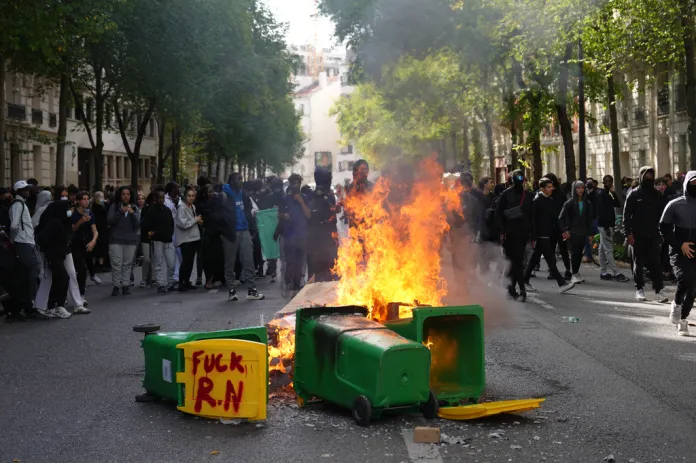
Within days of his departure, a very different crowd had taken over the streets. Riots that began at a high school in the suburb of Creteil spilled into the capital and across France, ostensibly over the state of the country’s public schools. But the raw footage of the streets make clear this is about far more than leaky roofs and teacher shortages.
Stay informed.Stay ahead.
Join Washington Examiner for unlimited access to the news, analysis, and commentary that matter most.
Already a member? Log in
The rioters, a coalition of high schoolers, outside agitators, and activists tied to Jean-Luc Melenchon’s La France Insoumise, a hard-left party critics have long branded “Islamo-leftist,” wave the Palestinian flag, ransack schools, burn trash cans in the street, and throw Molotov cocktails at buses. In one jarring incident captured on camera, a protester turned a deodorant can into a makeshift flamethrower and used it to burn a woman’s face in the street.
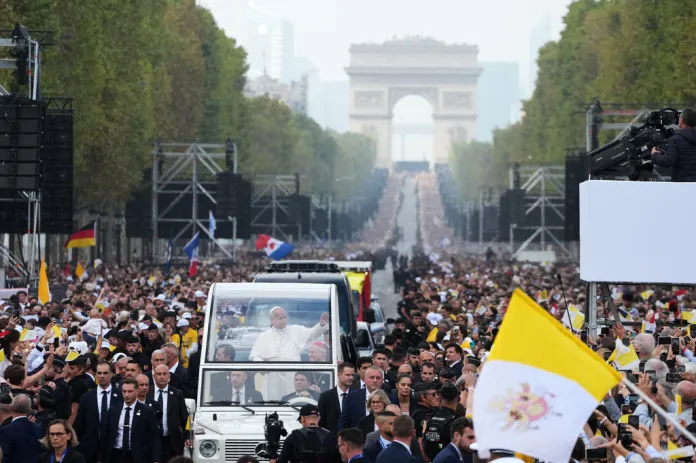
Two crowds, two civilizations, one city. One came to worship and praise; the other came to riot and burn.
The contrasting scenes reminded me of something famed biologist and atheist Richard Dawkins said a couple of years ago. Despite authoring numerous books trashing Christianity, Dawkins told an interviewer that he considered himself a “cultural Christian.”
“I’m not a believer, but there is a distinction between being a believing Christian and a cultural Christian,” Dawkins said. “I love hymns and Christmas carols and I sort of feel at home in the Christian ethos, and I feel that we are a Christian country in that sense.”
It was a remarkable admission from the front man of the Four Horsemen of New Atheism, the religion skeptics who rose to prominence after the Sept. 11 attacks and the Catholic Church abuse scandal. Those twin events gave Dawkins and his cohort an opening to cast religion itself as the root of the world’s evils. Rid the world of its ancient superstitions, they preached with evangelical zeal, and a more enlightened, peaceful, and humane society would surely follow.
The first half of Dawkins’s wish came true. Christianity’s influence waned dramatically in the first quarter of this century. The “nones” surged across the West, and with them came a host of “enlightened” cultural innovations, chief among them total rejection of the sanctity of life from conception to natural death. Meanwhile, church pews emptied at a startling clip.
But the rationalist utopia never arrived. Instead, a new ideology filled the void left by Christianity: a strange amalgamation of relativistic postmodernism and identitarian Marxism. It exhibited more fervor and binary thinking than Christianity had in centuries — and far less mercy. By the peak-woke years of 2018 to 2022, it had become a greater threat to the values the New Atheists cherished — free inquiry, the dignity of the individual, universal rights — than Christianity ever was. It even dawned on some of them that each of these values grew from Christian soil.
Worse, the retreat of Christianity opened a window for something else to climb through. Islamism, the militant political strain of the faith that has taken root across parts of North Africa and the Middle East, claimed the cultural Marxist’s “oppressed” label and curried favor among the young Western progressives who were trained to link arms with any opponent of the white, male patriarchy. And through mass migration, Islamism soon gained a firm foothold in Europe.
France is now the front line of this erupting clash of civilizations. European elites and their American media counterparts are working feverishly to obscure the truth of what’s happening on the ground, particularly the Islamist contributions to the riots, but even they must sense that this is no longer something they can hide, let alone control.
The two crowds in Paris, one that came to see the Holy Father and the other that came to burn France to the ground, cast the West’s choice in stark relief: on one side joy and peace, and on the other fury and chaos. The West must decide which crowd it belongs to.
SIGNS OF LIVING WATER FLOWING THROUGH FRANCE
Will it return to the faith that built it, or surrender it to those eager to leave it in ashes?
The answer is obvious enough that even an atheist can see it.