The heat was sweltering when delegates emerged from Independence Hall on Sept. 17, 1787. Crowds had gathered outside, waiting for news from the Constitutional Convention. Among them was Elizabeth Willing Powel, a prominent Philadelphia socialite, who approached Benjamin Franklin, who at 81 was wizened but still sharp.
“Well, Doctor, what have we got?” she asked. “A republic or a monarchy?”
Recommended Stories
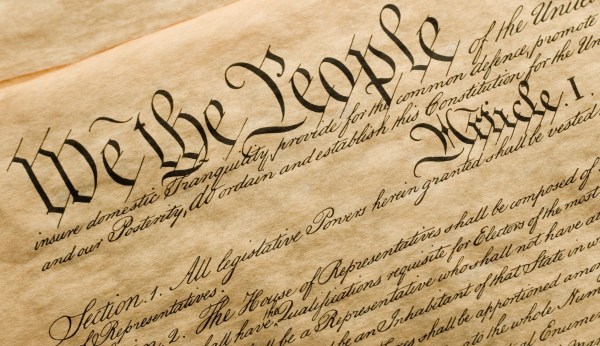
“A republic,” Franklin replied, “if you can keep it.”
The anecdote has become part of the lore of the American Revolution, and for good reason. Franklin’s quip captured the fragility not only of the American experiment but of liberty and self-governance itself.
As America approaches the 250th anniversary of the Declaration of Independence, one cannot help but wonder whether Franklin would say the nation remains a republic.
This is not to say the American experiment has failed, nor to suggest the United States has not been a force for good in the world. It has. But it is fair to ask, as some have, whether America is drifting toward something more akin to late-stage Rome than the republic Franklin envisioned.
For one, few people today even speak of America as a republic. It is far more commonly described as a democracy, something many of the founders rightfully distrusted. When James Madison wrote in Federalist No. 10 that “pure democracies have ever been spectacles of turbulence and contention,” he was warning that unchecked majority rule often devolves into factionalism, instability, and the erosion of individual rights.
That description feels uncomfortably familiar today, and there’s reason to believe it stems from the erosion of the constitutional system Franklin, Madison, and company created in 1787.
Above all else, the founders sought to create a system that divided power. They feared concentrated authority, and nothing was more dangerous than unchecked government. When Thomas Paine called government a “necessary evil,” he was describing the premise on which the Constitution was built.
Drawing on the ideas of Montesquieu, David Hume, John Locke, and other Enlightenment thinkers, the framers split federal authority into three branches, but that was only the most visible feature of America’s checks and balances. Federal powers — coining money, regulating interstate commerce, declaring war, maintaining armed forces — were carefully enumerated in the Constitution. Then came the Bill of Rights.
Rather than listing what government must do for the people, it listed what government could not do: censor speech, disarm citizens, conduct unreasonable searches, seize property without due process, etc. The 10th Amendment further stated that powers not delegated to the federal government were reserved to the states or the people.
All of this was intended to keep the government in check. The framers understood that government mission creep is the norm.
“The natural progress of things is for liberty to yield and government to gain ground,” Thomas Jefferson wrote in 1788.
That is precisely what happened over the course of generations. Today, the federal government regulates nearly every form of economic activity not expressly prohibited, often through executive agency fiat.
The founders are unlikely to have believed the Constitution authorizes the federal government to run a national health insurance market or compel individuals to buy insurance. Still, Obamacare passed Congress. President Donald Trump often appears uninterested in involving Congress at all.
From unconstitutional tariffs to unlawful bump stock bans to the undeclared war in Iran, now stretching beyond 70 days, Trump has repeatedly acted unilaterally. Even supporters of these actions couldn’t argue they are republican (small r) in nature. This is precisely the kind of concentrated executive power the founders feared.
John Adams warned that “liberty, once lost, is lost forever.” But perhaps he was wrong.
Though Washington has grown in power, checks and balances continue to work. The Supreme Court has recently rolled back executive power grabs, including President Barack Obama’s carbon dioxide endangerment finding and Trump’s IEEPA tariffs.
Still, the court cannot rescue the American experiment on its own. Only a renewal of the ideals on which the nation was founded can do that.
Fortunately, the antidote was articulated long ago by Adam Smith in The Theory of Moral Sentiments and The Wealth of Nations — two very different books that together describe the foundations of a free society.
The first emphasized virtue: self-command, moral responsibility, prudence, and justice. The second explained how prosperity emerges when people are free to produce, trade, innovate, and cooperate under stable rules that protect life, liberty, and property.
WHAT HAPPENED TO WIKIPEDIA’S NEUTRALITY?
Unfortunately, Smith’s ideas are not exactly in fashion these days, which helps explain why America today faces $40 trillion in debt, persistent inflation, rampant fraud and corruption, and institutional decay.
Despite these challenges, the American experiment can survive another 250 years, but only through a renewal of the classical liberal ideals on which it was founded.
It will not survive another 50, however, if Americans forget what Benjamin Franklin understood: Keeping a republic requires a virtuous people devoted to liberty, not power.